







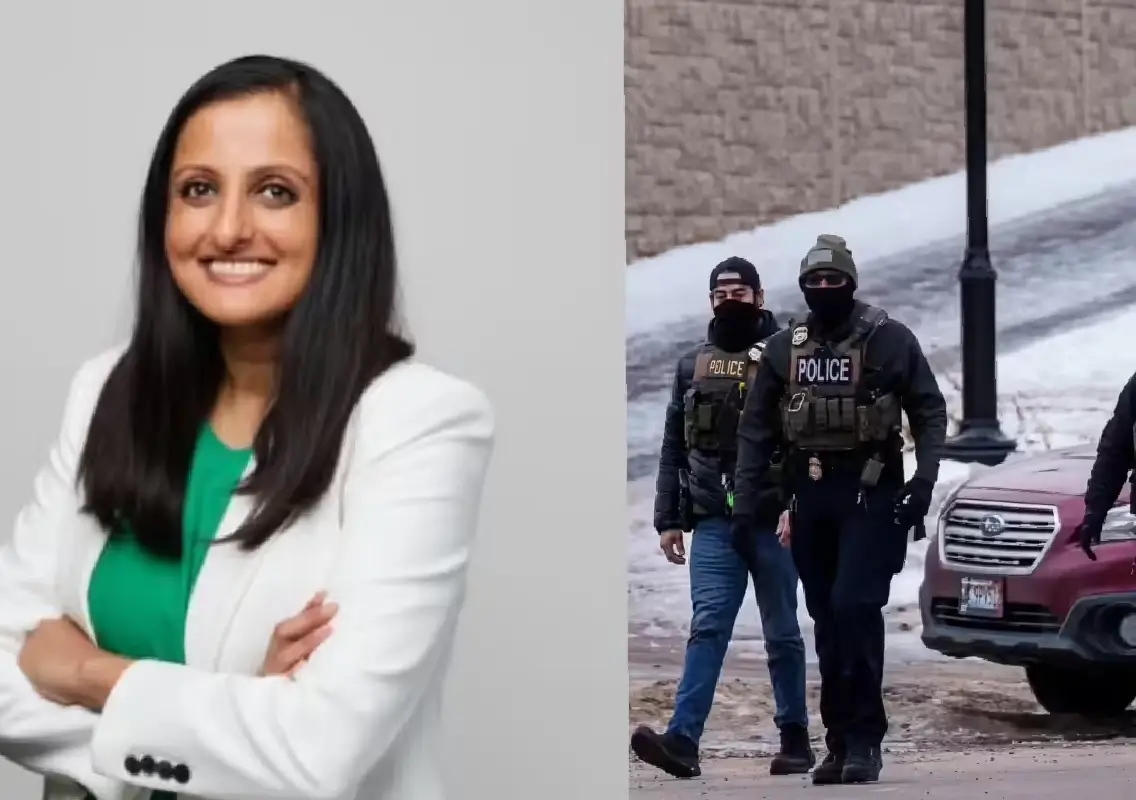


An Indian-American doctor has alleged that her elderly mother, a US citizen, was stopped and questioned by masked US Immigration and Customs Enforcement (ICE) agents at a shopping mall in Texas because of her accent—an incident that has intensified criticism of federal immigration enforcement.
‘Questioned because of her accent’
Dr Nisha Patel wrote on X that her mother was approached by ICE agents while shopping at an outlet mall. According to Patel, the agents initially addressed her mother in Spanish, assuming she spoke the language because of her accent. When she said she did not, the agents began asking where she was “from,” rapidly naming countries without allowing her time to respond.
Patel said her mother told the agents she had lived in the United States for 47 years and is a US citizen. She was allowed to leave only after showing a photo of her US passport on her phone.
Post sparks debate amid nationwide protests
In her post, Patel criticised the encounter, saying it undercuts claims that enforcement actions are limited to “sending criminals back.” The account has circulated widely online, adding to scrutiny of ICE tactics.
The incident comes amid protests in multiple US cities following recent fatal encounters involving federal immigration agents, including demonstrations in Minneapolis, New York City, San Francisco and Boston. Protesters and some local leaders have called for federal agents to withdraw from certain states, arguing that enforcement has become overly aggressive.
Detentions and political response
Government data show Indian nationals are among the larger groups detained by ICE in recent years for immigration violations such as visa overstays or unlawful entry. Democratic leaders have repeatedly questioned the aggressiveness of enforcement, while Donald Trump and Vice President JD Vance have defended federal actions as necessary to curb crime and alleged fraud.
ICE has not publicly commented on Patel’s specific allegation. Civil liberties groups say the episode underscores concerns about profiling based on appearance or accent, while supporters of enforcement argue agents must verify status during operations.