







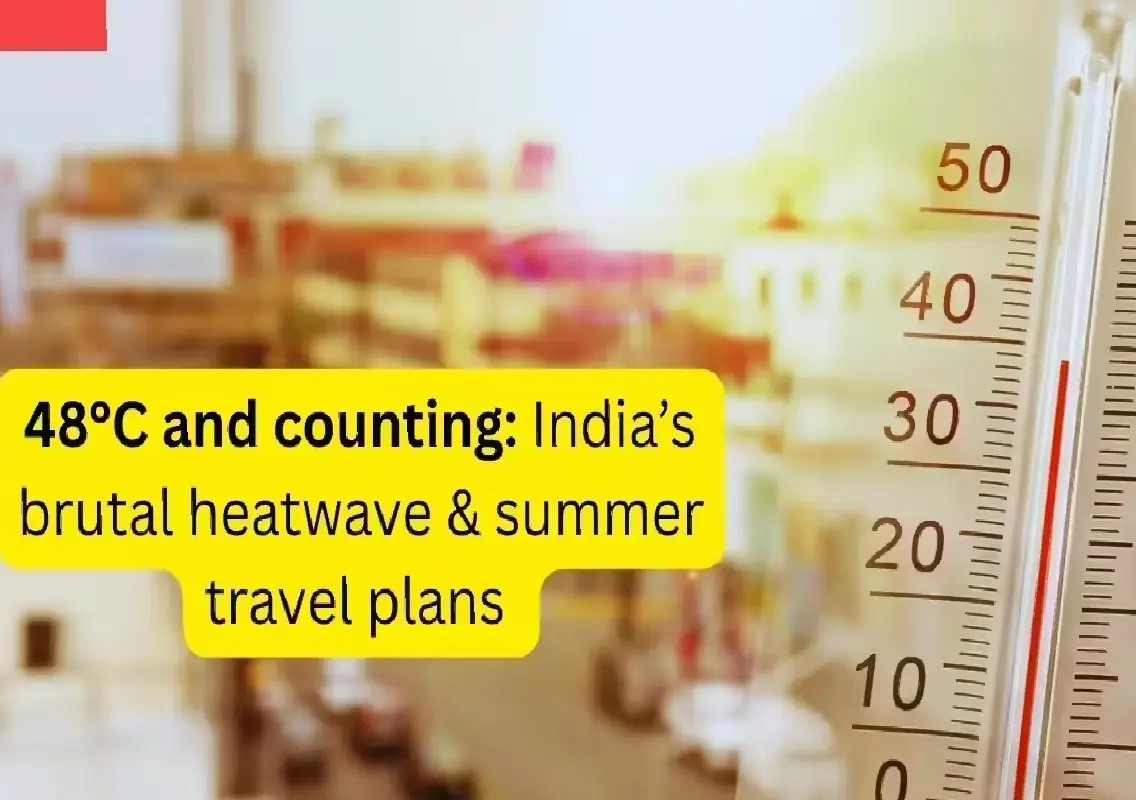


India is witnessing one of its harshest summers in recent years, with temperatures crossing 45 degrees Celsius in several regions and pushing millions into dangerous living conditions.
Akola in Maharashtra’s Vidarbha region recorded 46.9 degrees Celsius earlier this summer, while several cities consistently remained above 40 degrees for weeks. Reports of heat-related deaths, heatstroke, dehydration, and medical emergencies have emerged from across the country.
Heatwave affecting health and livelihoods
Medical experts warn that prolonged exposure to extreme heat can trigger heart attacks, kidney damage, sleep disorders, respiratory complications, mental health issues, and worsening chronic illnesses such as diabetes.
The United Nations has also raised concerns about the impact of heatwaves on agriculture, food supply chains, livestock, and rural livelihoods.
Farmers in several regions have struggled to work outdoors due to intense daytime heat, while street vendors, labourers, and homeless populations remain among the worst affected.
Climate concerns and shrinking green cover
Environmentalists say rapid urbanisation and large-scale tree cutting in cities such as Bengaluru, Pune, and Nashik are worsening the urban heat crisis.
Heritage trees, wetlands, and biodiversity zones are increasingly being cleared for roads, highways, and infrastructure projects despite repeated climate warnings from scientists.
Experts argue that loss of green cover reduces natural cooling and intensifies heat retention in urban areas.
Growing criticism over preparedness
Climate researchers and public health experts have criticised gaps in India’s heat-related data collection systems and transparency around official temperature readings.
The India Meteorological Department has faced scrutiny in recent years over heatwave monitoring and data inconsistencies.
The government’s Heat Wave Action Plans have also drawn criticism, with activists arguing that implementation remains slow and inadequate compared to the scale of the crisis.
Inequality becoming more visible
Experts say the heatwave is exposing sharp inequalities across Indian society. While wealthier populations often have access to air-conditioned homes and workplaces, poorer communities continue to face direct exposure to extreme temperatures with limited protection.
Researchers warn that rising global temperatures may increasingly push parts of India beyond safe physiological heat limits in the coming decades.