







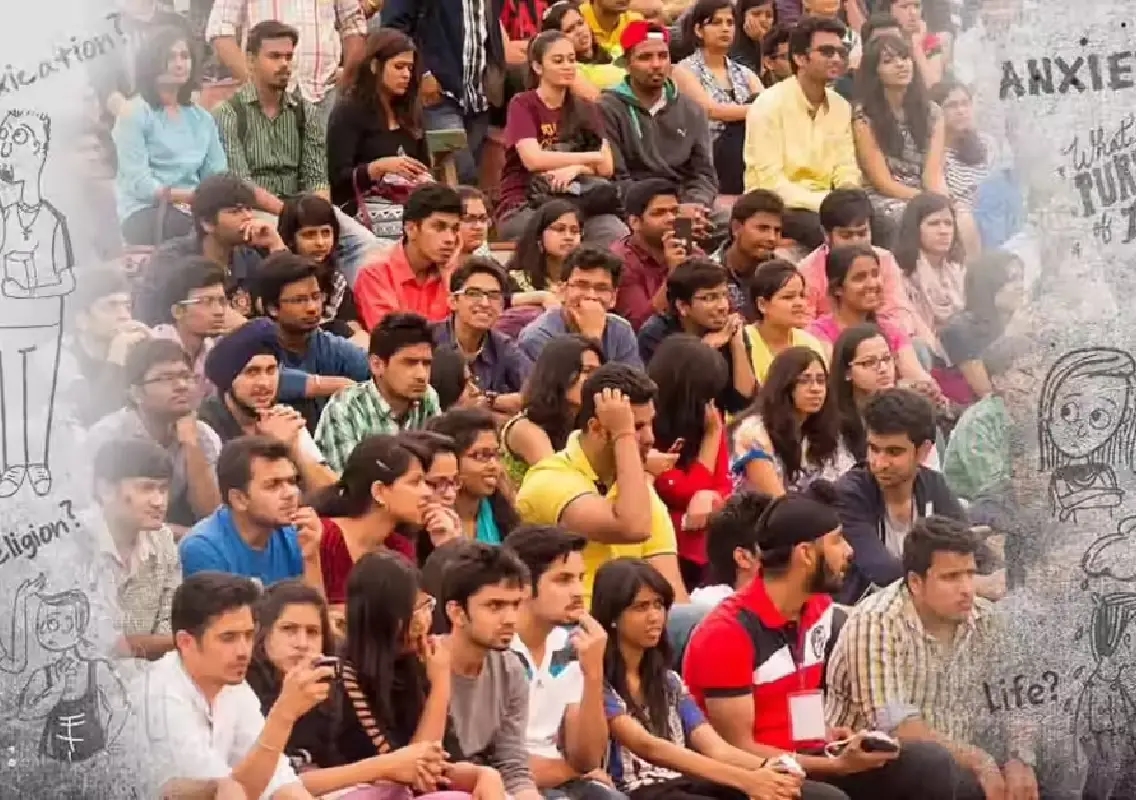


India’s growing young population is becoming more educated, but the country is struggling to create enough jobs to match their aspirations, according to the State of Working India 2026 report released by Azim Premji University.
Education rises, but inequality persists
The report highlights that India is nearing the peak of its demographic dividend, with around 367 million people aged 15–29—nearly one-third of the working-age population. Educational attainment has improved significantly over the past four decades, especially among women, with tertiary enrolment reaching 28%.
However, affordability remains a major concern. Professional courses such as engineering and medicine continue to be out of reach for many low-income families, reinforcing inequality. At the same time, enrolment among young men has declined from 38% in 2017 to 34% in 2024, with many entering the workforce early to support their households.
Rising graduate unemployment
A key concern is the persistently high unemployment among graduates. Nearly 40% of degree holders aged 15–25 are unemployed, while around 20% of those aged 25–29 remain without jobs.
Between 2004–05 and 2023, India produced about 5 million graduates annually, but only 2.8 million found employment each year. This has led to a growing pool of unemployed graduates, estimated at 11 million in 2023. Even among those employed, stable salaried roles remain limited.
Jobs grow, but quality concerns remain
While employment has increased, much of the growth is concentrated in low-productivity sectors like agriculture. Of the 83 million jobs added between 2021–22 and 2023–24, nearly 40 million were in agriculture.
Self-employment is also rising, particularly among women, but wage growth has stagnated across sectors. This raises concerns about job quality and long-term economic security.
Changing workforce and migration trends
Young workers are gradually shifting from agriculture to manufacturing and services. Women are increasingly finding opportunities in textiles, IT, and business services. Migration continues to shape employment, with states like Uttar Pradesh and Bihar supplying labour to industrial hubs such as Delhi, Haryana, and Punjab.
Urgent need for policy action
The report stresses the need for stronger policies to generate quality jobs and align education with industry demands. It calls for improved vocational training, better job-matching systems, and expanded social security for informal and migrant workers.
As India approaches the peak of its demographic window, the report warns that the coming decade will be crucial in determining whether the country can turn its youth potential into sustained economic growth.