







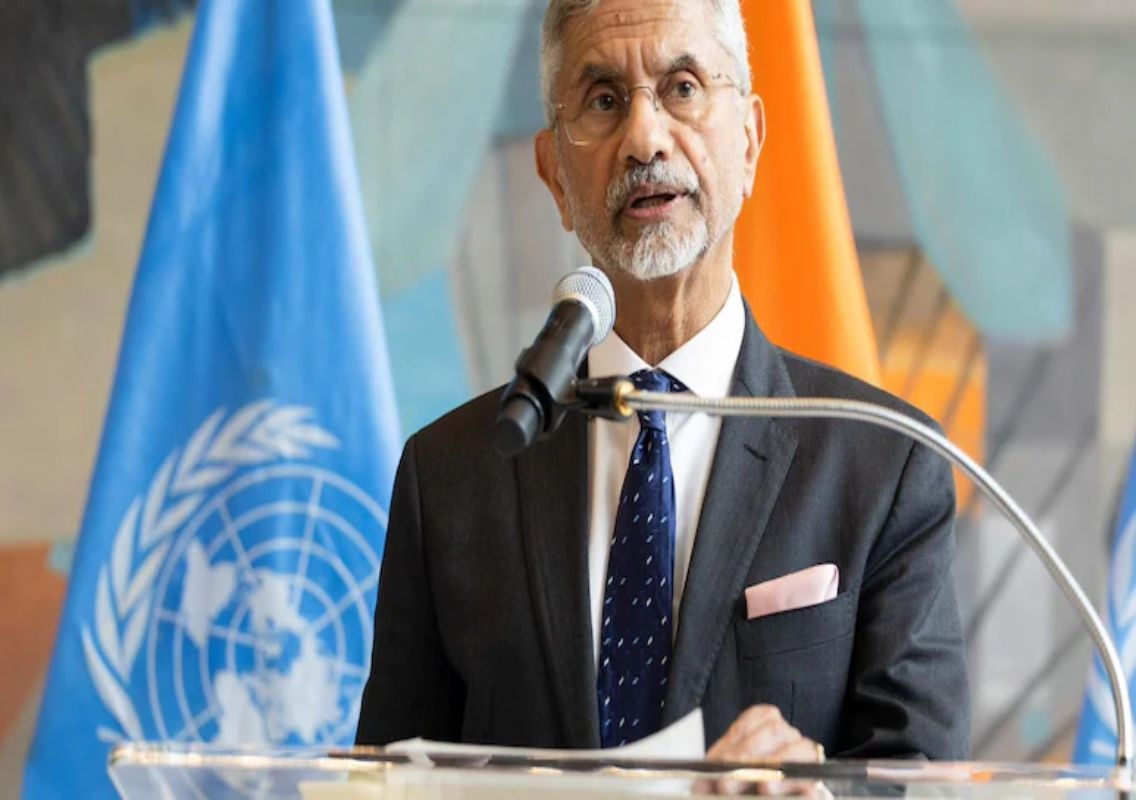


Manila: India’s External Affairs Minister S Jaishankar on Wednesday emphasised the need for fair market access, balanced trade and predictable supply chains during a bilateral meeting with Chinese Foreign Minister Wang Yi in Manila. The discussions took place on the sidelines of key regional forums, including the East Asia Summit and the ASEAN Regional Forum, amid ongoing efforts to stabilise India-China relations.
Jaishankar underlined that a sustainable and constructive relationship between the two countries must be rooted in mutual respect, mutual interest and mutual sensitivity. He noted that such an approach would not only benefit both nations but also contribute to a broader vision of a multipolar Asia and a balanced global order.
Focus on trade balance and market access
A major focus of the talks was the issue of economic engagement between the two countries. Jaishankar highlighted the importance of ensuring fair market access for Indian businesses operating in China, while also addressing the persistent trade imbalance between the two economies.
India has long expressed concerns over the widening trade deficit with China, with imports significantly outweighing exports. The minister stressed that correcting this imbalance is essential for building trust and strengthening bilateral economic ties.
He also called for more reliable and predictable supply chains, especially in the context of global disruptions in recent years. Stable supply chains, he said, are critical for sustaining economic growth and ensuring that both countries can benefit from deeper trade cooperation.
Border peace remains key priority
Jaishankar reiterated that peace and tranquillity along the Line of Actual Control remain the foundation for normal relations between India and China. He noted that since October 2024, both sides have made efforts to maintain stability in border areas through established mechanisms.
The minister emphasised that continued adherence to these mechanisms is essential to prevent tensions and build confidence. He also acknowledged recent steps taken by both sides to reduce friction and improve communication.
Signs of gradual normalisation
The meeting reflected a gradual improvement in ties following high-level engagements between Narendra Modi and Xi Jinping. Their interaction in Kazan in October 2024 marked a turning point, setting the stage for renewed dialogue and cooperation. This direction was further reinforced during their subsequent meeting in Tianjin.
Jaishankar welcomed recent confidence-building measures, including:
- Resumption of direct flights
- Easing of visa procedures
- Restart of the Kailash Mansarovar Yatra
- Revival of border trade
These steps, he said, indicate a willingness on both sides to move towards normalisation, although several challenges remain.
Call for deeper engagement and dialogue
Beyond trade and border issues, Jaishankar stressed the importance of enhancing people-to-people exchanges and institutional dialogue. He urged both countries to schedule regular bilateral discussions in line with shared priorities, which could help address outstanding concerns and build long-term cooperation.
The two ministers also reviewed regional and global developments, reflecting the broader strategic context in which India-China relations operate. Jaishankar expressed appreciation for China’s support of India’s leadership role in BRICS this year, highlighting areas of convergence despite existing differences.
Conclusion
The meeting between Jaishankar and Wang Yi underscores a cautious but steady effort to stabilise India-China relations. While progress has been made through recent confidence-building measures, key issues such as trade imbalance, market access and border stability continue to require sustained attention. As both nations navigate a complex geopolitical landscape, maintaining dialogue and mutual respect will be crucial in shaping the future of bilateral ties.