







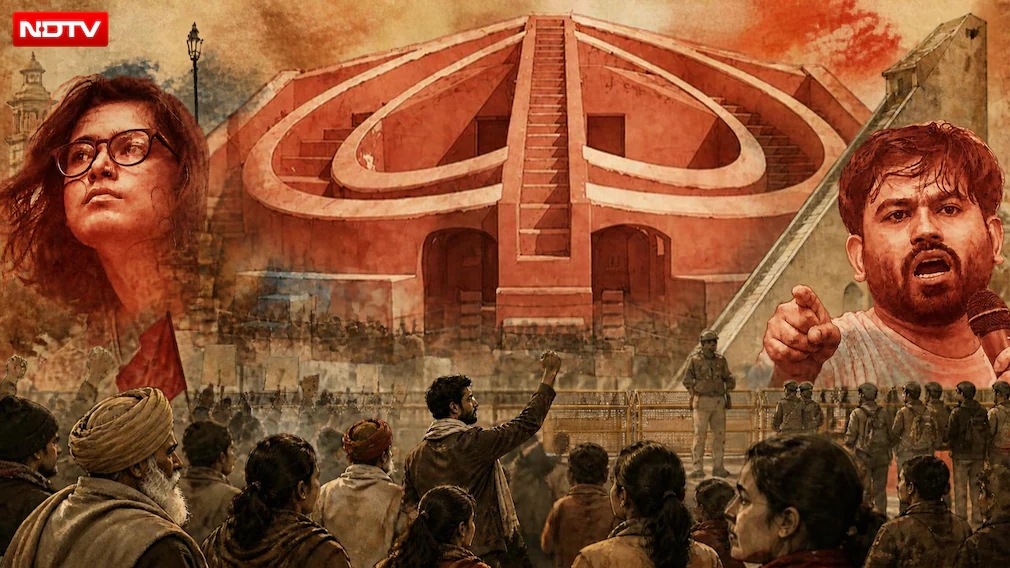


New Delhi: Jantar Mantar, the 18th-century astronomical observatory that has served as a prominent protest venue for decades, is facing renewed uncertainty over its future as a space for public demonstrations. Recent restrictions on protests organised by the Cockroach Janta Party (CJP) and the Supreme Court’s observations on alternative protest sites have revived questions about how the capital accommodates peaceful dissent.
Built in 1724 by Maharaja Sawai Jai Singh II, Jantar Mantar was designed to measure celestial movements and improve astronomical calculations. Today, however, the area adjoining the monument is better known for demonstrations on political, social and economic issues.
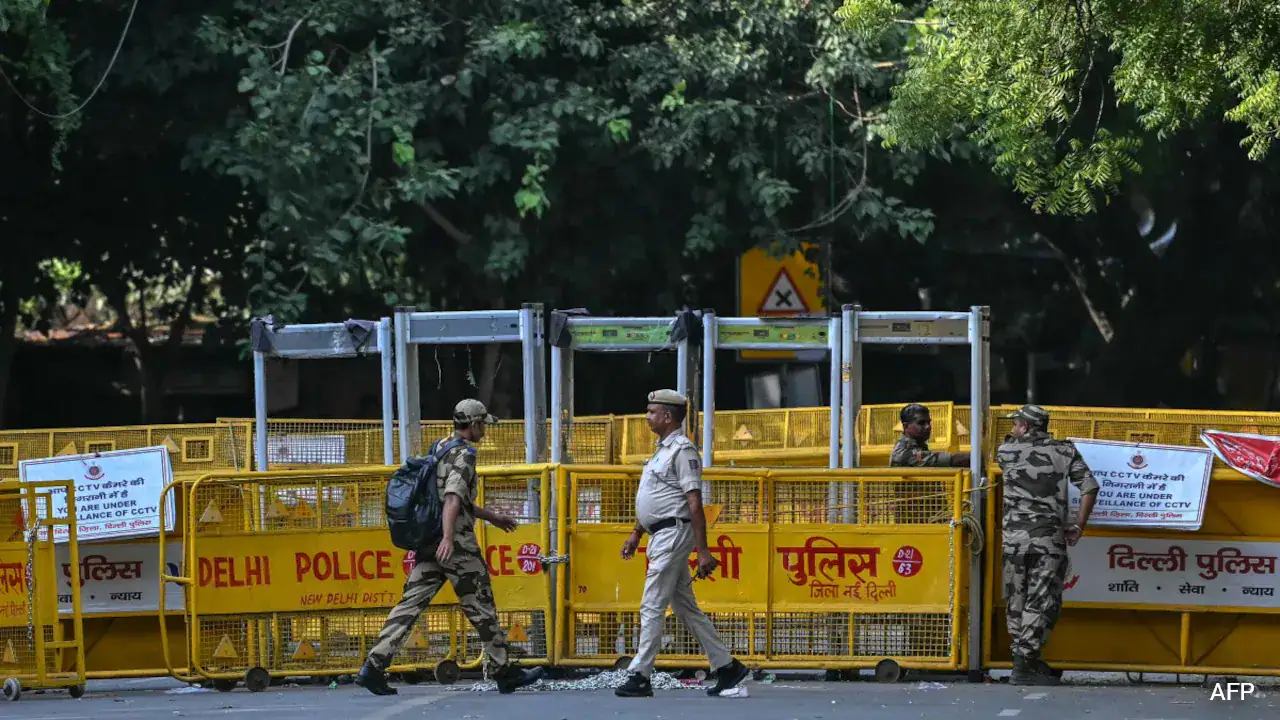
The latest controversy erupted after Delhi Police prevented protesters from reaching the designated protest area on October 10. The demonstrators intended to raise allegations of electoral irregularities and demand the resignation of Chief Election Commissioner Gyanesh Kumar.
A day earlier, the Supreme Court had stressed the need to provide basic amenities for people participating in peaceful and lawful protests. It also called for suitable alternative sites capable of accommodating the necessary infrastructure to be identified and designated.
The court has not ordered the closure of Jantar Mantar as a protest venue. Nevertheless, its observations have brought the site’s suitability, capacity and accessibility into sharper focus.
Supreme Court questions suitability of protest venues
The Supreme Court’s latest observations came while it was hearing petitions concerning restrictions on transport services ahead of the CJP’s planned demonstration.
The bench comprising Chief Justice of India Surya Kant and Justices Joymalya Bagchi and V Mohana emphasised that basic facilities should be available to those participating in peaceful and lawful protests.
“It is high time basic amenities were provided to those engaged in peaceful and lawful protest,” the court said in its order.
It added that suitable alternative locations capable of accommodating the required infrastructure needed to be identified and designated.
The observations reflect a longstanding challenge for Delhi: balancing the right to peaceful assembly with public safety, traffic management and the security requirements of the capital’s administrative district.
Jantar Mantar is located on Parliament Street, close to the seat of political power. That proximity has helped make it an important destination for groups seeking to draw the attention of the government and the media.
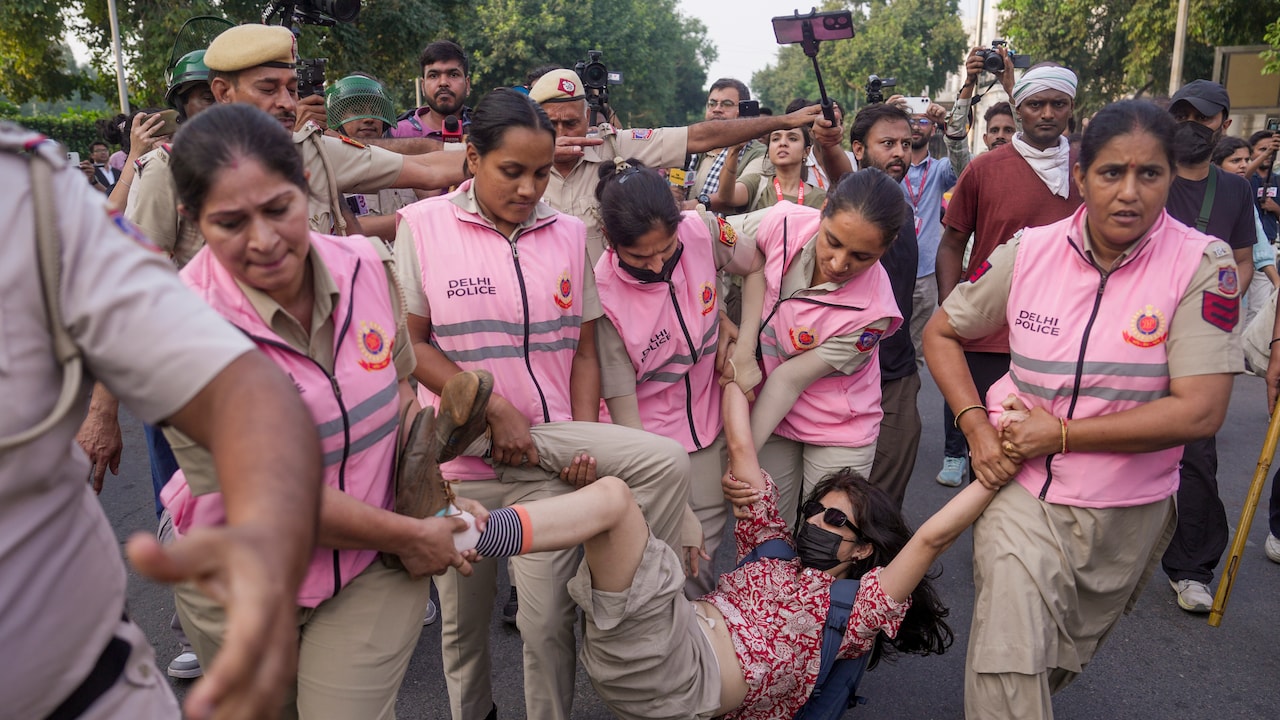
However, the designated protest area is relatively small. Police have cited a capacity of around 1,000 people, while larger demonstrations can create logistical difficulties involving crowd management, sanitation, medical assistance and access to nearby roads.
The court’s observations therefore raise a broader question about whether existing protest venues provide sufficient facilities and whether alternative locations can offer adequate space without making demonstrations less accessible or visible.
CJP protest triggers fresh confrontation
The Cockroach Janta Party’s proposed demonstration on October 10 brought the issue into focus.
CJP founder Abhijeet Dipke and two other prominent figures associated with the group, Saurav Das and Ashutosh Ranka, travelled from Mumbai to Delhi to lead the protest. The demonstration sought the resignation of Chief Election Commissioner Gyanesh Kumar over allegations relating to electoral rolls and the Election Commission’s functioning.
According to the account provided, Delhi Police entered the aircraft after it landed at Indira Gandhi International Airport and detained the three organisers before they could proceed to Jantar Mantar.
Thousands of people were also reportedly detained across the capital as the police moved to prevent the demonstration from taking place as planned. The detainees included political figures and former chief ministers, according to the source account.
Delhi Police had denied permission for the CJP gathering in a letter issued on Friday. The letter referred to the group’s earlier agitation during June and July, alleging that a gathering permitted for one day had continued for approximately a month.
The police also cited the limited capacity of Jantar Mantar, arguing that the location could safely accommodate only around 1,000 people at a time.
The restrictions have intensified the debate over how authorities interpret and enforce rules governing demonstrations. While police are responsible for managing public order, protest organisers have argued that access to recognised venues is important for exercising the right to peaceful assembly.
The CJP’s allegations concerning electoral irregularities remain allegations and have not, by themselves, established electoral wrongdoing.
From Boat Club lawns to Jantar Mantar Road
Jantar Mantar’s position as a protest venue is relatively recent compared with its 300-year history as an astronomical landmark.
For decades after Independence, major political rallies in Delhi were held at the Boat Club lawns near India Gate, within sight of North Block and South Block, which house important government ministries.
That arrangement changed after a major farmers’ mobilisation in 1988.
Mahendra Singh Tikait, then president of the Bharatiya Kisan Union, led a large gathering of farmers at the Boat Club lawns. Estimates cited in accounts of the protest put the number of participants at around five lakh.
The agitation continued for about a week and placed pressure on the government led by then Prime Minister Rajiv Gandhi. The farmers raised demands that included electricity bill waivers and higher sugarcane prices.
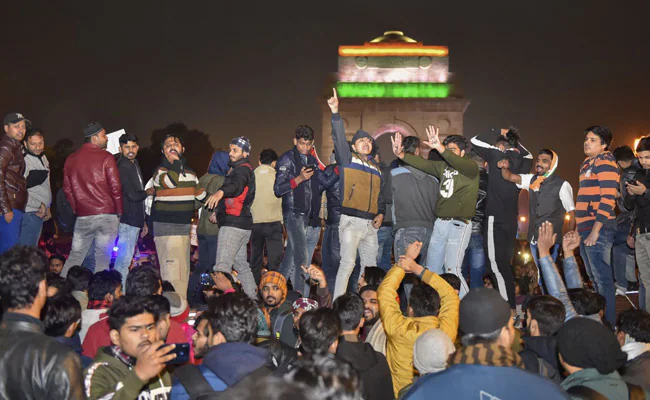
By 1993, demonstrations were no longer permitted on the Boat Club lawns. Some accounts have linked the decision to security concerns following the demolition of the Babri Masjid in 1992.
Protests subsequently moved to Jantar Mantar Road, around 2 km away, through administrative arrangements. Ramlila Maidan and grounds in Burari were used for larger gatherings.
The relocation changed the geography of public protest in the capital. Jantar Mantar became the designated space for smaller demonstrations, while larger rallies were directed towards venues with greater capacity.
A historic observatory with a modern political role
The observatory that lends its name and historical backdrop to the protest site was commissioned by Maharaja Sawai Jai Singh II in 1724, during the reign of Mughal emperor Muhammad Shah.
Jai Singh, the Rajput ruler of Amber, had a strong interest in astronomy and sought more precise methods to calculate celestial movements, calendars and auspicious dates.
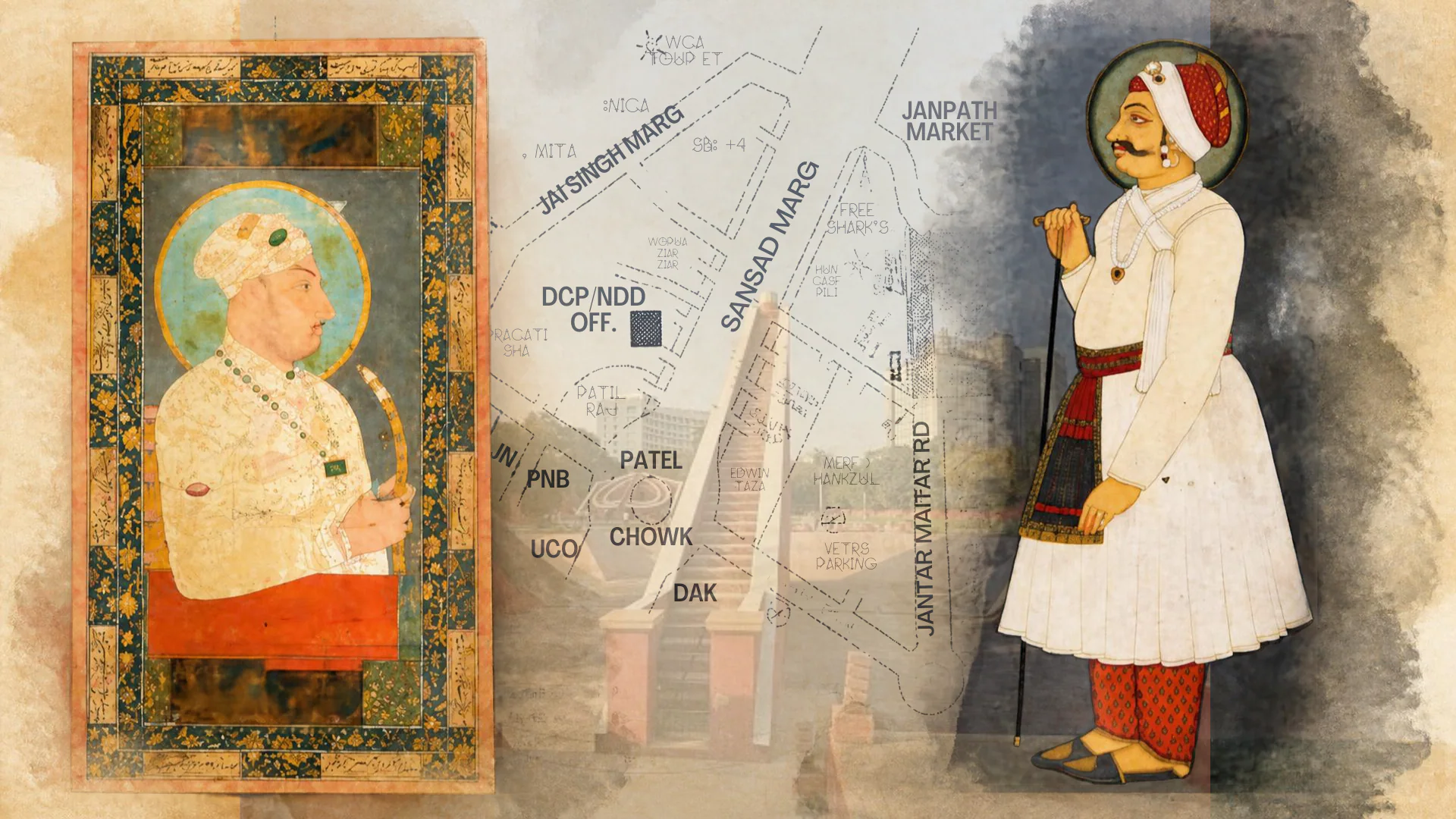
The giant instruments of brick and stone were developed partly because smaller brass instruments were considered inadequate for some astronomical calculations.
Conservation architect Anisha Shekhar Mukherji has written about the discussions between Jai Singh and Muhammad Shah that contributed to the observatory’s development. Historian Rana Safvi has also documented the site’s place in Delhi’s history.
At the time, the observatory stood outside the walled city of Shahjahanabad, now known as Old Delhi. The modern capital had not yet been built, and Delhi remained an important centre of Mughal power.
The name Jantar Mantar is commonly understood as a colloquial form of the Sanskrit words yantra, meaning instrument, and mantra, associated with calculation.
Delhi’s observatory was the first of five such complexes commissioned by Jai Singh. The others were established in Jaipur, Ujjain, Varanasi and Mathura, cities associated with his administrative responsibilities.
Their later histories diverged. The Mathura observatory disappeared by the mid-19th century, while Jaipur’s Jantar Mantar was designated a UNESCO World Heritage Site in 2010.
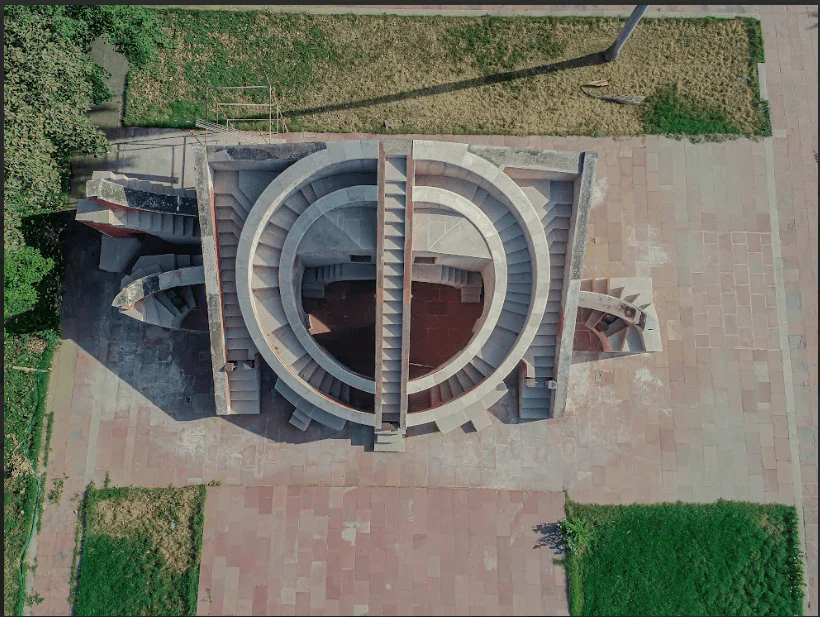
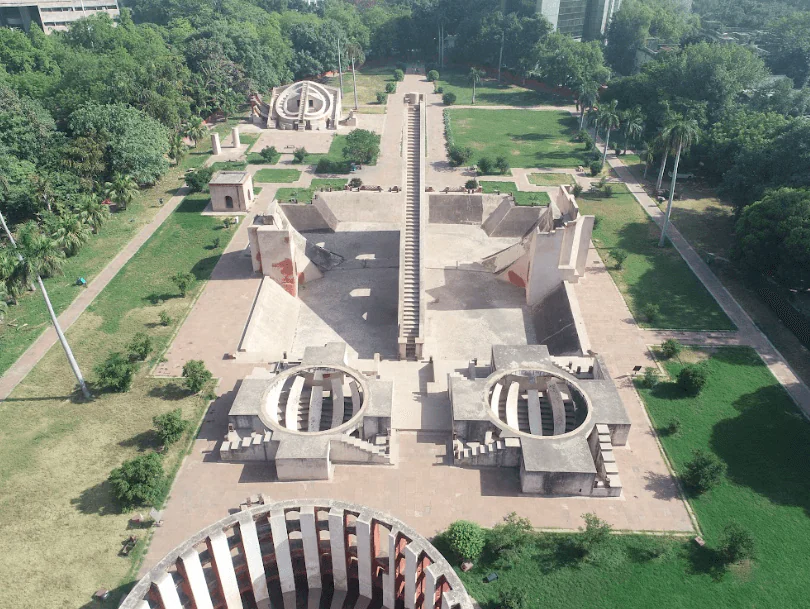
In Delhi, rapid urbanisation has altered the surroundings of the observatory and affected the conditions needed for precise astronomical observations. Yet the site has acquired another kind of significance through its association with public demonstrations.
‘Marketplace of grievances’
Jantar Mantar has hosted protests involving a wide range of political and social concerns.
Opposition parties have demonstrated against inflation and government decisions, while former military personnel have gathered to demand changes in pension arrangements. Activists and citizen groups have also used the site to seek new laws, oppose existing policies and demand accountability.
Time magazine once described the location as a “marketplace of grievances”, a phrase that captures its role as a gathering point for groups seeking public attention.
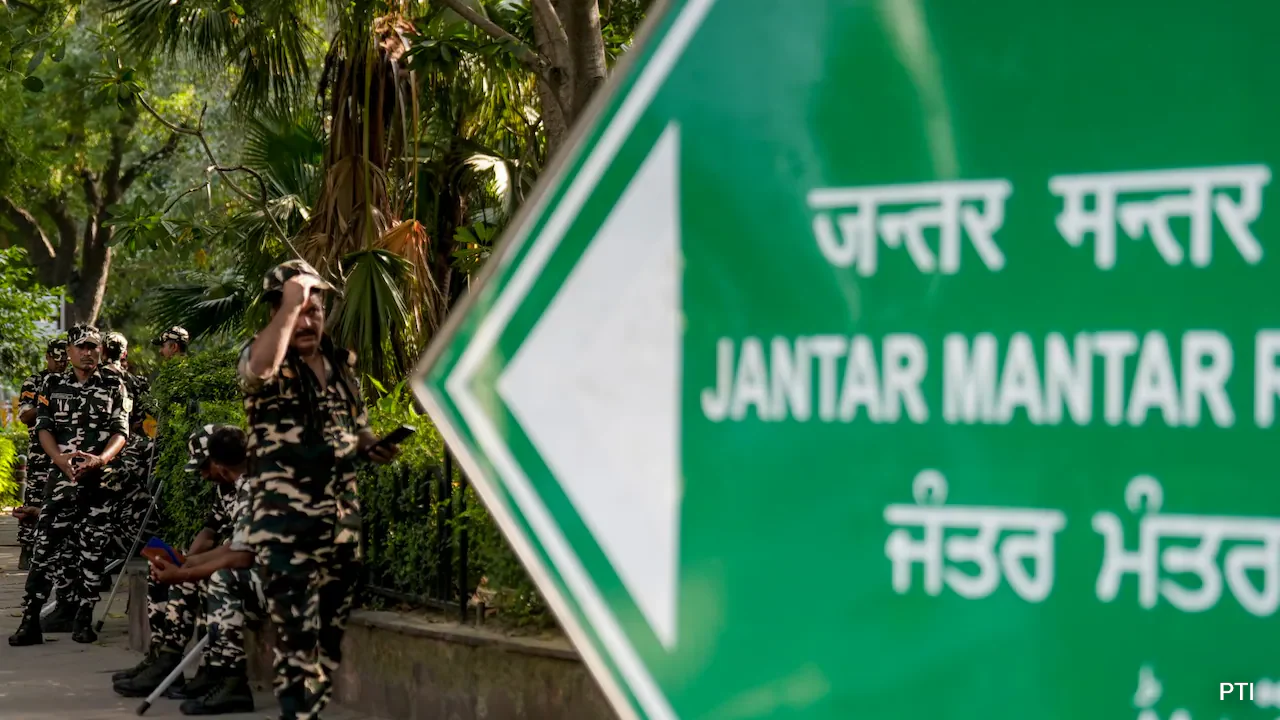
The site has hosted demonstrations by wrestlers protesting allegations of sexual harassment and by citizens raising concerns about air pollution in the National Capital Region.
In April 2011, veteran activist Anna Hazare began a hunger strike at Jantar Mantar demanding a Jan Lokpal law to establish an independent anti-corruption ombudsman. When his agitation resumed in August and attracted larger crowds, the protest moved to Ramlila Maidan.
The movement became an important moment in Indian politics. It helped create the political conditions in which the Aam Aadmi Party emerged, while Arvind Kejriwal, one of the prominent figures associated with the campaign, later became a major political leader.
Ramlila Maidan itself has a significant place in modern political history. On June 25, 1975, Jayaprakash Narayan addressed a rally there against Indira Gandhi, shortly before the Emergency was declared. During the gathering, he recited Ramdhari Singh Dinkar’s famous line, “Sinhasan khali karo ki janta aati hai” — a call for those in power to make way for the people.
The history of both locations illustrates how public spaces can become closely associated with political movements and demands for accountability.
Farmers’ protest highlighted limits of the site
Jantar Mantar has also witnessed demonstrations whose methods attracted national attention.
In March 2017, more than 80 farmers from Tamil Nadu began a protest that continued for 41 days. They sought drought relief and a loan waiver, using highly visible forms of demonstration to draw attention to the agrarian distress they described.
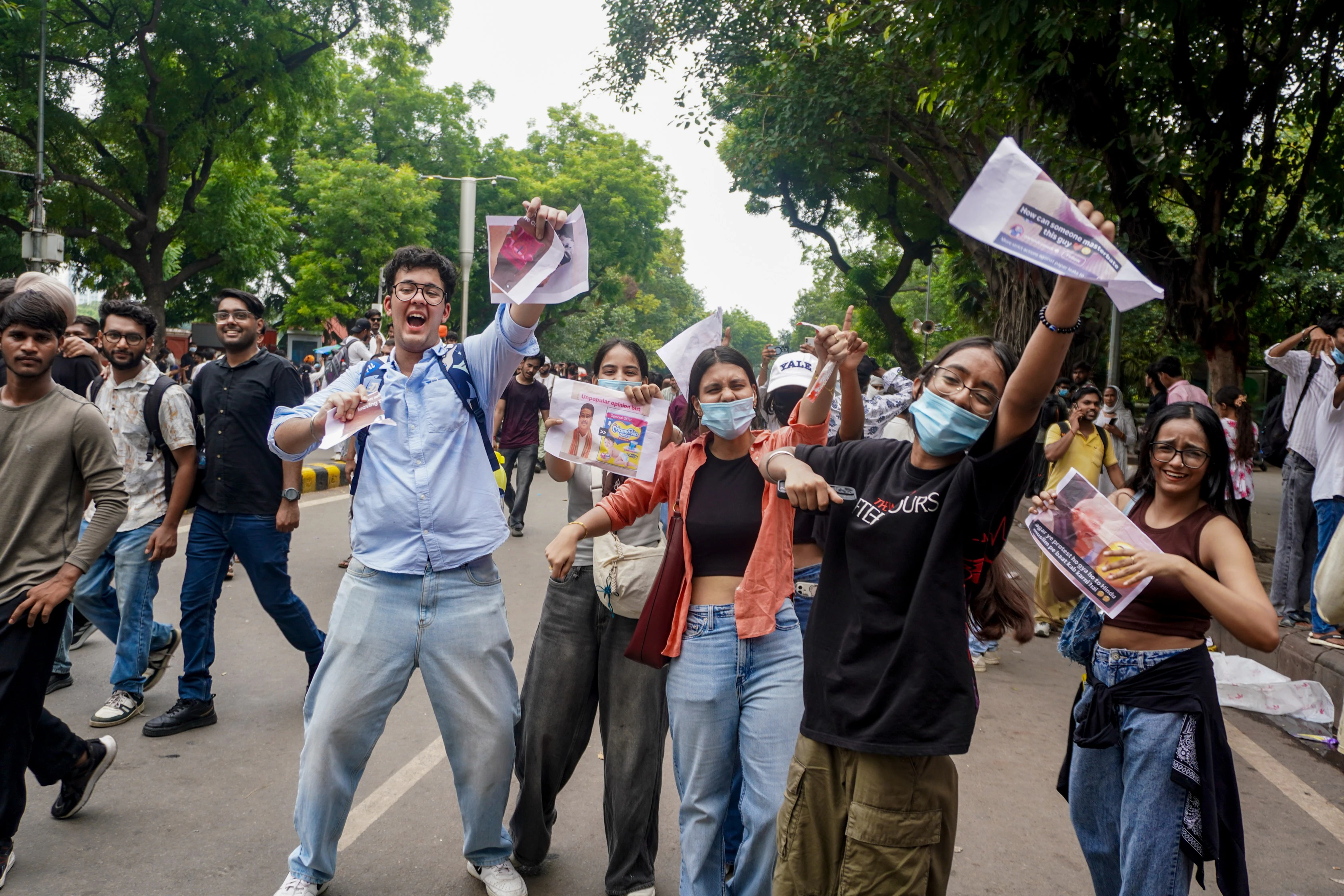
Images of protesters with half-shaved moustaches, holding mice and snakes in their mouths, staging mock funerals and displaying skulls they said belonged to farmers who had died by suicide became widely circulated.
The demonstration illustrated how a relatively small site could become a national stage for a protest when its participants attracted sustained media coverage.
Six years later, the group reportedly sought permission to demonstrate at Jantar Mantar again but was refused.
Delhi Police has increasingly relied on standing orders governing demonstrations, including restrictions on the hours during which protests can be held and the duration of continuous programmes. The guidelines cited in the source account limit protests to between 10 am and 5 pm and generally restrict a continuous programme to one day.
Such restrictions are intended to regulate the use of public space, but they have also raised questions about the practical ability of protesters to sustain long-running demonstrations.
NGT ban and Supreme Court intervention
The question of whether Jantar Mantar was suitable for protests had reached the courts well before the latest CJP confrontation.
In October 2017, the National Green Tribunal (NGT) ordered a ban on protests along Jantar Mantar Road after hearing a petition from residents who complained that demonstrations were contributing to noise pollution and the accumulation of waste.
The tribunal directed that protesters be shifted to Ramlila Maidan.
The ban remained in place for about nine months. On July 23, 2018, the Supreme Court set it aside, holding that peaceful demonstrations could be regulated but should not be prohibited altogether.
The judgment established an important distinction between managing protests and eliminating the opportunity to hold them.
Following the intervention, police regulations limited the permitted capacity at Jantar Mantar to around 1,000 people, down from an earlier limit of 5,000. Ramlila Maidan was designated for gatherings of up to 50,000 people, while Burari was earmarked for larger crowds.
Organisers were also required to seek permission in advance, generally at least 10 days before a planned gathering.
The latest proceedings have reopened the question of whether Jantar Mantar should continue as the ordinary designated venue for public protests and demonstrations.
In a separate petition heard on August 3, the Supreme Court sought responses from the authorities, including the Centre, the Delhi government and the police, on a plea seeking an end to the site’s use as the default protest venue.
Chief Justice Surya Kant reportedly highlighted concerns about entry and exit arrangements and access to medical essentials, asking the Solicitor General to obtain instructions from the authorities.
The proceedings have not resulted in a final order closing the site. They nevertheless indicate that the practical suitability of the venue is under judicial consideration.
CJP says protesters must retain access
The CJP responded to the possibility of replacing Jantar Mantar with alternative venues by defending the site’s role in peaceful political mobilisation.
On August 7, the group’s chief spokesperson, Saurav Das, wrote on X: “HANDS OFF our Jantar Mantar!”
He also questioned whether the authorities would designate India Gate as a place where citizens could exercise their fundamental right to peaceful protest.
The statement reflected the group’s concern that moving demonstrations away from central Delhi could reduce their visibility and make it more difficult to draw the attention of government institutions.
The CJP emerged as a satirical online movement before developing into a pressure group. Its recent agitation has brought it into conflict with authorities over protest permissions and electoral concerns.
The October 10 restrictions, including the detention of its organisers before they could reach Jantar Mantar, have added a new dimension to the dispute.
The group and Opposition leaders have indicated that they intend to continue seeking access to the site. A call circulated among supporters urged people to gather wherever they could, declaring: “Let the whole country be Jantar Mantar.”
What the future holds for Jantar Mantar
Jantar Mantar’s future as a protest venue will depend on how the courts and authorities address the competing requirements of public order, safety, accessibility and peaceful assembly.
Alternative sites could offer more space and better facilities for large gatherings. However, their effectiveness will depend on their accessibility, public transport connections and ability to provide protesters with a meaningful opportunity to communicate their demands.
Jantar Mantar’s location near Parliament Street has given it a distinctive place in the political life of the capital. Replacing it with venues farther from the centre could change the visibility and character of public demonstrations, even if those sites offer better logistical arrangements.
The Supreme Court’s observations have not settled that debate. Instead, they have brought the adequacy of Delhi’s protest infrastructure back into focus.
For nearly three decades, Jantar Mantar Road has served as a recognised space for demonstrations after protests were moved away from the Boat Club lawns. Its subsequent history — from the Anna Hazare movement to the wrestlers’ agitation and the recent CJP protests — reflects the changing relationship between public dissent and the administration of public spaces.
The observatory was built to help people understand the movement of celestial bodies and the passage of time. Its adjoining road has acquired a different role in modern India: providing a place where citizens can make their grievances visible.
Whether that role continues at Jantar Mantar, or is transferred to other designated sites, remains an open question as the legal proceedings and debate over protest restrictions continue.