







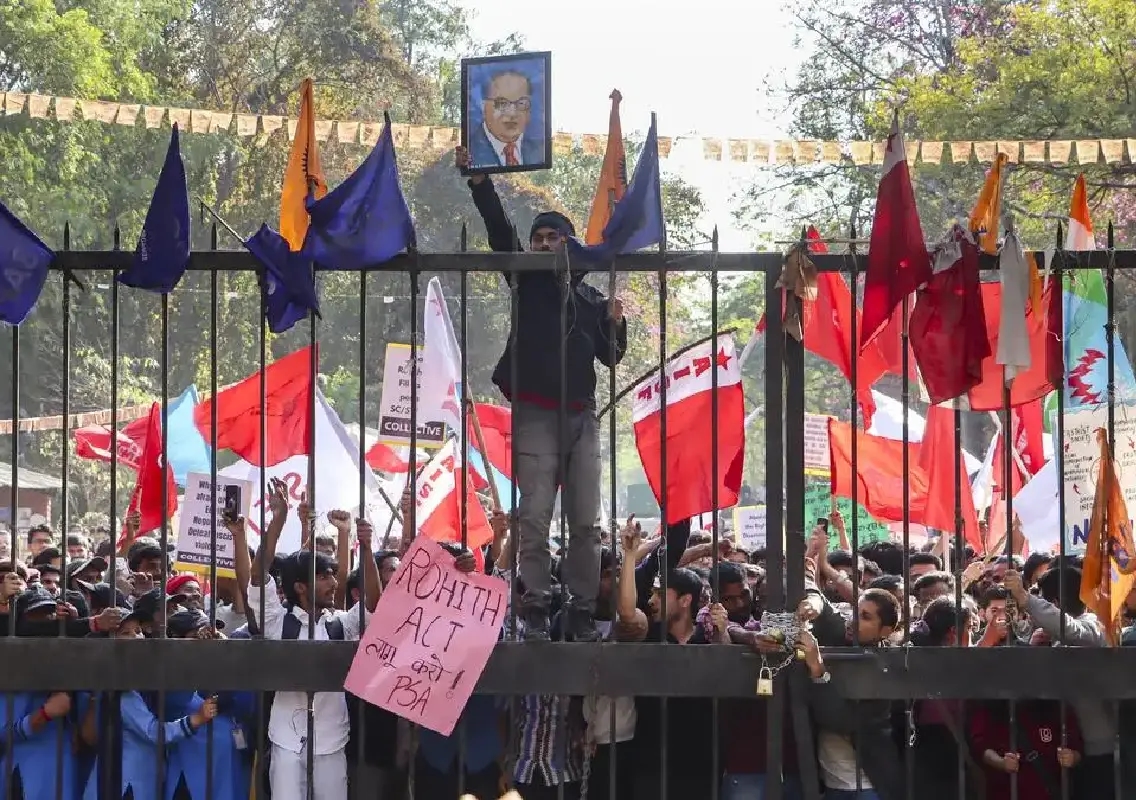


Protests at Jawaharlal Nehru University over the installation of a Facial Recognition Technology (FRT) system at its central library escalated into a major confrontation, resulting in the rustication of student leaders and the arrest of 14 students.
Protest against surveillance system
The controversy began in August 2025 when students objected to the installation of a facial recognition system at the B.R. Ambedkar Central Library. Members of the JNU Students’ Union raised concerns about transparency, decision-making processes, and privacy implications.
Despite initial assurances from the administration to hold consultations, students alleged that the system was installed without dialogue, triggering protests and sit-ins.
Arrests during ‘Long March’
Tensions intensified on February 26 during a ‘Long March’ to the Ministry of Education, where students demanded the resignation of the Vice Chancellor and implementation of UGC regulations along with the Rohith Act.
The protest was met with heavy police deployment, including barricading and forceful action. Fourteen students were detained and later arrested by the Delhi Police.
They were sent to Tihar Jail and spent three days in custody before being released on bail.
Allegations of crackdown on dissent
Student leaders described the action as a broader crackdown on dissent, linking it to nationwide protests over education policies and social justice concerns.
They also alleged mistreatment during detention and criticised the use of force against what they termed a peaceful march.
Wider debate on campus governance
The incident has sparked renewed debate on surveillance, student rights, and administrative accountability in universities. Critics argue that such measures risk curbing academic freedom, while authorities maintain that security and regulation are necessary.
The developments at JNU highlight ongoing tensions between student activism and institutional governance, raising questions about the balance between dissent and discipline in higher education spaces.