







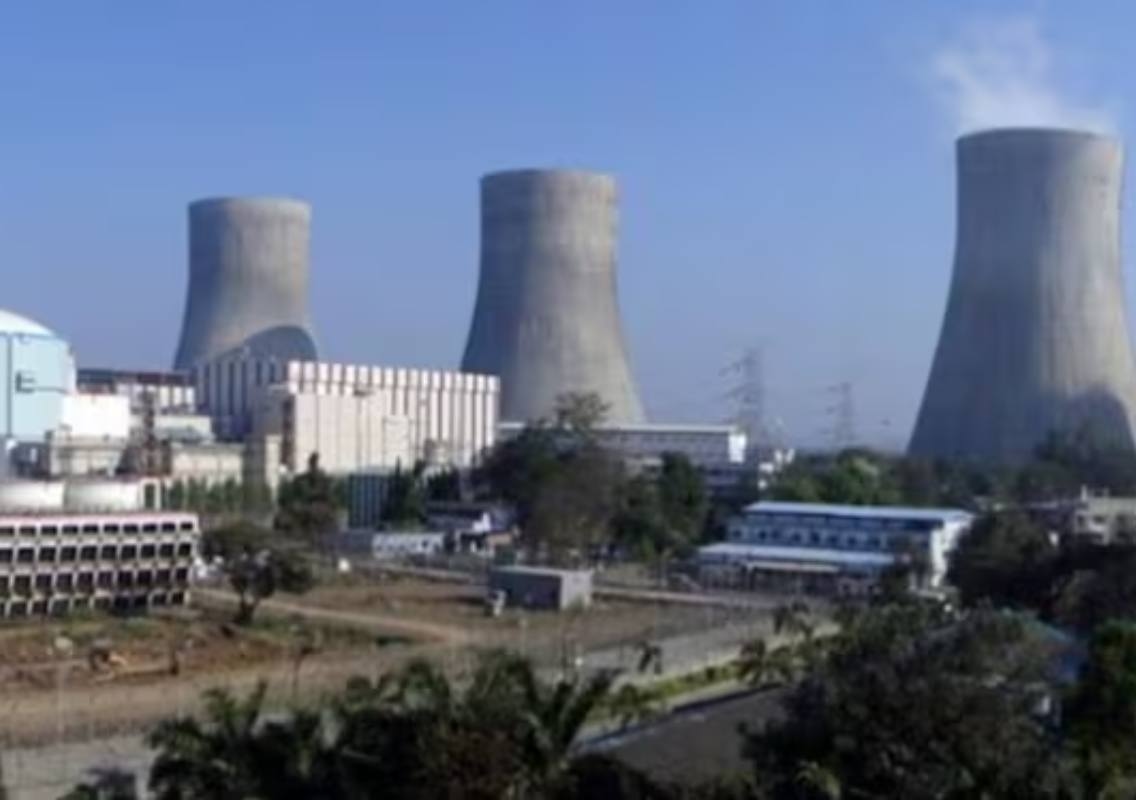


Kalpakkam: India’s 500 MW Prototype Fast Breeder Reactor (PFBR) at Kalpakkam in Tamil Nadu is expected to be fully commissioned by March 2027, according to information provided by the Department of Atomic Energy in response to a parliamentary question. The project is being commissioned by Bharatiya Nabhikiya Vidyut Nigam Limited (BHAVINI).
The PFBR is a major component of India’s three-stage nuclear power programme and is designed to produce more usable nuclear fuel than it consumes. Its development is linked to the country’s long-term plan to make greater use of India’s substantial thorium resources.
The latest government data shows that the PFBR is among 10 nuclear reactors currently under construction or commissioning in India, forming part of a wider expansion of the country’s nuclear power capacity. The government has also approved additional projects in Karnataka, Haryana, Rajasthan and Tamil Nadu.
PFBR expected to be commissioned by March 2027
BHAVINI is currently commissioning the 500 MW PFBR at Kalpakkam. A July 2026 parliamentary reply from the Department of Atomic Energy put the project’s estimated completion cost at Rs 8,181 crore and said it was expected to be fully commissioned by March 2027.
The PFBR is different from conventional nuclear power reactors because of its fast breeder design. A breeder reactor is intended to generate additional fissile material while producing electricity, allowing the fuel cycle to be extended.
For India, the technology is particularly important because the PFBR forms part of the second stage of the country’s three-stage nuclear programme. The broader programme was conceived to eventually enable more extensive utilisation of India’s thorium resources.
The Kalpakkam project is therefore not simply another addition to India’s electricity-generating capacity. It is intended to serve as a technological bridge towards the later stages of the country’s nuclear fuel strategy.
In March 2026, the Department of Atomic Energy said BHAVINI was commissioning the PFBR and that the government had approved pre-project activities for two 500 MW fast breeder reactor units at Kalpakkam. Financial sanction for those future units is to be considered after the PFBR achieves first criticality.
RAPP-8 moves towards operation in Rajasthan
The PFBR is being developed alongside a number of conventional nuclear reactors at different stages of construction and commissioning.
At Rawatbhata in Rajasthan, the 700 MW Rajasthan Atomic Power Project Unit-8 (RAPP-8) is in an advanced stage of commissioning. NPCIL said in September that initial fuel loading had commenced, marking a significant step towards operation.
RAPP-7, the companion 700 MW unit, has already commenced commercial operation. According to government data, it began commercial operation on April 15, 2026. The combined approved cost for RAPP-7 and RAPP-8 is Rs 22,924 crore.
The two Rajasthan units are indigenous 700 MW Pressurised Heavy Water Reactors (PHWRs), a reactor design developed for India’s nuclear power programme.
Kudankulam adds four more 1,000 MW units
Tamil Nadu is also at the centre of the expansion through the Kudankulam Nuclear Power Project.
Four additional 1,000 MW units are being constructed at Kudankulam in cooperation with Russia. Units 3 and 4 are scheduled for completion in June 2027 and June 2028, respectively.
Units 5 and 6 have later timelines, with Unit 5 expected in June 2029 and Unit 6 in March 2030. The approved project costs are Rs 68,893 crore for Units 3 and 4 and Rs 69,437 crore for Units 5 and 6.
NPCIL’s June 2026 status data put Units 3 and 4 at 82.65 per cent physical progress and Units 5 and 6 at 45 per cent.
The expansion will add 4,000 MW of generation capacity once all four units are commissioned.
Karnataka gets two new 700 MW reactors
Karnataka is also part of the next wave of India’s nuclear expansion through Kaiga Units 5 and 6.
The two reactors, each with a capacity of 700 MW, are being built at the Kaiga site in the state. NPCIL commenced construction with the first pour of concrete on March 1, 2026, following the required statutory and regulatory clearances.
Government data currently places their expected commissioning at June 2031 and June 2032.
Kaiga already operates four 220 MW PHWR units. The addition of Units 5 and 6 will significantly increase the site’s nuclear generation capacity.
The two units are part of the government’s fleet-mode programme for 10 indigenous 700 MW PHWRs. The wider programme covers projects at Kaiga in Karnataka, Gorakhpur in Haryana, Chutka in Madhya Pradesh and Mahi Banswara in Rajasthan.
Haryana and other projects expand the pipeline
Gorakhpur in Haryana is another major location in the expansion programme. Units 1 and 2 are 700 MW PHWRs currently under construction.
The government has also listed Gorakhpur Units 3 and 4 among projects undergoing pre-project activities. Similar preparatory work is under way for Chutka Units 1 and 2 in Madhya Pradesh and four units at Mahi Banswara in Rajasthan.
This pipeline forms part of India’s broader effort to expand nuclear generation using domestically developed PHWR technology while continuing work on advanced reactor systems such as the PFBR.
As of July 2026, the Department of Atomic Energy said there were 10 reactors under construction or commissioning, with a combined capacity of 8,000 MW. The list included RAPP-8, four Kudankulam units, the 500 MW PFBR, Kaiga Units 5 and 6 and Gorakhpur Units 1 and 2.
India’s existing nuclear network
India’s nuclear power system already includes operating reactors across several states.
NPCIL’s operating fleet includes plants at Tarapur in Maharashtra, Rawatbhata in Rajasthan, Kalpakkam in Tamil Nadu, Narora in Uttar Pradesh, Kakrapar in Gujarat, Kaiga in Karnataka and Kudankulam in Tamil Nadu. The fleet includes different reactor technologies and capacities.
At Tarapur, Units 1 and 2 have capacities of 160 MW each, while Units 3 and 4 have capacities of 540 MW each. Rawatbhata has a mix of older 200 MW and 220 MW units along with the newer 700 MW RAPP-7.
Kalpakkam’s existing Madras Atomic Power Station has two 220 MW units, while Kudankulam Units 1 and 2 each have a capacity of 1,000 MW.
Kakrapar operates two 220 MW units and two 700 MW units, while Kaiga’s existing four reactors each have a capacity of 220 MW.
The expansion under way is therefore adding both newer indigenous PHWR capacity and larger reactors, alongside the PFBR’s fast breeder technology.
PFBR’s role in India’s three-stage nuclear plan
The significance of the Kalpakkam reactor extends beyond its 500 MW generating capacity.
India’s three-stage nuclear programme envisages using different reactor technologies and fuel cycles to make more effective use of the country’s available nuclear resources. The fast breeder stage is important because it is intended to generate additional fissile material that can support subsequent stages.
The PFBR is consequently a key test of India’s ability to operate commercial-scale fast breeder technology. If commissioned as currently scheduled, the March 2027 milestone would mark an important stage in the country’s long-running nuclear development programme.
At the same time, the government is preparing a broader pipeline of reactors, including the proposed future fast breeder units at Kalpakkam and multiple 700 MW PHWRs across different states.