







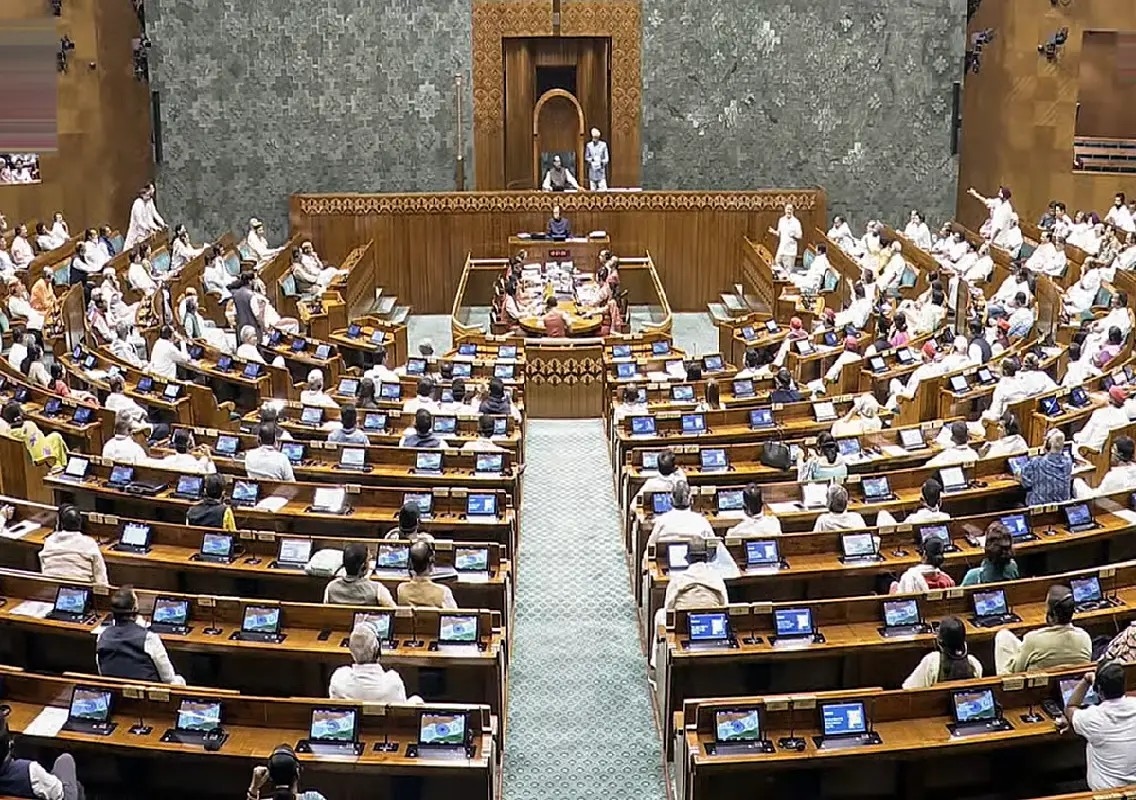


New Delhi: The Lok Sabha on Wednesday passed the Public Examinations (Prevention of Unfair Means) Amendment Bill, 2026 by voice vote, approving stricter provisions to curb examination malpractices, including paper leaks. The amended legislation proposes imprisonment of up to 10 years and fines of up to Rs 50 lakh for individuals convicted of leaking examination papers, while organised paper leak syndicates could face penalties of up to Rs 10 crore.
The Bill, introduced by Union Minister Jitendra Singh on July 27, now awaits consideration and passage in the Rajya Sabha before it can become law.
Stricter penalties and fast-track courts
The amendment seeks to strengthen the existing anti-paper leak framework by introducing tougher punishments and expediting the judicial process.
Key provisions of the Bill include:
- Up to 10 years’ imprisonment and a Rs 50 lakh fine for those found guilty of leaking public examination papers.
- Penalties of up to Rs 10 crore for organised paper leak syndicates.
- Establishment of fast-track courts in every state to exclusively hear paper leak cases.
- Mandatory completion of investigations within two months.
The government said the amendments are aimed at improving transparency, fairness and credibility in public examinations.
Education Minister welcomes legislation
Welcoming the passage of the Bill, Education Minister Pralhad Joshi said the legislation would provide a stronger legal framework to tackle examination fraud.
In a post on X, Joshi said the amended law introduces stricter punishments, faster investigations and specialised courts to dismantle organised paper leak networks and restore confidence in the examination system.
Heated debate in Lok Sabha
The Bill was passed amid repeated sloganeering by Opposition members following a heated exchange over recent police action against student protesters.
After the House was adjourned, Leader of Opposition Rahul Gandhi said he would address a press conference on issues he claimed he was not allowed to raise during the proceedings.
Rahul Gandhi, government clash over protest
During the debate, Rahul Gandhi alleged that Union Home Minister Amit Shah had authorised the use of force against students during protests held by the Cockroach Janta Party (CJP) at Delhi’s Jantar Mantar.
The remarks drew strong protests from Treasury bench members, with Parliamentary Affairs Minister Kiren Rijiju demanding evidence to support the allegations.
Responding on behalf of the government, Union Minister Jitendra Singh rejected the allegations as factually incorrect.
He maintained that no bullets had been fired during the protests and clarified that only tear gas was used. Singh also stated that any order to open fire can only be issued by a magistrate, not by the police.
Background to the amendments
The Bill comes in the aftermath of widespread protests over the alleged NEET paper leak, which triggered a 36-day nationwide agitation led by the Cockroach Janta Party beginning on June 20 at Delhi’s Jantar Mantar.
The protests intensified after activist Sonam Wangchuk joined an indefinite fast on June 28 and reached a flashpoint on July 20, when police stopped demonstrators marching towards Parliament.
The agitation concluded on July 25 after the Centre accepted several key demands, including the resignation of former Education Minister Dharmendra Pradhan, compensation for families of alleged NEET paper leak-linked suicide victims and the withdrawal of FIRs filed against protesters.
Awaiting Rajya Sabha approval
With the Lok Sabha approving the amendments, the legislation will now be taken up in the Rajya Sabha.
If passed by the Upper House and subsequently receiving presidential assent, the amended law will introduce significantly tougher legal consequences for examination-related fraud and establish a faster mechanism for prosecuting paper leak cases across the country.