







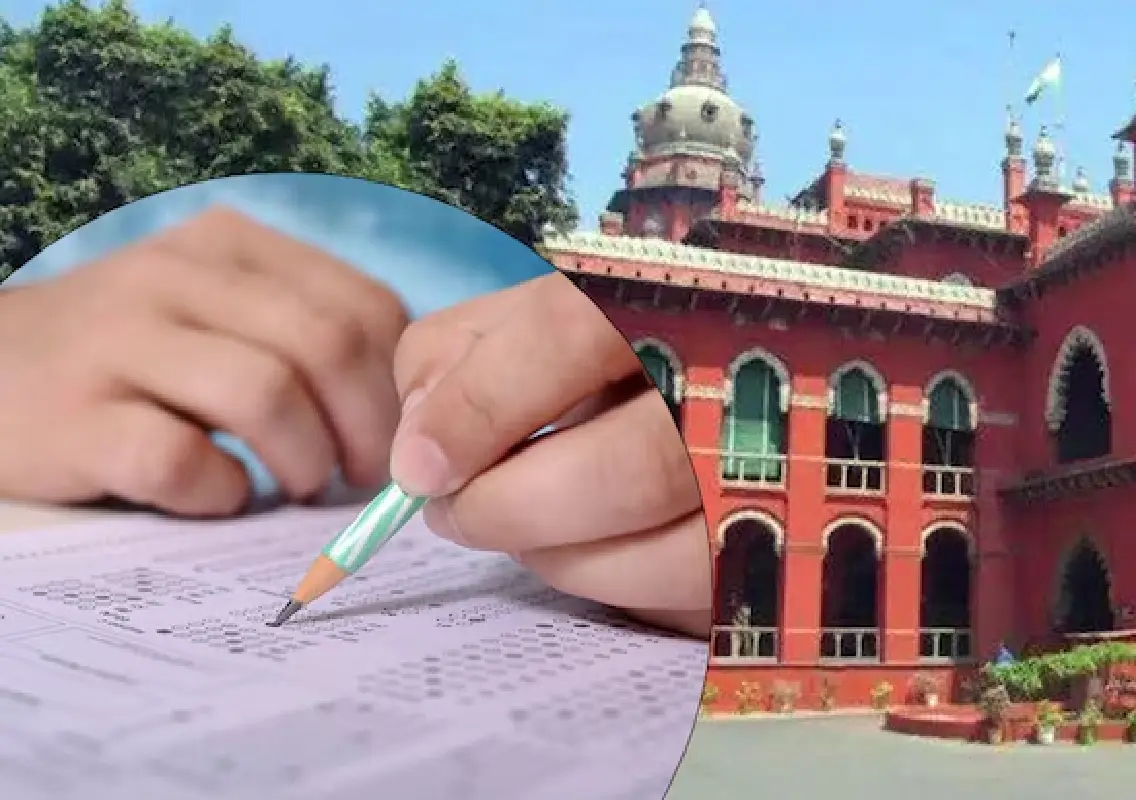


The Madras High Court has expressed concern over the increasing pressure placed on students to pursue only medical and engineering careers, warning that children are being pushed into an unhealthy academic “rat race”.
Justice Bharatha Chakravarthy observed that education is increasingly being treated merely as a pathway to securing admission in prestigious courses such as medicine or engineering.
Court questions narrow approach to education
During the hearing, the judge noted that many parents are encouraging their children to choose easier subjects in school, allowing them to focus primarily on a limited set of subjects that are required for competitive entrance exams.
According to the court, this trend is particularly visible among students preparing for the National Eligibility cum Entrance Test (NEET), where students often concentrate only on Physics, Chemistry and Biology to maximise their chances of clearing the exam.
Justice Chakravarthy remarked that this approach reflects a broader mindset in which education is valued mainly for securing admission to professional courses rather than for holistic learning and intellectual development.
Concern over academic pressure on children
The court observed that excessive academic pressure could affect the mental well-being and overall development of students. By limiting learning to only a few exam-focused subjects, students may miss opportunities to explore other areas of knowledge and develop diverse skills.
The judge also highlighted that children should not be forced into predetermined career paths solely based on societal expectations or parental ambitions.
Need for balanced education
The High Court emphasised that education should promote critical thinking, creativity, and broad-based knowledge, rather than serving only as preparation for entrance examinations.
Experts have long argued that the intense competition surrounding medical and engineering admissions in India has created significant stress among students, sometimes leading to mental health challenges and burnout.
Encouraging diverse career choices
The court’s remarks have renewed discussions about the need to encourage diverse career paths and recognise talents beyond traditional professional streams.
Educationists believe that students should be allowed to explore different disciplines—including arts, humanities, sciences, and vocational fields—so they can choose careers aligned with their interests and abilities.
The High Court’s observations serve as a reminder that the purpose of education should be to nurture well-rounded individuals, rather than forcing children into a narrow race for a limited number of professional seats.