







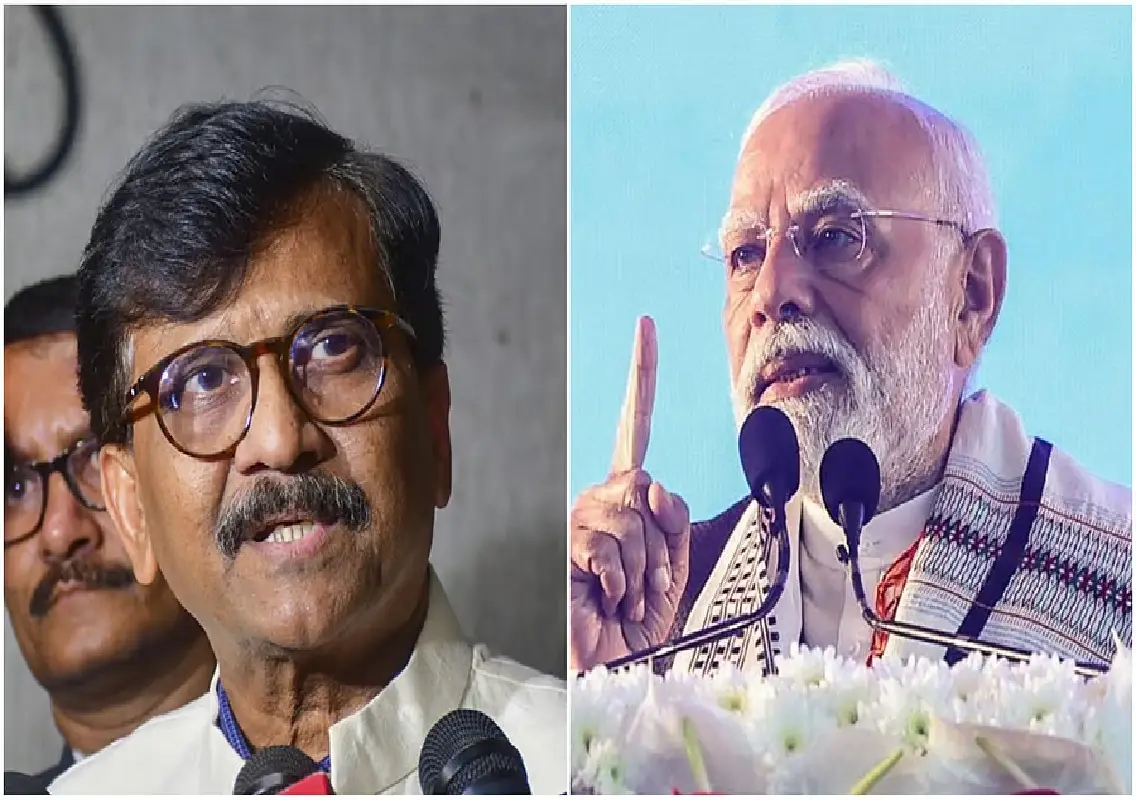


Mumbai: The Shiv Sena (UBT) has criticised the Centre’s foreign policy following the recent two-week ceasefire between the United States-Israel coalition and Iran, alleging that India failed to play a meaningful role in de-escalating the conflict.
Senior leader and Rajya Sabha MP Sanjay Raut launched a sharp attack on the Union government, claiming that Pakistan had received global recognition for brokering temporary peace in West Asia.
Raut questions India’s global standing
Raut said that Pakistan’s involvement in facilitating the ceasefire had sent a “message of peace” globally, while India, despite projecting itself as a major power, did not receive similar acknowledgment.
He took a dig at the government’s “Vishwaguru” narrative, alleging that India had no visible role in resolving the conflict. He also criticised the leadership for focusing on domestic political campaigns during a time of international crisis.
Criticism of Prime Minister and EAM
Raut directly targeted Prime Minister Narendra Modi and External Affairs Minister S. Jaishankar, terming the situation a “setback” for India’s foreign policy.
He argued that it was “embarrassing” for the country that Pakistan was being credited for stopping the conflict, while India remained on the sidelines.
Remarks on global conflict and Iran’s stance
Referring to the broader conflict, Raut said that Iran had demonstrated resilience and refusal to bow down despite facing military pressure from the United States and Israel.
He added that both Iran and Israel had suffered losses, but global perceptions had shifted during the course of the conflict.
Political attack intensifies
The Shiv Sena (UBT) leader also linked the issue to domestic politics, criticising the ruling party’s campaign rhetoric in various states. He questioned past statements about taking strong action against Pakistan, contrasting them with the current diplomatic developments.
Raut further stated that a proposed peace meeting in Islamabad highlighted Pakistan’s emerging role in the situation, which he described as a matter of concern for India.
Conclusion
The remarks reflect intensifying political criticism over India’s foreign policy approach amid evolving geopolitical developments in West Asia. While the ceasefire between the United States, Israel and Iran offers a temporary respite, it has also triggered a domestic political debate on India’s diplomatic influence and global positioning.