







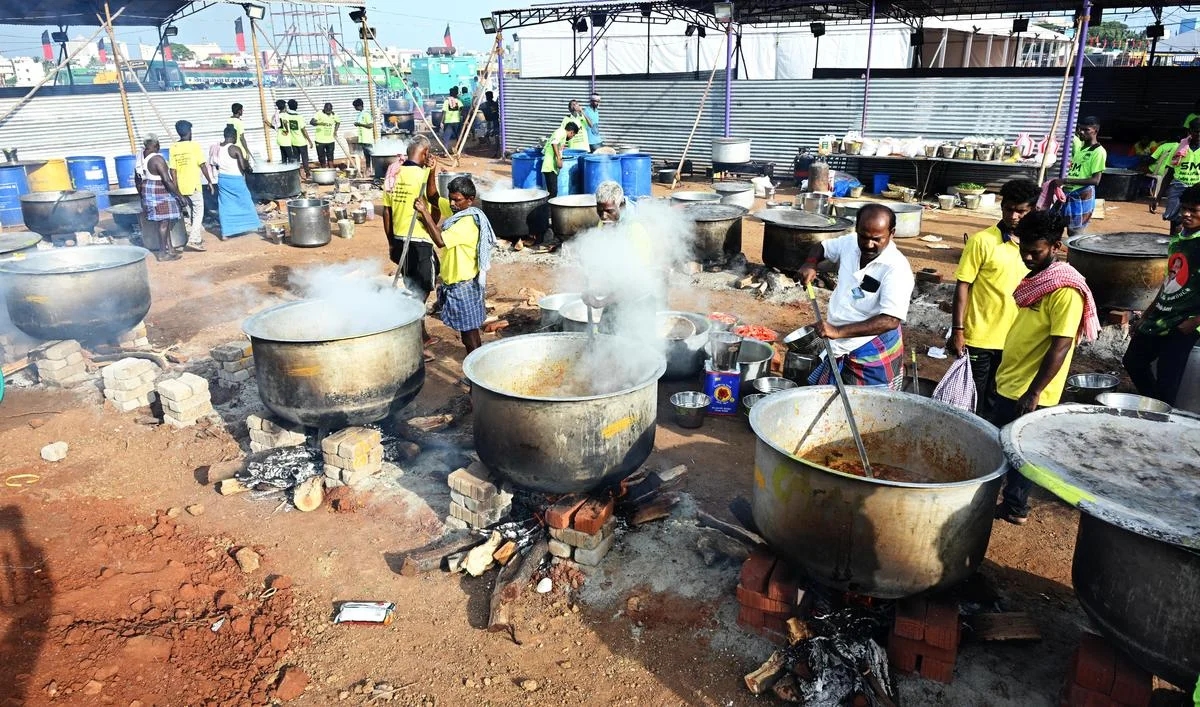


In the sleepy square of Manapatty, a village nestled in Melur taluk, Madurai, a man naps under a tree. When he wakes, he introduces himself as Kalyana Sundaram, a wedding cook — a common identity in this quiet yet extraordinary hamlet known as southern Tamil Nadu’s epicentre of wedding catering.
By 8 a.m., the square starts to come alive — every passerby turns out to be a cook or a master with decades of experience. As S Bala Murali, a young cook, says, “If you have a last-minute wedding, just walk into Manapatty. You’ll find a master ready to serve.”
This village, with 650 families, pulses with culinary tradition. Generations of men have travelled across Tamil Nadu and beyond — from Coimbatore to Chennai, and even Singapore — to cook at weddings and grand events. Their signature dishes: mutton biryani and the famed mutton nei chukka, slow-cooked with red chillies, crushed garlic, ginger, and gingelly oil.
Their story began in the 1960s, when drought devastated their farmland. An itinerant cook named Vairavan arrived from Melur, seeking helpers. The men of Manapatty stepped into kitchens, founding a legacy. One of those first volunteers was Thondhi, father of the legendary caterer Murugesan, who now runs MS Caterers in Madurai.
From cooking for 40,000 at political rallies to private events for 2,500 at Guindy Race Course, Manapatty cooks command large-scale feasts with discipline and precision. Engineer-turned-entrepreneur Balasundhar, Murugesan’s son, now runs a takeaway in Madurai — “Manapatty Biryani” — and is working to standardise recipes and form a village-wide collective to preserve this culinary heritage.
Here, measurements are by feel, not spoon, and the secrets lie in practice and instinct. Whether it’s the subtle chinna vengaya oorga or the wood-smoked biryani, it’s food passed through generations of fire and memory.
In Manapatty, cooking is not just a job — it’s identity, resilience, and pride.