


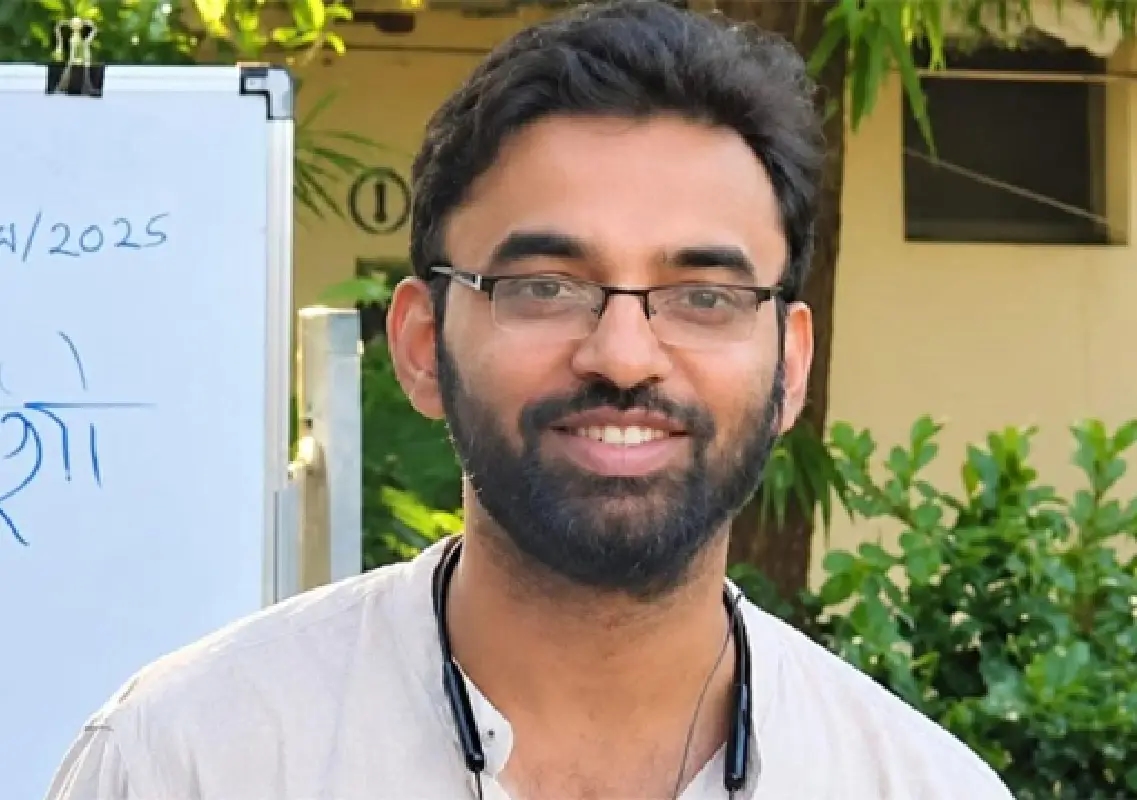


New Delhi: A 39-year-old doctor of Mangaluru origin who spent nearly a decade providing free medical treatment to Adivasi communities in remote parts of Odisha has been arrested and remanded to judicial custody amid a police crackdown on protests against bauxite mining.
Randall Sequeira was arrested at his residence in Bhawanipatna, Kalahandi district, on the night of October 16 by a team from Rayagada police. He was subsequently lodged in a jail in neighbouring Rayagada district. His arrest has raised concerns among tribal communities, healthcare professionals and civil society organisations familiar with his work.
Police have accused Sequeira of instigating tribal communities against the state government. However, his lawyers have said he is not directly named as an accused in the first information report (FIR) concerning the violence that erupted on April 7 during protests against a proposed bauxite mining project in the Sijimali Hills.
The arrest comes amid a series of police actions against activists opposing mining projects in the Rayagada-Kalahandi region, where tribal communities have been resisting projects they say threaten their land, forests, livelihoods and sacred hills.
Doctor who took healthcare to remote villages
Sequeira is known among residents of tribal-dominated areas in Kalahandi and Rayagada for travelling by motorcycle to remote villages, treating patients and distributing medicines free of cost.
Laxman Majhi, a farmer from Kerpai village, told Article 14 that Sequeira regularly visited villages to treat people suffering from malaria, diarrhoea, skin diseases and other communicable illnesses.
The nearest primary healthcare centre was more than 60 km away in Thuamul Rampur, making the doctor’s visits an important source of medical assistance for residents.
Majhi said Sequeira often stayed in a tiled hut in Kerpai and visited households to provide treatment. He also educated villagers about disease prevention, nutrition, cleanliness and hygiene.
Kerpai is situated in the Thuamul Rampur block of Kalahandi district, near the Rayagada border. The surrounding hills and forests contain rich bauxite deposits and are home to predominantly tribal communities in areas covered by the Fifth Schedule of the Constitution.
Sequeira arrived in Kalahandi in July 2017 after completing his postgraduate studies in internal medicine at Sawai Man Singh Medical College and Hospital in Jaipur. He graduated from St John’s Medical College Hospital in 2011.
In October 2017, he joined the non-profit organisation Swasthya Swaraj through a fellowship that allowed him to practise clinical medicine in a low-resource healthcare setting. The organisation runs a community health programme in the tribal-dominated Thuamul Rampur block.
Although Sequeira left Swasthya Swaraj in March 2020, he continued working with non-profit organisations and community groups, including Living Farms and the Development Agency for Poor and Tribal Awakening (DAPTA).
Since 2023, he has also worked as a solidarity worker and healthcare trainer with grassroots organisations, including Maa Mati Mali Surakhya Manch and Niyamgiri Surakhya Samiti, both of which oppose the diversion of tribal land and forests for bauxite mining.
Arrest follows renewed resistance to bauxite mining
The Rayagada-Kalahandi region has witnessed sustained opposition to bauxite mining since the late 2000s, when the Odisha government proposed extracting the mineral from the Niyamgiri Hills for Vedanta Limited, owned by businessman Anil Agarwal.
The Dongria Kondh, classified as a Particularly Vulnerable Tribal Group (PVTG), regard the Niyamgiri Hills as sacred and believe they are the abode of their presiding deity, Niyam Raja.
In April 2013, the Supreme Court left the decision on the proposed diversion of 660.749 hectares of forestland for mining to local communities. The Odisha government scrapped the project in 2014 after 12 Gram Sabhas rejected the proposal.
Opposition to mining resurfaced in April 2026 over another proposed bauxite project by Vedanta in the Sijimali Hills, locally known as Tijimali, which straddles Rayagada and Kalahandi districts.
Tribal communities have alleged that consent obtained during Gram Sabha meetings for the diversion of forestland was fabricated. Residents also consider Sijimali Hill sacred and have opposed the proposed mining-related infrastructure.
Violence broke out between police and residents near the site of a proposed road on April 7. The road was intended to connect the hilltop to a state highway to facilitate the mining project. More than 100 people, including police personnel, were reportedly injured in the clashes.
Sequeira’s arrest is part of a broader series of police actions against prominent anti-mining activists in the region. The crackdown has coincided with Vedanta’s renewed push for bauxite mining in Niyamgiri, following a meeting between Agarwal and Odisha Chief Minister Mohan Charan Majhi on September 26.
Police allege doctor instigated tribal communities
A Rayagada police team arrested Sequeira at his Bhawanipatna residence on October 16. He was subsequently produced before a sub-divisional judicial magistrate in connection with an FIR relating to the April 7 violence in Kantamal village of Rayagada district.
According to his lawyers, Sequeira is not directly named as an accused in the FIR. The case invokes provisions of the Bharatiya Nyaya Sanhita relating to offences including attempt to murder, rioting, dacoity and the use of arms.
The court remanded him to judicial custody in a Rayagada jail. His lawyers planned to seek bail after the court reopened on October 27.
Laxman Naik, a tribal leader associated with Maa Mati Mali Surakhya Manch, was also arrested alongside Sequeira.
Nagaraj Devarakonda, Kalahandi Superintendent of Police, told Article 14 that Rayagada police had arrested the doctor, while Kalahandi police provided logistical support.
“The Kalahandi police merely provided logistical back-up to the Rayagada team,” Devarakonda said.
Rayagada SP Raj Prasad did not respond to repeated calls and text messages seeking comment. Akhileshwar Singh, Deputy Inspector General of the southwestern range, which oversees six districts, including Rayagada and Kalahandi, also did not respond to the publication’s queries.
However, Singh told the Press Trust of India that Sequeira was “not innocent” and alleged that he had been instigating tribal communities against the state government rather than providing medical services.
“The arrested persons were not innocent,” Singh said. “Dr Randall Sequeira was not providing medical services to the people but was engaged in instigating tribals against the State government.”
Singh also questioned why Sequeira had been arrested when other doctors were working in Kalahandi and Rayagada districts.
These allegations have been disputed by people familiar with Sequeira’s healthcare work and by his supporters, who have called for a fair hearing.
Several anti-mining activists remain in jail
Sequeira’s arrest follows the detention of several prominent activists opposing bauxite mining in the region.
On September 10, police arrested Lada Sikaka, a Dongria Kondh leader and president of Niyamgiri Surakhya Samiti, in connection with a 2012 FIR registered under the Unlawful Activities (Prevention) Act. The case dates back to the height of the agitation against the Niyamgiri mining project. According to Sikaka’s lawyers, he is also facing trial in at least a dozen other cases.
Earlier, on March 25, Lingaraj Azad, an adviser to Niyamgiri Surakhya Samiti and a member of the Samajwadi Jan Parishad, was arrested amid preparations for protests against the Sijimali project. He remains in jail.
Hiramal Naik, a prominent member of Maa Mati Mali Surakhya Manch, was arrested on August 28 and subsequently jailed.
On October 18, Medico Friends Circle, a healthcare resource group of which Sequeira is a member, issued a solidarity statement demanding the immediate and unconditional release of those arrested.
The organisation described the arrests as taking place amid the constitutionally legitimate struggle of Adivasi and Dalit communities against the allocation of the Sijimali Hills to Vedanta and the neighbouring Kutrumali Hills to the Adani Group’s Mundra Aluminium Limited, now known as Kalinga Alumina Limited, for bauxite mining.
High Court had quashed earlier restriction on his entry
Sequeira’s latest arrest is not his first confrontation with the district administration.
In June 2025, the Rayagada administration issued an order barring him from entering the district for two months, citing public-order concerns. The order, dated June 4, followed allegations that he had circulated pamphlets, maps and anti-mining material in villages around the Sijimali Hills.
The administration alleged that Sequeira and 23 others associated with Maa Mati Mali Surakhya Manch had planned a large gathering at Sunger Hatapada on June 5 to mark World Environment Day.
Citing intelligence inputs, officials claimed the gathering could lead to law-and-order problems, congestion, economic disruption and violence. The administration also alleged that the proposed event could have links with extremist or Naxalite elements active in the region.
The Odisha High Court subsequently quashed the prohibitory order, finding insufficient material to establish that the proposed protest posed an immediate and grave threat of violence or public disorder.
The court observed that the gathering had been planned as a one-day peaceful event to mark World Environment Day, with no indication that it would involve weapons or an inflammatory agenda.
Setting aside the order, a single-judge bench headed by Justice S.K. Panigrahi said the state could not curtail fundamental rights merely on the basis of general apprehensions that a large protest might attract troublemakers or result in clashes.
The court emphasised that restrictions on fundamental rights required a sufficiently high threshold of actual risk.
Family appeals for fair hearing and early release
Sequeira’s parents, Alex and Nancy Sequeira, said they were deeply distressed by his arrest but continued to have faith in the judicial process.
In a written statement to Article 14, they expressed hope that the circumstances surrounding the case would be examined fairly and impartially.
“As parents, this is an extremely painful and difficult time for us,” they said.
They added that, to their knowledge and belief, their son had dedicated his professional life to healing and serving the poor and marginalised.
“We pray that he receives a fair hearing and that justice prevails. Our earnest prayer is for his early release so that he may be reunited with us and, in due course, continue the work of service to which he has devoted his life,” they said.
The family originally hails from Mangaluru in Karnataka. His father is a retired senior executive of a private company, while his mother retired from the National Bank for Agriculture and Rural Development. Both live in Mumbai and remain involved in community service.
Healthcare work extended beyond individual treatment
People who have worked with Sequeira say his engagement with tribal communities extended beyond treating individual patients.
A close friend, who requested anonymity, said Sequeira initially came to the region through a fellowship but later recognised that its healthcare challenges required a broader, community-based approach. The shortage of healthcare facilities could not be addressed merely by treating individual patients in hospitals, the friend said.
Sequeira therefore began providing basic healthcare training and educating local communities about disease prevention.
Since March 2022, he has also travelled to Sukinda in Odisha’s Jajpur district, nearly 450 km from Bhawanipatna, to treat patients suffering from tuberculosis linked to the adverse impacts of chromite mining.
Prabir Chatterjee, a doctor associated with Medico Friends Circle, said he had known Sequeira for nearly a decade and had witnessed his commitment to public healthcare.
Chatterjee said Sequeira had increasingly worked with tribal communities on the potential health and environmental consequences of bauxite mining. He was also challenging the perception that large-scale industrial use of aluminium was inherently safe compared with iron and steel, Chatterjee said.
Sequeira had co-authored a research paper on the subject with three other authors. The paper was close to publication when he was arrested.
His arrest has brought renewed attention to the tensions between mining-led development plans and the rights and concerns of Adivasi communities in southwestern Odisha. It has also raised questions about the treatment of activists opposing mining projects and the circumstances surrounding the arrest of a doctor whose supporters say he has devoted years to providing healthcare in some of the state’s most remote areas.