







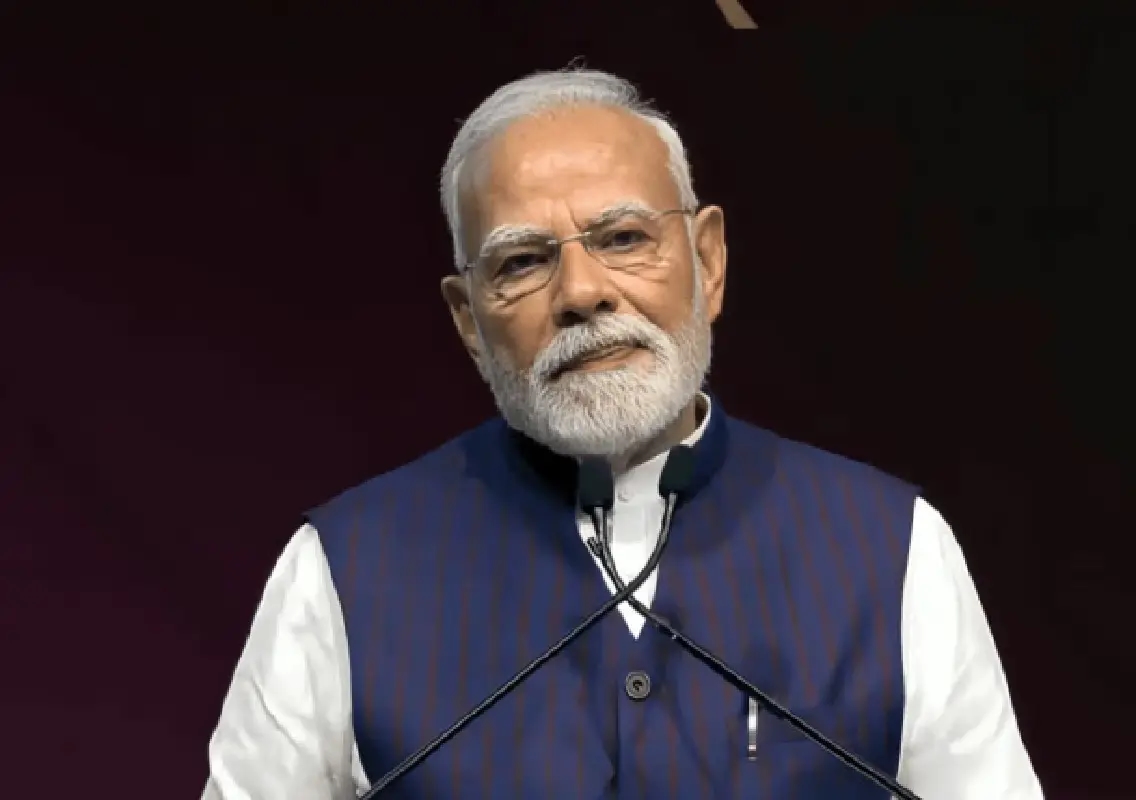


Thiruvananthapuram: Prime Minister Narendra Modi on Thursday responded to criticism surrounding public displays of affection during his visits, after a young boy holding up a hand-drawn portrait of him caught his attention at a public event. Referring to such moments often being labelled as “drama” or “pre-planned” by his detractors, the Prime Minister said he chooses to accept personal criticism but would never dismiss or insult the emotions of children who express their feelings with sincerity and effort.
Addressing a massive gathering of party workers and supporters, Modi paused his speech when he noticed the child proudly holding the portrait. He used the moment to reflect on how spontaneous expressions of admiration, particularly by young people, are frequently misrepresented on social media platforms.
‘Love of children cannot be dismissed’
Modi said that wherever he travels across the country, he often sees children and young people expressing affection in various forms, including drawings, letters, and handmade gifts. He noted that while such gestures come from genuine emotions, they are sometimes portrayed online as staged events.
“Later, reels are made and such incidents are described as pre-planned or drama,” Modi said, drawing applause from the audience. He added that he understands the political nature of criticism directed at him and is prepared to endure it.
“I take all such insults because I understand the love you have for me. I understand the feelings of these kids,” he said. “But if a child has put in love and effort to make something like this, I cannot insult that child. I cannot disappoint them.”
The Prime Minister emphasised that the emotional bond between citizens and public representatives, especially when expressed by children, should not be trivialised or mocked for political gains.
‘Responsibility towards people only grows stronger’
Modi said that attempts to ridicule such moments on social media would not weaken his commitment to public service. Instead, he said, they only strengthened his sense of responsibility.
“So, no matter how many reels are made, my responsibility towards the people and their feelings for me will only be strengthened,” he said, underlining that public trust and emotional connection are integral to democratic engagement.
He then directly addressed the young boy who had drawn the portrait, asking him to write his name and address on the back of the artwork. “I will write a letter to you,” Modi told the child, drawing cheers from the crowd.
He also instructed the Special Protection Group (SPG) personnel accompanying him to accept the portrait from the boy. Another child who had brought a handmade item for the Prime Minister was also acknowledged, with Modi ensuring that both gifts were safely received.
Moment resonates with supporters
Supporters at the venue described the interaction as emotional and memorable, particularly for party workers who had gathered in large numbers. Many said the episode reflected Modi’s ability to connect with people at a personal level, especially children and first-time participants at political events.
Party leaders present at the gathering later said such moments highlight the human side of political leadership, contrasting it with what they described as cynicism prevalent on social media.
While critics often argue that such interactions are orchestrated, supporters maintain that spontaneous expressions from children are difficult to script and reflect genuine admiration shaped by family influence, media exposure, and personal perception.
Public reactions and political context
Political observers note that Modi’s remarks also come at a time when social media scrutiny of public figures has intensified, with short video clips and reels frequently shaping narratives. Moments involving children, in particular, tend to go viral quickly, attracting both praise and scepticism.
The Prime Minister’s statement appeared aimed at addressing this broader culture of instant judgement, where emotional moments are dissected and questioned for authenticity. By framing his response around respect for children’s feelings, Modi sought to draw a moral distinction between political criticism and personal empathy.
Conclusion
The brief interaction between the Prime Minister and the young boy, though simple, became a focal point of the event, reinforcing Modi’s message about respecting genuine emotions in public life. By choosing to acknowledge the child’s effort and address the criticism surrounding such gestures, Modi highlighted the importance of empathy and sensitivity in political discourse, especially when it involves children. The moment served as a reminder that beyond speeches and slogans, human connections continue to shape public engagement in Indian politics.