







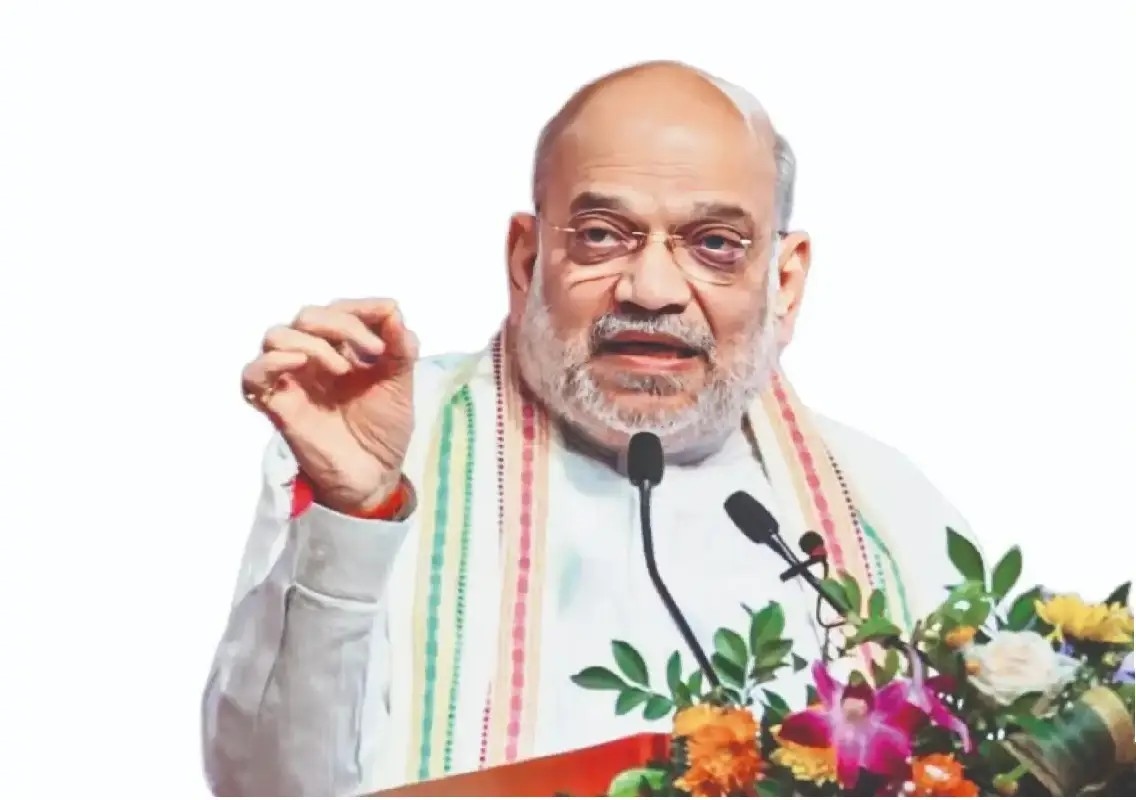


New Delhi: Union Home Minister Amit Shah has stressed the importance of Indian languages in children’s education, saying that children can develop a deeper understanding of India and its cultural diversity through their mother tongue.
Addressing an event focused on Indian languages, Shah urged people to work together to preserve and promote the country’s linguistic heritage. He also highlighted the importance of Prime Minister Narendra Modi’s emphasis on education in the mother tongue.
Language shapes a child’s connection
Shah said a child’s early understanding of the country, its culture and traditions can be strengthened when learning takes place in a familiar language.
Mother-tongue education can make it easier for young children to express themselves, understand concepts and remain connected with their family and community. Supporters of multilingual education have similarly emphasised the role of local languages in preserving cultural identity.
India is home to hundreds of languages and dialects, making linguistic diversity an important part of its social and cultural landscape.
Push to promote Indian languages
Shah called for collective efforts to strengthen Indian languages and ensure they remain part of everyday life and education.
The emphasis on mother-tongue learning is also linked to broader discussions about making education more accessible and child-friendly. Allowing children to learn foundational concepts in a language they understand well can help create a stronger base for further learning.
At the same time, multilingual education can allow children to learn additional Indian and international languages without losing their connection to their first language.
Preserving India’s linguistic heritage
The call to promote Indian languages comes amid continuing efforts to give greater importance to regional and indigenous languages in education and public life.
For families, schools and communities, the discussion is about more than language alone. It also concerns identity, cultural continuity and the ability of children to remain connected with their roots.
As India continues to debate the future of education, the role of the mother tongue is likely to remain an important part of the conversation about how children learn and understand the country around them.