







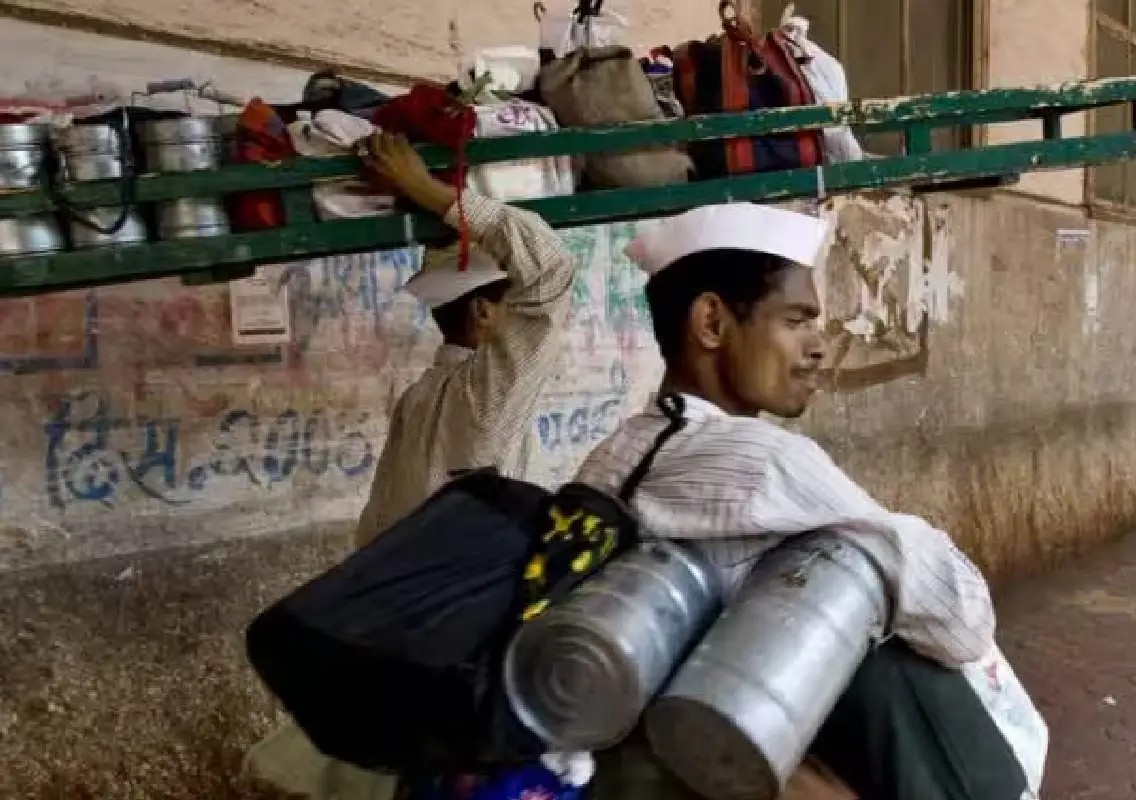


Mumbai’s famed dabbawala network, celebrated worldwide for its precision and efficiency, is facing one of its toughest challenges as changing work patterns and evolving food habits reshape the city’s lunch culture.
According to the Mumbai Tiffin Box Suppliers Association, the number of dabbawalas has declined from nearly 5,000 before the Covid-19 pandemic to around 3,000 today, marking a drop of about 40 per cent.
Pandemic changed the lunchbox business
Association president Ramdas Karvande said operations came to a complete halt during the lockdown, and business has yet to recover fully.
Many employees continue to work remotely or follow hybrid schedules, reducing the demand for daily lunchbox deliveries. During the pandemic, the workforce reportedly shrank to around 1,500 before partially recovering.
Despite the decline, dabbawalas still deliver more than 50,000 lunchboxes every day across Mumbai.
Food delivery apps add competition
Apart from remote work, the rise of food delivery platforms and cloud kitchens has also affected the traditional service.
Dabbawala leader Subhash Talekar noted that younger professionals increasingly prefer ordering meals through apps rather than carrying home-cooked food to work.
The service, which began in 1890, once served as a symbol of Mumbai’s unique logistics culture and gained global recognition for its near-flawless delivery system. It even attracted international attention when King Charles III, then Prince Charles, met dabbawalas during a visit to Mumbai in 2003.
Adapting to changing times
Today, dabbawalas charge between ₹1,500 and ₹2,500 per month for their services, compared to just ₹12 a month in the 1970s.
While challenges remain, association members remain optimistic. Efforts are underway to attract new customers and adapt to changing work patterns.
Leaders believe the century-old service, known for its distinctive Gandhi caps and unmatched punctuality, will continue to remain an integral part of Mumbai’s identity for years to come.