


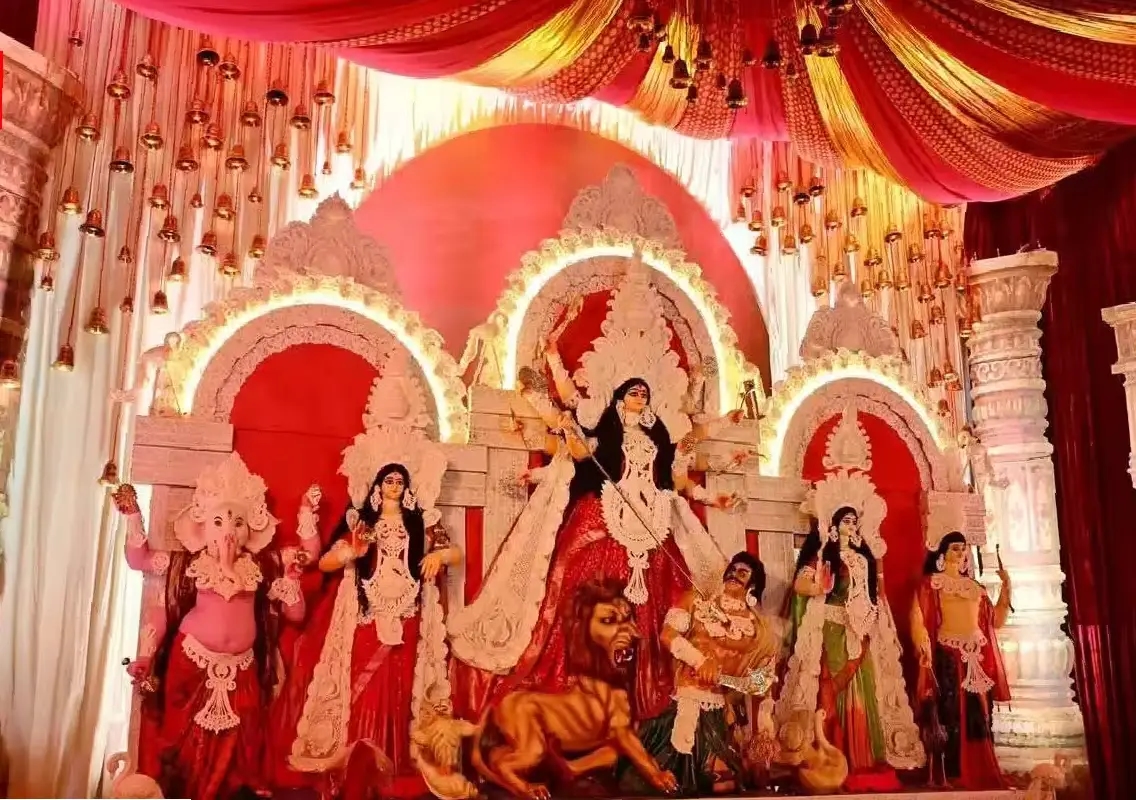


Mumbai: Mumbai’s Bengali community is preparing for five days of Durga Puja celebrations, with traditional rituals, elaborate pandals, cultural programmes and community feasts scheduled across the city from October 16 to 21.
While the main five-day festival begins on Shashti, the sixth day of Navratri, several prominent pujas have already commenced or unveiled their themes. Among the major attractions are the Bengal Club’s 91st Durga Puja at Shivaji Park, the traditional celebrations organised by the Ramakrishna Mission in Khar and two 97-year-old pujas that continue to preserve the city’s Bengali cultural heritage.
The celebrations will culminate in Vijayadashami on October 21, when devotees bid farewell to Goddess Durga through idol immersion ceremonies.
Bengal Club presents nature-inspired Durga Puja theme
The Bengal Club at Shivaji Park unveiled the first glimpse of its Durga idol on Wednesday ahead of its 91st Durga Puja celebrations, scheduled from October 15 to 21.
The club has created a 10,000-square-foot pandal, which is expected to attract a large number of visitors during the festival. Spokesperson Joy Chakraborty said the organisers expect around eight lakh visitors over the course of the celebrations.
This year’s theme draws inspiration from the natural disaster that struck Nepal and explores the relationship between nature, divine power and human life.
“This year’s theme correlates the natural disaster that befell Nepal with Durga Puja, because the goddess embodies Nature. Ma Durga as Prakriti is both life-giving and immensely powerful,” Chakraborty said.
Art director Rupin Suchak has designed the pandal using fabric, bamboo and metal to reflect the theme of nature. The materials and design are intended to evoke the natural world while creating a setting for worship and cultural gatherings.
The Bengal Club will also organise bhog meals on four days of the festival, along with cultural programmes and Kumari Puja. Its handicraft and food stalls are expected to be among the popular attractions for visitors.
Ramakrishna Mission to hold traditional rituals
The Ramakrishna Mission in Khar will organise its traditional Durga Puja, featuring rituals that are central to Bengali religious observances.
The programme will include Sandhi Puja and Kumari Puja, drawing devotees seeking to participate in the spiritual and ceremonial aspects of the festival.
Sandhi Puja is performed at the transition between Ashtami and Navami and holds particular significance in the worship of Goddess Durga. Kumari Puja involves the ritual worship of a young girl as a manifestation of the divine feminine.
These observances form an important part of the traditional celebrations, alongside prayers, offerings and community participation.
Kalbadevi’s Bengali goldsmiths continue 97-year-old tradition
Among Mumbai’s oldest Durga Puja celebrations is the Sharadiya Utsav organised by the Bengali goldsmith community of Kalbadevi.
Now in its 97th year, the Kalbadevi Sarvajanin Durga Puja reflects the enduring contribution of the city’s Bengali workers and artisans to its cultural life.
Lakhmikant Das, popularly known as Lakhi Babu, spoke about his personal contribution to the celebrations, including the craftsmanship involved in preparing the goddess’s crown.
“Our Sharadiya Utsav is in its 97th year. I myself have carved a tall crown for the Devi using the best materials,” he said.
The celebration represents a tradition sustained across generations, bringing together members of the community through worship and shared cultural practices.
The craftsmanship associated with the idol and its adornments remains an important part of the festival, highlighting the role of artisans in preserving traditional forms of religious art.
Bombay Durga Bari Samiti combines faith and cultural heritage
Another long-running celebration is the Sharodotsav organised by the Bombay Durga Bari Samiti at Tejpal Hall in Grant Road. The event is also marking its 97th year.
This year’s theme is “Dharma sansthapanaya: When divine wisdom and Shakti unite to restore dharma”.
President Partha Sen said the theme brings together the spiritual teachings associated with Lord Krishna and the strength embodied by Goddess Durga.
Chairperson Mitali Poddar said the organisers wanted to convey a message of peace against the backdrop of ongoing wars and conflicts.
“Against the backdrop of war, our message is that power is not for destruction but for peace,” Poddar said.
She explained that the theme combines Lord Krishna’s teachings in the Bhagavad Gita with Goddess Durga’s strength as Mahishasuramardini, emphasising the use of power to uphold righteousness rather than destruction.
The Samiti brings artisans, idol-makers, pandal specialists and cooks from Kolkata to Mumbai to maintain the traditional character of its celebrations.
Rabindra Sangeet performances and shows by visiting artists are among the cultural attractions planned during the festival.
Five days of devotion and community celebrations
Durga Puja is one of the most significant festivals in the Bengali calendar, celebrating Goddess Durga’s victory over the buffalo demon Mahishasura and symbolising the triumph of good over evil.
In Mumbai, the festival also serves as an occasion for the Bengali community to preserve its language, artistic traditions, food and cultural practices while welcoming visitors from across the city.
The combination of elaborate pandals, traditional rituals, music, food and community gatherings makes the celebrations a major feature of Mumbai’s cultural calendar.
With the Bengal Club presenting a nature-inspired theme, the Ramakrishna Mission continuing its traditional worship and the two 97-year-old pujas preserving long-standing customs, this year’s festivities bring together devotion, craftsmanship and messages of peace.
The celebrations will conclude on Vijayadashami on October 21, with devotees bidding farewell to the goddess and looking forward to her return the following year.