







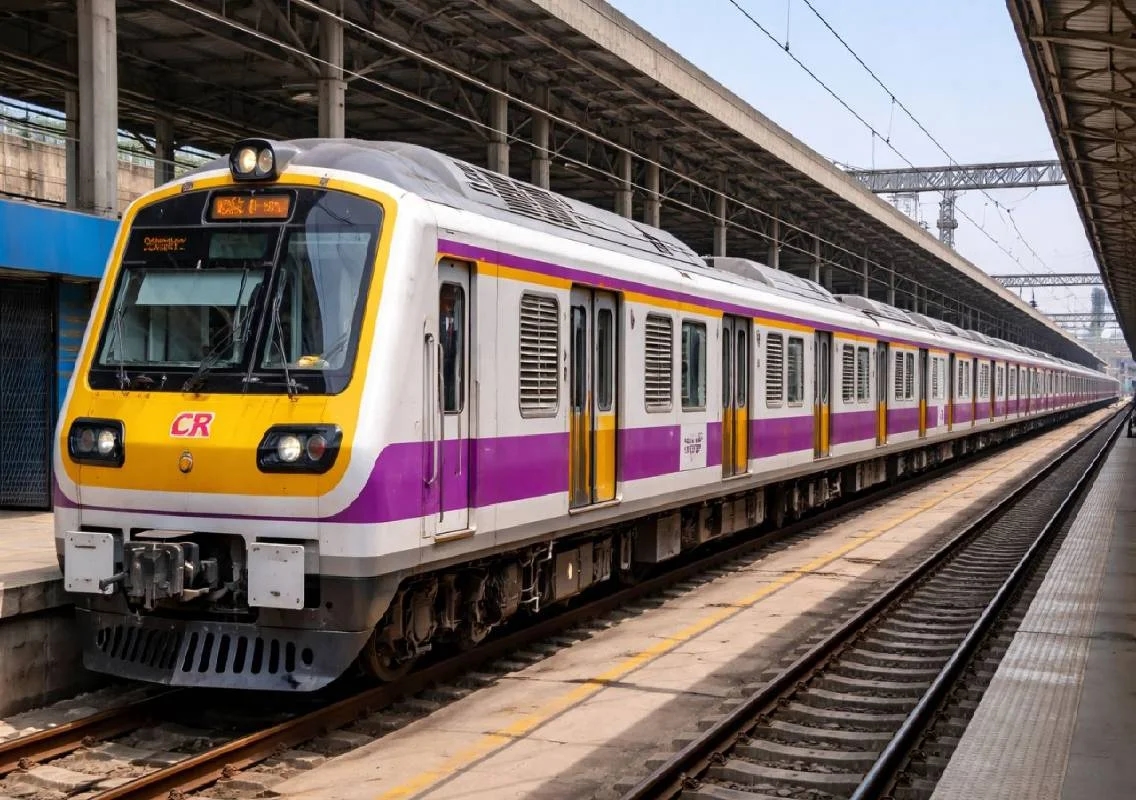


Mumbai: In a landmark move towards improving commuter safety, Mumbai has introduced its first non-AC suburban local train equipped with automatic doors. The 12-car rake, manufactured by the Integral Coach Factory, recently arrived at the Kurla car shed, marking a major upgrade in the city’s decades-old railway system.
Often referred to as the lifeline of Mumbai, the suburban rail network has long been known for its open-door trains — a feature that has contributed to both convenience and risk. The introduction of closed-door, non-AC trains signals a shift towards prioritising safety without significantly increasing travel costs.
Focus on safety after repeated accidents
For years, overcrowding and open doors have led to frequent accidents, with hundreds of commuters losing their lives annually due to falls from moving trains. The push for closed-door systems gained urgency after a tragic accident near Mumbra in 2025, which highlighted the dangers of the existing design.
The new trains are designed to eliminate the possibility of passengers standing at open doors. They will only begin movement once all doors are securely shut, reducing the risk of accidental falls and encouraging more disciplined boarding behaviour.
Innovative cooling without air conditioning
A major concern with closed-door trains in Mumbai’s humid climate is ventilation. To address this, the new design incorporates several innovative features that ensure passenger comfort without air conditioning.
High-capacity blowers installed in the coaches can circulate up to 10,000 cubic metres of fresh air per hour — nearly double the capacity of traditional local trains. Additionally, window sizes have been significantly increased from 900 mm to 1,900 mm, allowing better airflow and a more open feel.
The doors are also fitted with louvered panels, which enable continuous air circulation even when the doors remain shut, ensuring that commuters do not feel suffocated during peak hours.
Enhanced commuter experience
Beyond safety and ventilation, the train introduces multiple features aimed at improving the overall travel experience.
The coaches are connected through vestibules, allowing passengers to move freely between compartments. This is expected to help distribute crowds more evenly, especially during rush hours.
Seating arrangements have also been redesigned to offer improved legroom and comfort. Digital passenger information systems have been installed, displaying real-time updates such as the next station, route details, and safety announcements.
These upgrades collectively aim to modernise Mumbai’s suburban rail network while maintaining affordability for daily commuters.
Testing and rollout timeline
Before entering regular service, the train will undergo a series of rigorous safety trials and inspections by the Research Designs and Standards Organisation (RDSO).
Officials have indicated that only after receiving the necessary certifications will the trains be gradually introduced into Mumbai’s suburban network. The phased rollout will allow authorities to assess performance and make adjustments if required.
Conclusion
The introduction of Mumbai’s first non-AC closed-door local train marks a significant milestone in the city’s public transport evolution. By combining safety, innovation, and commuter comfort, the initiative addresses long-standing concerns while preserving affordability.
If successfully implemented, this model could set a precedent for suburban rail systems across India, offering millions of daily commuters a safer and more efficient journey.