







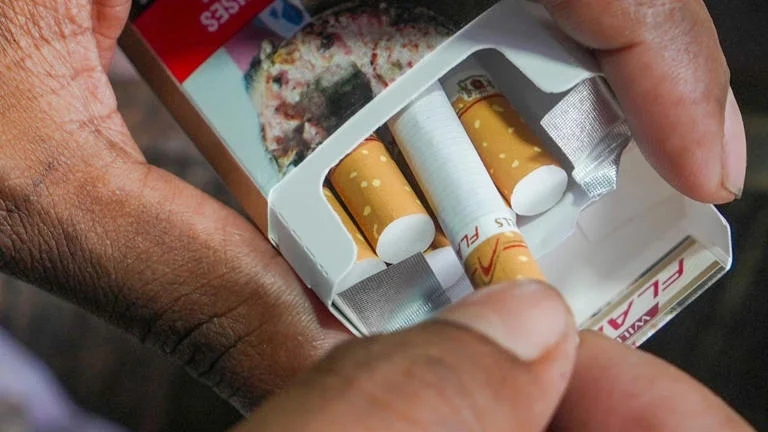


From February 1, India will quietly but decisively change how tobacco and pan masala are taxed. Cigarettes, chewing tobacco and pan masala will no longer be taxed only at the point of sale. Instead, the government will also tax how these products are manufactured, marking a significant shift in the regulation of so-called “sin goods”.
Under the new Health Security se National Security Cess Bill, 2025, manufacturers will pay an additional cess based on their installed production capacity, over and above existing GST and excise duties. For consumers, this is expected to translate into higher prices. For the state, it signals a new approach as the GST compensation cess nears its end.
What the new Bill does
The Bill introduces a special cess focused on tobacco and pan masala manufacturing processes, rather than just finished products. Manufacturers will be required to declare production capacity at each unit, with the cess calculated accordingly. This framework is designed to improve monitoring, curb under-reporting and ensure steady revenue after the GST compensation cess is phased out by March 2026.
The cess will sit alongside existing taxes and can be extended to other notified goods in the future. Nirmala Sitharaman outlined the Bill in Parliament during the winter session in December 2025.
Why the government introduced it
The government has cited two main reasons: revenue continuity and public health. When GST was introduced, compensation cess on tobacco and pan masala helped offset state revenue losses. With that debt largely repaid, a replacement mechanism was needed.
By anchoring the cess to production capacity, authorities also hope to reduce evasion in an industry known for fragmented and informal supply chains. Critics, however, argue that unless paired with stronger public-health enforcement, the measure may function more as a fiscal tool than a health intervention.
Existing tobacco laws
Tobacco manufacturing and sale in India are already governed by multiple laws. The Cigarettes and Other Tobacco Products Act regulates production, advertising and sales, mandates graphic health warnings and bans smoking in public places. Gutkha and similar products are restricted under food safety regulations. India is also a signatory to the WHO Framework Convention on Tobacco Control.
What Indians consume most
According to the World Health Organization, smokeless tobacco remains the most commonly used form in India, far exceeding cigarette and bidi smoking. Products like khaini, gutkha and betel quid with tobacco are especially prevalent in rural and lower-income communities.
Will it reduce consumption?
India’s tobacco laws have produced mixed results. While smoking rates have declined modestly, overall consumption remains high, particularly for smokeless forms. Experts note that taxation can deter use over time, but uneven enforcement and cultural acceptance remain major challenges.
With tobacco still killing over 10 lakh Indians annually, the new cess adds a powerful fiscal lever — but its real impact will depend on pricing, enforcement and complementary public-health action.