









Bhubaneswar: Odisha has launched a new tourism portal and an investment incentive management system as part of a broader push to attract national and international investment into the state’s tourism sector.
Chief Minister Mohan Charan Majhi launched the Odisha Tourism Portal and the Odisha Tourism Investment Incentive Management System during the seventh edition of the Odisha Travel Bazaar in Bhubaneswar on October 3. The government said the new digital initiatives are aimed at making tourism investment easier while strengthening the state’s position as a global tourism destination.
The launch comes alongside a series of policy measures covering hotels, tourism infrastructure, land availability, investment incentives and visitor safety. The state government is seeking to make tourism a larger contributor to economic growth, employment and local livelihoods.
Majhi invites global investors to Odisha
Addressing investors and representatives from the hospitality and tourism industries at the Odisha Travel Bazaar, Majhi invited companies, hospitality brands and tourism partners from India and abroad to explore investment opportunities in the state.
He said tourism should become an important pillar of Odisha’s economic development and employment generation, while highlighting the state’s coastline, heritage, architecture and cultural traditions.
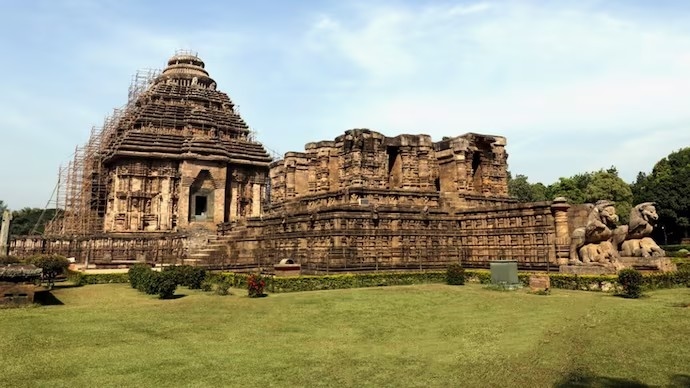
Odisha has a 575-km coastline, along with major tourism attractions including the Jagannath Temple, Konark Sun Temple, Chilika Lake, Bhitarkanika’s mangrove ecosystem and Hirakud Reservoir.
The Chief Minister said the government’s tourism measures were aligned with its broader development vision and were intended to create an environment where private investment could contribute to tourism infrastructure and job creation.
The state has also been increasing its engagement with international investors. Earlier in September, the Odisha government conducted an investment outreach in the UAE, where it said proposals worth Rs 8,417 crore had been received across several sectors, including tourism, logistics, real estate and other industries.
Hotel rules eased to encourage investment
One of the key measures announced at the Travel Bazaar is a reduction in the minimum room requirement for star-category hotels.
The minimum requirement has been reduced from 50 rooms to 10 rooms, a move intended to make it easier for smaller and mid-sized hospitality projects to qualify and develop in Odisha.
The state has also increased the maximum capital subsidy limit from Rs 20 crore to Rs 120 crore under its tourism investment framework.
These measures are part of the Odisha Tourism (Amendment) Policy, 2026, which the government has positioned as an effort to improve investment attractiveness and encourage emerging tourism segments.
Odisha’s budget documents had already outlined amendments to the tourism policy to enhance investment attractiveness, incentivise new tourism segments and facilitate timely disbursement of incentives.
The new investment incentive management system is expected to provide a more streamlined mechanism for investors seeking information, approvals and incentives associated with eligible tourism projects.
Rs 1,500 crore provision and 5,500-acre land bank
The state government has approved a Rs 1,500 crore provision for tourism infrastructure between 2026 and 2031.
It has also established a 5,500-acre tourism land bank to support the development of tourism infrastructure, including hotels and resorts. The government said the land bank would help address one of the challenges faced by investors looking to develop hospitality and tourism projects.
The state’s broader tourism planning also includes the development of priority destinations and supporting infrastructure.
Odisha’s budget documents had earlier identified land for tourism development at 15 priority destinations and provided funds for land acquisition, premium payments and trunk infrastructure. The state has also set long-term tourism goals under its Vision 2036 and 2047 framework.
The focus on land availability and infrastructure is significant because tourism investment often requires coordinated development of accommodation, roads, utilities and visitor facilities.
Safety measures expanded across tourist destinations
The Odisha government has also placed emphasis on visitor safety as part of its tourism strategy.
Majhi said Tourist Police and Destination Managers are being deployed at 29 major tourist destinations.
The state also plans to deploy 1,000 lifeguards along Odisha’s beaches, with the aim of strengthening safety measures at coastal tourism locations.
The measures are particularly relevant to Odisha’s extensive coastline, which remains one of the state’s major tourism assets.
Safety infrastructure is also important for destinations that attract large numbers of domestic and international visitors, particularly during festivals, holidays and peak tourist seasons.
The government is seeking to combine tourism promotion with destination management so that the expansion of visitor numbers is supported by adequate safety and operational arrangements.
Pravati Parida highlights sustainable tourism
Deputy Chief Minister Pravati Parida, who handles the Tourism portfolio, said Odisha’s tourism proposition extends beyond individual destinations and attractions.
She highlighted the state’s Buddhist heritage, handlooms, heritage sites, Chilika Lake and eco-tourism initiatives.
Parida said the government was working towards creating an ecosystem for sustainable tourism while linking tourism development with employment generation and skill development.
The emphasis on sustainability is particularly relevant for destinations such as Chilika and Bhitarkanika, where tourism development needs to coexist with sensitive ecological environments.
Odisha’s existing tourism framework includes financial and non-financial incentives for eligible tourism projects, including capital investment subsidies, land-related incentives and employment-linked support.
Sports and tourism opportunities highlighted
Former India cricket captain Kapil Dev, who attended the Odisha Travel Bazaar, also spoke about the connection between sport, tourism and India’s global image.
Kapil Dev highlighted Odisha’s contribution to Indian hockey and said the state could develop into both a major tourism destination and a sports hub.
Odisha has invested heavily in sports infrastructure and has developed a strong association with hockey, particularly through Bhubaneswar and Rourkela.
The state’s tourism and sports sectors could therefore complement each other by bringing visitors to the state for sporting events as well as cultural, heritage, coastal and eco-tourism experiences.
Odisha seeks deeper private-sector participation
The launch of the new portal and investment system marks an attempt to make Odisha’s tourism sector more accessible to investors while supporting the state’s broader infrastructure plans.
The government is seeking investment not only in traditional hotels and resorts but also in tourism-related infrastructure and emerging segments.
The approach comes as Odisha continues to position itself as an investment destination beyond its traditional industrial strengths. Recent government outreach in the UAE has also focused on building international partnerships across sectors, including tourism.
For the tourism sector, the challenge will be to convert investor interest into actual projects, improve connectivity and visitor facilities, create employment and ensure that development remains sustainable.
Tourism positioned as a growth and employment engine
The Odisha government is increasingly treating tourism as more than a destination-marketing exercise.
The combination of policy incentives, digital investment systems, land availability, infrastructure spending and safety measures reflects an attempt to build a broader tourism ecosystem.
The state’s long-term tourism planning aims to attract more domestic and international visitors while expanding accommodation capacity. The budget framework has set targets of more than 5 crore domestic tourists and 7 lakh foreign tourists, along with the creation of 25,000 hotel rooms by 2047.
The new tourism portal is expected to strengthen Odisha’s digital presence, while the investment incentive system could make it easier for businesses to navigate government support and approvals.
With its coastline, temples, heritage sites, forests, wetlands and cultural traditions, Odisha already has a diverse tourism base. The government’s latest measures are aimed at turning that potential into greater investment, infrastructure and employment.
The next phase will depend on how effectively the new policies translate investor interest into projects and how successfully the state balances tourism growth with safety, sustainability and local economic benefits.