







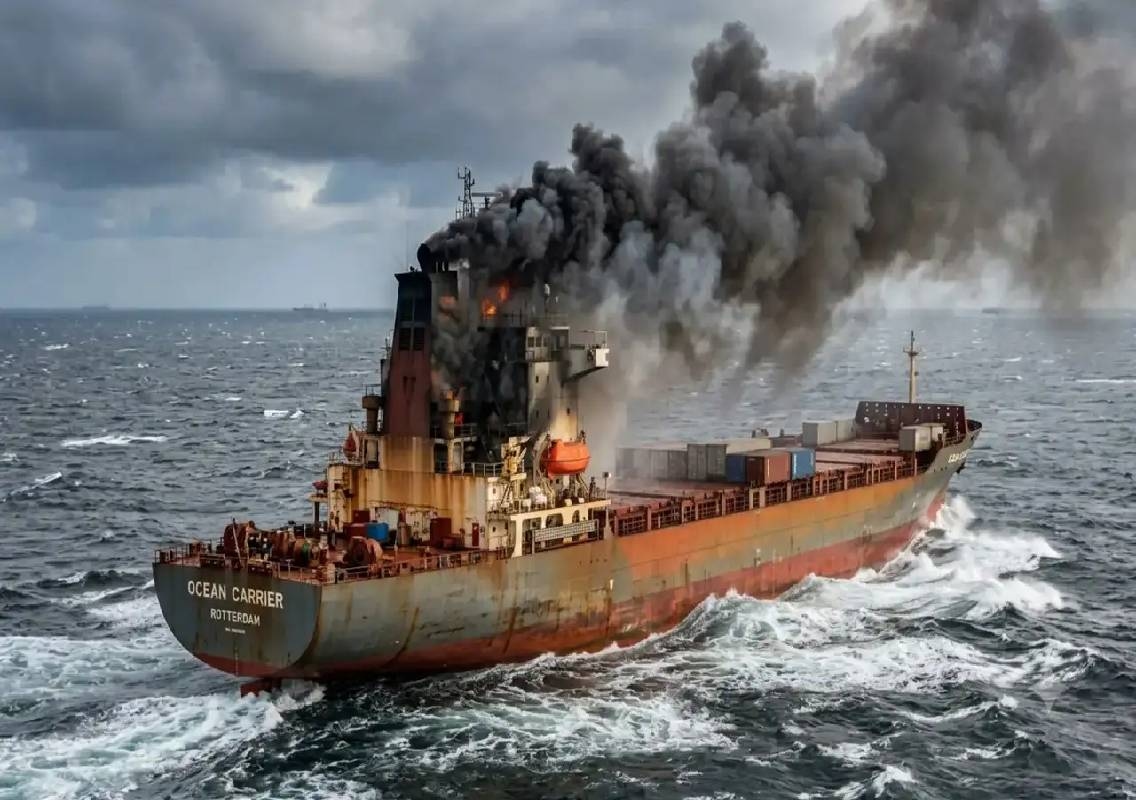


New Delhi: A Hong Kong-flagged oil tanker carrying an all-Indian crew came under a drone attack while transiting through the Strait of Hormuz on the night of June 12-13, raising fresh concerns over maritime security in the conflict-hit West Asia region.
The vessel, identified as Bockem Marengo, reportedly sustained damage to parts of its structure during the attack. However, all 21 Indian crew members on board were safely evacuated and no injuries were reported.
The incident comes amid heightened tensions in the region and follows a series of attacks on commercial vessels operating near one of the world’s most strategically important maritime routes.
Drone attack damages vessel
According to reports, the tanker was navigating through the Strait of Hormuz under the protection of the US Navy’s Naval Cooperation and Guidance for Shipping (NCAGS) arrangement when it was targeted by an unmanned drone.
The attack reportedly damaged three sections of the vessel, including the No. 1 and No. 2 port water ballast tanks. Despite the damage, the tanker remained afloat and was able to continue its voyage.
The vessel is managed by Anglo-Eastern Ship Management (India) Pvt Ltd, and all sailors on board are Indian nationals.
Crew members escape unharmed
Officials confirmed that all 21 crew members escaped unharmed despite the attack.
The safe evacuation of the crew prevented what could have been a major maritime disaster in one of the world’s busiest energy corridors.
The incident has once again highlighted the risks faced by merchant sailors operating in conflict-prone waters.
Series of attacks on vessels
The attack on Bockem Marengo is not an isolated incident.
Reports indicate that several other vessels with Indian crew members, including MT Marivex, MT Settebello and Jalveer, have also been targeted near the Strait of Hormuz in recent months.
In one of the earlier incidents involving MT Settebello, three Indian sailors reportedly lost their lives.
The repeated attacks have raised concerns about the safety of commercial shipping routes in the region and the growing risks for international maritime trade.
India monitoring the situation
Reacting to the latest incident, the Ministry of Shipping said the government is closely monitoring developments.
The ministry also referred to the recent case involving MT Celestial, where an Indian sailor lost his life. Officials said the vessel had reached shore and the mortal remains of the deceased sailor had been transported to Oman for repatriation to India.
According to the ministry, around 10 Indian-flagged vessels and five foreign-flagged vessels have successfully crossed the Strait of Hormuz despite the ongoing tensions.
Authorities also stated that more than 3,500 Indian seafarers have been safely repatriated since the conflict in the region escalated.
Strategic importance of the Strait of Hormuz
The Strait of Hormuz is one of the world’s most critical maritime chokepoints, connecting the Persian Gulf to international shipping routes.
Before the escalation of tensions in West Asia, the waterway accounted for nearly 20 per cent of global crude oil and liquefied natural gas (LNG) trade.
Disruptions in the region have the potential to impact global energy markets, shipping costs and supply chains.
The continued targeting of commercial vessels has increased concerns among shipping companies, governments and energy markets worldwide.
Maritime security concerns grow
The latest attack underscores the growing security challenges facing commercial shipping in the Gulf region.
While international naval forces continue to provide protection and monitoring, repeated incidents involving merchant vessels demonstrate the vulnerability of key trade routes during periods of geopolitical instability.
With thousands of Indian sailors employed across the global shipping industry, ensuring their safety remains a priority for Indian authorities as tensions continue to affect maritime operations in West Asia.