







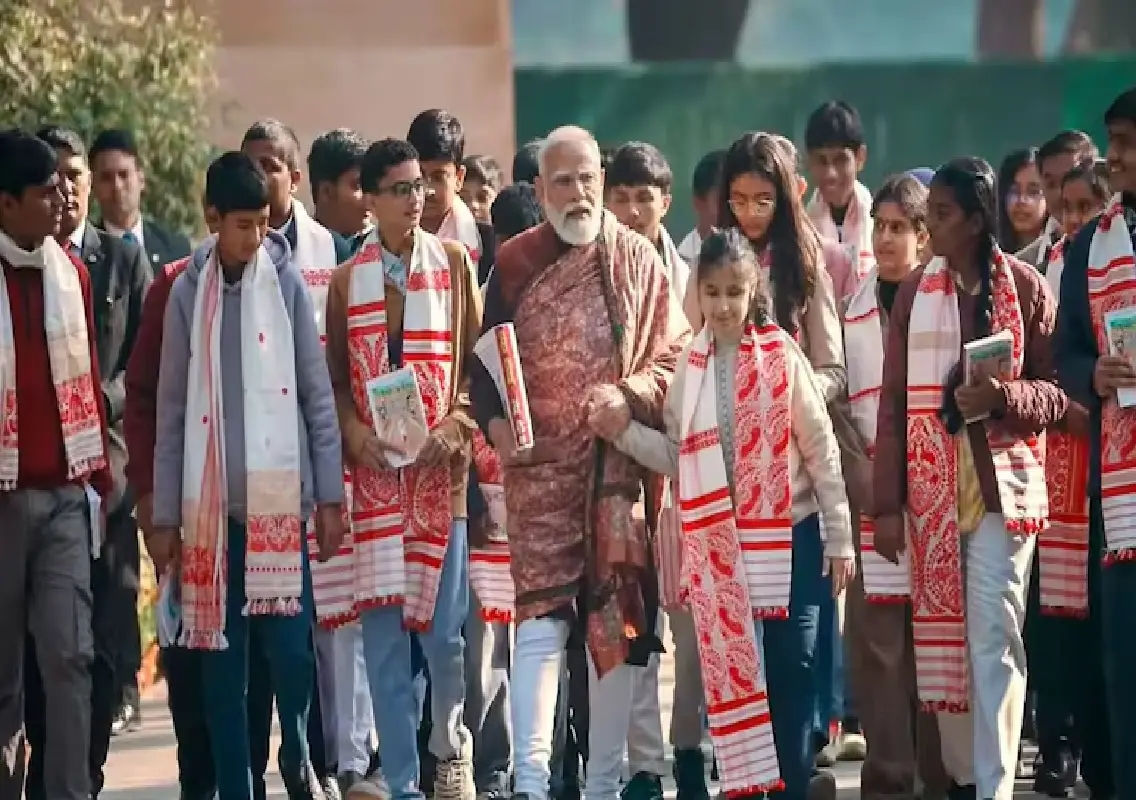


New Delhi: Prime Minister Narendra Modi on Thursday interacted with students across the country during the 9th edition of Pariksha Pe Charcha 2026, offering guidance on exams, skill development, technology use, holistic education, and responsible citizenship. Addressing exam-related stress and future readiness, the Prime Minister emphasised that while education is important, skills play a more decisive role in shaping life outcomes.
During the interactive session, PM Modi responded to student questions and shared practical advice on learning methods, goal-setting, use of Artificial Intelligence (AI), and nation-building responsibilities. The annual programme aims to reduce exam stress and encourage a broader outlook towards education and personal growth.
Skills crucial alongside formal education
Stressing the importance of practical capability, PM Modi said that students should not rely only on textbook knowledge. He highlighted that skills and adaptability are equally — if not more — important in the real world.
“Education and skills, both are important, however, skills are crucial in life,” he said, urging students to develop competencies that go beyond exam syllabi.
He noted that education should be viewed as a continuous developmental journey rather than a marks-driven race. According to him, students who focus on learning deeply and applying knowledge are better prepared for future challenges.
Use technology and AI wisely, PM tells students
Speaking about the growing role of technology in education, PM Modi described technology and Artificial Intelligence as powerful tools that should be used constructively.
“Technology is a boon, and we need to embrace it,” he said. “Use AI wisely to boost your wisdom and personality.”
He advised students not to become overly dependent on digital tools but instead use them to enhance understanding, creativity, and problem-solving ability. AI, he said, should support thinking — not replace it.
The Prime Minister’s comments come amid increasing AI adoption in classrooms, competitive exam preparation, and skill-based learning platforms across India.
Education should not feel like a burden
PM Modi repeatedly stressed that education must not be treated as a load or pressure point. Instead, he encouraged total involvement and curiosity-driven learning.
“Education should not feel like a burden. It needs our total involvement. Education in bits and pieces does not ensure success,” he said.
He explained that deep engagement improves retention and understanding. “We remember things and events only when we are completely involved in them,” he noted.
He also advised students to look beyond marks as the sole measure of achievement. “Instead of focusing on marks, everyone should focus on where they have made it in life,” he said.
Exams not ultimate goal, holistic growth matters
Emphasising all-round development, the Prime Minister said examinations are only one part of a much larger life journey.
“Life is not just about exams. Education is just a medium of our development. Exams should never be the ultimate goal. The ultimate goal is all-around development,” he said.
He observed that while some teachers may teach selectively for marks, truly impactful teachers focus on broader understanding and character building. He encouraged educators to nurture curiosity and conceptual clarity rather than rote performance.
Advice for teachers and learning methods
Addressing teachers directly, PM Modi suggested practical classroom strategies to improve student engagement. He recommended that teachers share topic schedules in advance so students can prepare beforehand.
“Giving the schedule of topics in advance and asking students to prepare beforehand will create curiosity and also improve understanding,” he said.
He added that this approach promotes active participation and helps students enter classrooms with questions and interest rather than passive listening.
Encourages self-belief and independent thinking
The Prime Minister urged students to maintain self-belief even while considering advice from parents, teachers, and peers.
“No matter what your parents, or teachers, or peers say, have faith in and follow your pattern, keeping in mind all the suggestions that come your way,” he said.
On goal-setting, he advised students to choose targets that are achievable but still challenging. “Our goal should always be within reach, but not easily achievable,” he noted.
He also shared a motivational line: “Mann ko joto, fir mann ko jodo, aur fir padhai ke vishay rakho,” encouraging students to first discipline and align their minds before focusing on studies.
Students’ role in building Viksit Bharat
Linking student growth with national development, PM Modi reminded participants that today’s youth will be in their late 30s and early 40s when India marks 100 years of Independence in 2047.
“You all will be between 35–40 years old in 2047… Who am I working hard for to build a Viksit Bharat? Should you also not work towards it?” he asked.
He called upon students to practise responsible citizenship, promote cleanliness, and support Indian-made products. “Be responsible citizens… If we want a Viksit Bharat, we need to ensure cleanliness and raise awareness,” he said.
Gaming and personality development
In a notable remark, PM Modi said gaming, when pursued in a balanced way, can also support personality development and skill-building.
“Gaming is a skill. It is a good way for personality development,” he said, while implying that moderation and purpose are important.
Conclusion
The 9th edition of Pariksha Pe Charcha reinforced the Prime Minister’s consistent message that exams are only one milestone in a longer journey of growth. By emphasising skills, wise use of AI, holistic development, and responsible citizenship, PM Modi encouraged students to approach learning with curiosity, balance, and confidence rather than fear and pressure.