







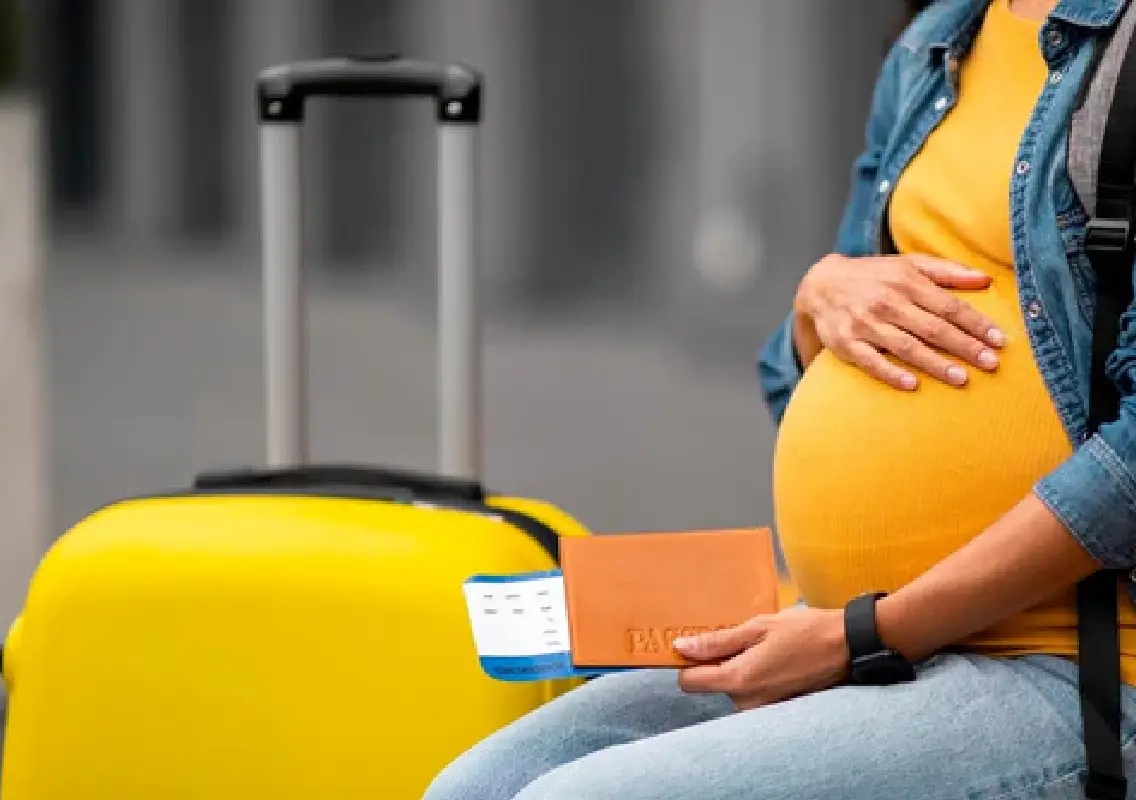


A travel vlog shared by an Indian woman has drawn attention online after she revealed that she was almost stopped from boarding her flight home from Thailand due to her pregnancy, highlighting the confusion many expectant mothers face while travelling.
In the video, the woman explains that she had completed check-in and security clearance without any issue. However, at the boarding gate, airline staff intervened after noticing she was pregnant. “I was stopped at the airport because I am pregnant,” she said, adding that she was unsure about what would happen next and had to wait for some time.
Declaration cleared her to fly
According to her account, she was eventually asked to fill out a declaration form confirming her pregnancy and health status. After completing the paperwork, she was allowed to board the flight. While the journey continued without further trouble, the incident left many viewers questioning how pregnancy travel rules work across countries and airlines.
Is travel during pregnancy allowed?
Doctors generally say that travel during pregnancy is permitted if the pregnancy is low-risk and approved by a medical professional. The second trimester is often considered the safest period for travel. Risks such as blood clots or preterm labour tend to increase after 28 weeks, which is why airlines impose stricter rules in later stages.
What travellers should know
Indian airlines typically allow travel up to 32 weeks for uncomplicated pregnancies without documentation, with medical certificates required beyond that. International carriers serving Southeast Asia and the Gulf usually permit travel up to 36 weeks, subject to medical clearance after 28 weeks. Airlines may deny boarding if documents are missing, even if immigration rules allow entry.
Doctors advise pregnant travellers to consult a gynaecologist before flying, carry recent medical records, stay hydrated, move regularly during long flights, and opt for pregnancy-inclusive travel insurance.
A reminder for expectant travellers
The incident has served as a reminder that airline policies — not immigration rules — often determine whether a pregnant passenger can board. For expectant mothers, advance planning and documentation can help avoid stressful last-minute surprises at the airport.