







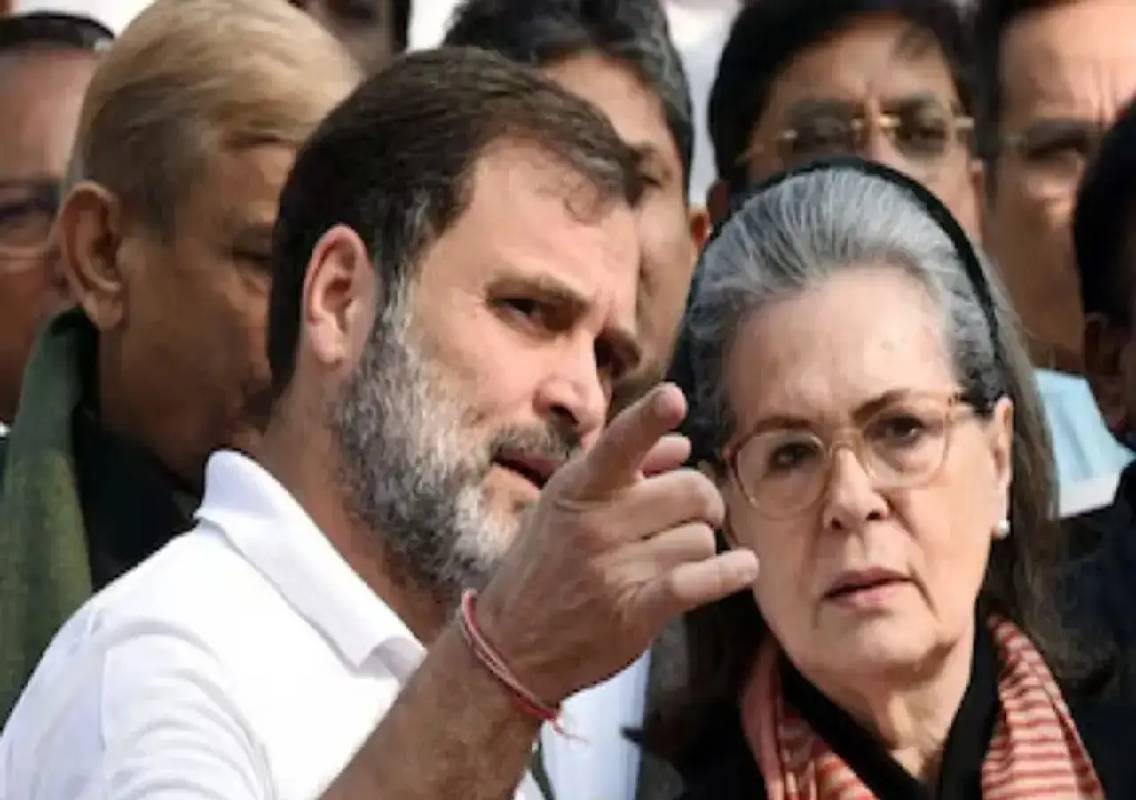


New Delhi: Congress leader and Leader of Opposition in the Lok Sabha Rahul Gandhi on Saturday backed Congress Parliamentary Party chairperson Sonia Gandhi’s call for India to reclaim its “independent foreign policy” and adopt what he described as a morally clear position on the humanitarian situation in Gaza. He alleged that India was moving closer to Israel’s strategic orbit, while the BJP hit back, asserting that the Centre has consistently maintained a balanced position on the Israel-Palestine conflict.
Rahul Gandhi’s remarks came after Sonia Gandhi criticised the Centre’s foreign policy in an editorial, accusing the government of remaining silent on the humanitarian crisis in Gaza.
The BJP rejected the criticism, saying India has repeatedly articulated its position, extended humanitarian assistance and supported United Nations resolutions calling for a ceasefire.
Rahul Gandhi cites Sonia Gandhi’s editorial
In a post on X, Rahul Gandhi said India should reclaim an independent foreign policy rooted in humanitarian values.
Referring to the conflict in Gaza, he alleged that India was “slipping further into Israel’s strategic orbit” at a time when many countries were reassessing their positions.
He also said India should speak up for the Palestinian people and called for what he described as greater moral clarity on the humanitarian situation.
Rahul’s comments echoed the views expressed by Sonia Gandhi in her editorial on India’s foreign policy.
Sonia Gandhi criticises Centre’s foreign policy
In her editorial, Sonia Gandhi criticised the Narendra Modi-led government over its handling of the Gaza conflict.
She alleged that the government’s “silence” and “inaction” on the conflict were morally indefensible and not in India’s national interest.
The Congress Parliamentary Party chairperson also claimed that India had distanced itself from its long-standing relationships with Palestine, Iran and other countries in the Middle East.
She further argued that the country’s traditional diplomatic approach had undergone a significant shift under the current government.
BJP rejects Congress allegations
The BJP strongly refuted the Congress leaders’ remarks.
Party national spokesperson Shehzad Poonawalla accused Sonia Gandhi of attempting to misrepresent India’s position on the Israel-Palestine issue.
According to the BJP, India has consistently advocated dialogue, supported humanitarian assistance for civilians and voted in favour of United Nations resolutions seeking a ceasefire.
The party also highlighted that India has maintained diplomatic engagement with multiple countries in the region while continuing to pursue an independent foreign policy based on national interests.
BJP highlights India’s diplomatic outreach
Poonawalla said Prime Minister Narendra Modi has maintained relations with countries that are on opposing sides of global conflicts, describing it as evidence of India’s balanced diplomatic approach.
The BJP also pointed to India’s humanitarian assistance to Gaza and its continued engagement with both Israel and Palestine.
According to the ruling party, India’s foreign policy continues to prioritise strategic autonomy while strengthening relations with partners across the world.
The BJP further alleged that the Congress was attempting to politicise foreign policy for electoral considerations.
Debate over India’s foreign policy
The exchange between the Congress and the BJP comes amid continuing international attention on the conflict in Gaza and its humanitarian impact.
India has traditionally supported a two-state solution, maintaining diplomatic ties with both Israel and Palestine while calling for peace, dialogue and humanitarian assistance.
The latest political exchange reflects differing views between the ruling party and the Opposition over how India should balance its strategic partnerships with its longstanding foreign policy principles.
As the debate continues, the Centre has maintained that its foreign policy decisions are guided by India’s national interests, strategic autonomy and commitment to regional stability.