







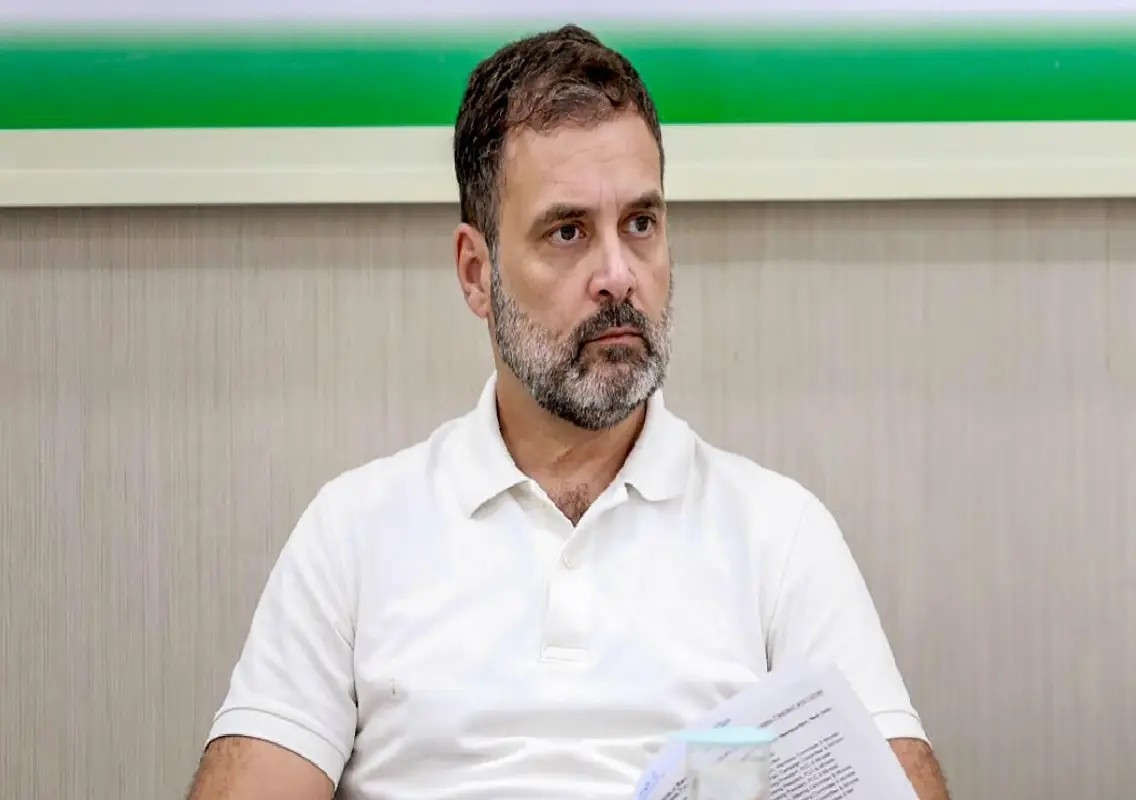


Great Nicobar Island: Leader of Opposition in the Lok Sabha Rahul Gandhi has strongly criticised the Centre’s proposed Rs 81,000 crore infrastructure project in Great Nicobar Island, calling it one of the “biggest scams” and a grave threat to the country’s ecological and tribal heritage.
During his visit to the island, Gandhi described the project as “destruction dressed in development’s language,” alleging that it would lead to large-scale environmental damage and displacement of local communities.
Concerns over environmental impact
Taking to social media, Gandhi claimed that millions of trees were marked for felling and that nearly 160 square kilometres of rainforest could be lost due to the project.
“What I have seen is not a project. It is millions of trees marked for the axe… it is communities that have been ignored while their homes have been snatched away,” he said.
He further remarked that the forests in the region are “older than memory” and emphasised the ecological significance of the island, which is home to rich biodiversity and indigenous populations.
Political opposition to the project
The project has been a point of contention, with the Congress party repeatedly raising concerns over its environmental and social implications.
Former Congress president Sonia Gandhi had earlier urged the Centre to reconsider the plan, describing it as “ill-conceived” and warning that it could displace tribal communities and harm fragile ecosystems.
The project has also faced scrutiny over clearances granted by the National Green Tribunal, which allowed it to move forward despite objections from environmentalists.
Strategic and economic significance
The proposed development includes a transshipment and logistics hub at the southernmost tip of the Andaman and Nicobar archipelago, a location considered strategically vital.
The island lies close to the Strait of Malacca, one of the world’s busiest maritime trade corridors. This proximity gives it importance in India’s broader strategic calculations, particularly in the context of regional competition with China.
Experts argue that the project could boost trade, attract investment and strengthen India’s maritime capabilities, potentially transforming the region into a key logistics hub.
Balancing development and conservation
While critics warn of irreversible environmental damage and displacement, supporters highlight potential economic and strategic benefits.
The debate reflects a broader challenge of balancing infrastructure development with environmental conservation and the protection of indigenous communities.
Conclusion
Rahul Gandhi’s remarks have once again brought the Great Nicobar project into focus, underscoring deep divisions over its long-term impact. As discussions continue, the project remains a critical test of how India navigates development alongside ecological and social responsibilities.