







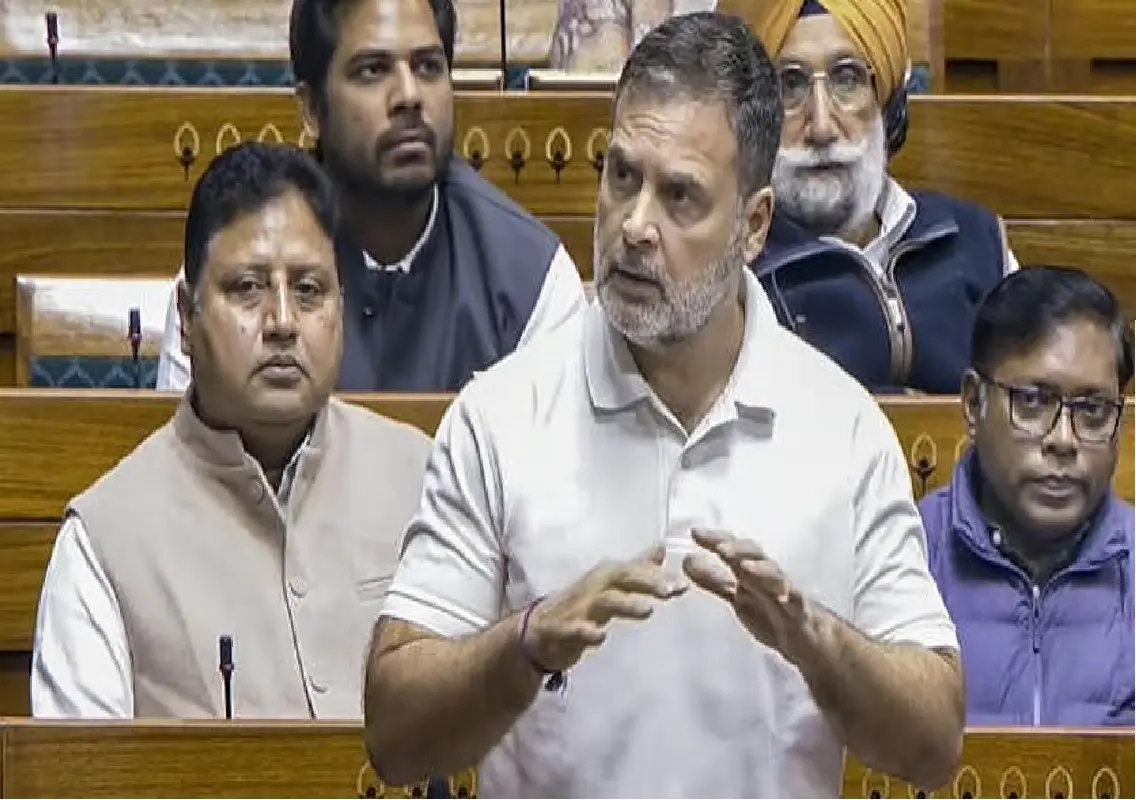


New Delhi: Congress leader and Leader of Opposition in the Lok Sabha Rahul Gandhi on Friday launched a sharp attack on the Modi government, accusing it of “demolishing 20 years of MGNREGA in a single day” through the passage of the VB-G RAM G Bill, which he termed “anti-village” and against the interests of rural India.
Allegation of dismantling MGNREGA framework
In a strongly worded post on X, Rahul Gandhi said the newly passed Viksit Bharat–Guarantee for Rozgar and Ajeevika Mission (Gramin) (VB-G RAM G) Bill was not a revamp of the Mahatma Gandhi National Rural Employment Guarantee Act (MGNREGA), but a fundamental dismantling of its core principles. He alleged that the government had destroyed the rights-based, demand-driven nature of MGNREGA and replaced it with a rationed scheme controlled centrally from New Delhi.
According to Gandhi, MGNREGA’s strength lay in its legal guarantee of employment on demand, which empowered rural workers and decentralised decision-making to states and local bodies. He claimed the new law undermines this structure by capping work and creating multiple avenues to deny employment.
Impact on rural workers and bargaining power
Rahul Gandhi said MGNREGA had provided rural labourers with crucial bargaining power over the past two decades. With guaranteed employment as a fallback option, exploitation reduced, distress migration declined, wages rose and working conditions improved, he said.
He argued that this leverage was precisely what the current government sought to weaken. By altering the nature of the employment guarantee, the VB-G RAM G Bill, he claimed, would reduce the negotiating strength of workers and tilt power back towards contractors and employers.
The Congress leader maintained that the new legislation weakens “the one instrument the rural poor had” by limiting access to work and diluting the certainty that MGNREGA offered during times of economic stress.
Lessons from the Covid-19 crisis
Recalling the Covid-19 pandemic, Gandhi said MGNREGA had proved to be a lifeline when the economy shut down and livelihoods collapsed. He claimed the scheme prevented crores of rural households from falling into hunger and debt during the crisis, providing a safety net when other sources of income vanished.
He asserted that the government’s decision to replace MGNREGA ignored the lessons learnt during the pandemic, when the demand-driven nature of the scheme allowed states to respond flexibly to mass unemployment.
Women and marginalised communities at risk
Rahul Gandhi highlighted that women had been among the biggest beneficiaries of MGNREGA over the years. He pointed out that women consistently contributed more than half of the total person-days generated under the programme, making it one of the largest employment initiatives for rural women in the world.
He warned that rationing a jobs programme disproportionately affects vulnerable groups. According to him, women, Dalits, Adivasis, landless labourers and the poorest Other Backward Classes are the first to be excluded when work availability is capped or made conditional.
The Congress leader said the new law risks pushing these communities further to the margins, undoing years of progress made through guaranteed wage employment and financial inclusion.
Criticism of parliamentary process
Gandhi also objected strongly to the manner in which the VB-G RAM G Bill was passed in Parliament. He said the legislation was “bulldozed” through without adequate scrutiny, despite repeated demands from the Opposition to refer it to a standing committee.
He argued that a law reshaping the rural social contract and affecting crores of workers should not be enacted without detailed examination, expert consultation and public hearings. Rejecting the Opposition’s demand for committee scrutiny, he said, reflected the government’s unwillingness to engage in democratic debate.
Allegations of centralisation and political intent
Accusing the Modi government of having a clear political agenda, Rahul Gandhi said the bill aimed to weaken labour, reduce the leverage of rural India and centralise power. He alleged that the government was targeting Dalits, OBCs and Adivasis while projecting the move as a reform through slogans.
According to him, MGNREGA was internationally recognised as one of the most successful poverty alleviation and empowerment programmes, combining social security with asset creation in rural areas.
Government stance and passage of the Bill
The VB-G RAM G Bill was passed by Parliament late on Thursday night after it received approval from the Rajya Sabha amid vociferous protests by Opposition parties. The legislation seeks to replace the 20-year-old MGNREGA and promises up to 125 days of rural wage employment every year.
The government has maintained that the new mission is aimed at improving efficiency, linking employment with livelihood generation and aligning rural employment with the vision of a ‘Viksit Bharat’. However, Opposition parties have announced plans to take the issue to the streets across the country.
Conclusion
Rahul Gandhi concluded his statement by asserting that the Congress would not allow the government to “destroy the rural poor’s last line of defence”. He said the party would stand with workers, panchayats and state governments to build a nationwide movement demanding the withdrawal of the VB-G RAM G law. As the political debate intensifies, the future of rural employment policy is set to remain a major flashpoint between the government and the Opposition.