







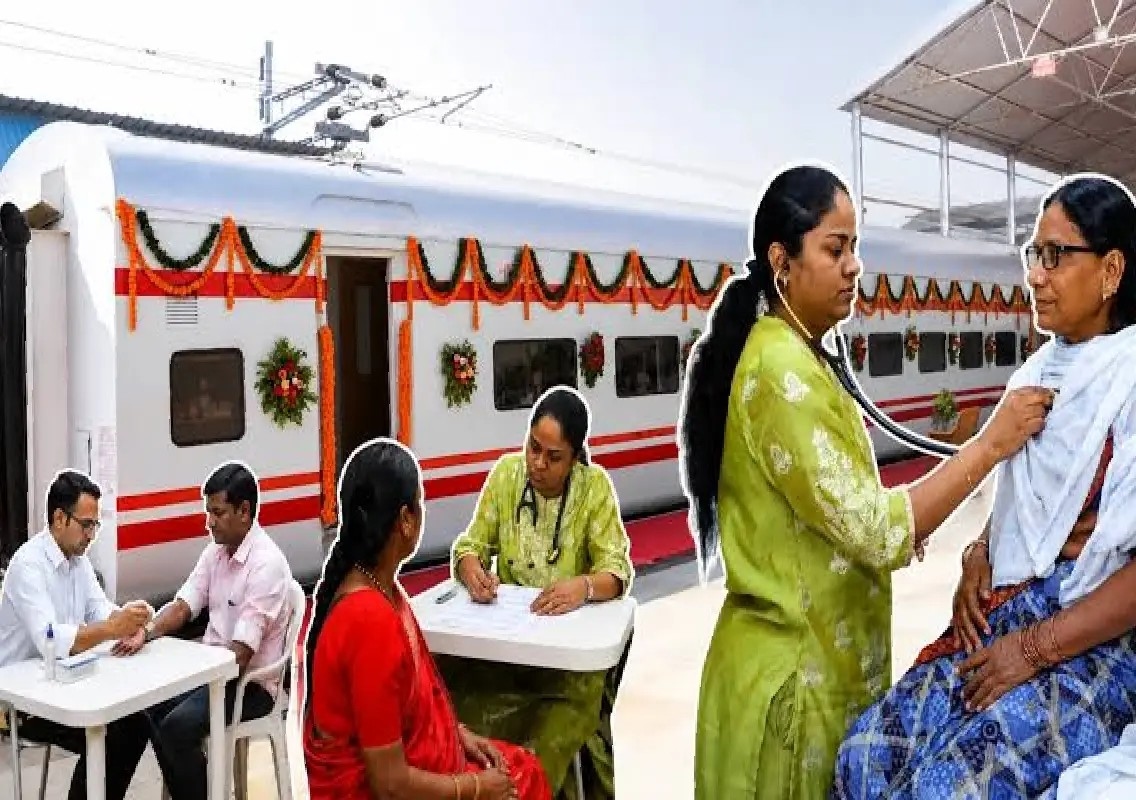


Bhusawal: For railway employees stationed in Akola, Jalgaon and Manmad, visiting the Divisional Railway Hospital in Bhusawal can mean a two- to three-hour journey. To reduce that burden, the Bhusawal railway division has turned an old coach into ‘Rudra’, a hospital on wheels that takes basic healthcare closer to employees and their families.
An old coach gets a new purpose
Launched in January 2025, Rudra was created by refurbishing a railway coach and equipping it with consultation spaces, diagnostic facilities and medicines.
The Bhusawal division covers more than 1,200 kilometres and handles over 225 passenger trains a day, making healthcare access a challenge for employees living far from the divisional headquarters.
Healthcare reaches railway stations
Rudra travels across the division and stops at different stations to conduct medical camps. Patients can access general consultations, visiting specialists and basic tests, including ECGs and pathology screenings.
As of March 2026, the mobile hospital had conducted 28 camps and directly assisted 4,321 beneficiaries.
Divisional Railway Manager Punit Agrawal said the initiative has also helped identify health problems that people were previously unaware of, allowing treatment to begin earlier.
Technology keeps care connected
Since the coach cannot remain at every location, the division has added teleconsultation services to provide initial medical advice between visits.
Digital health records and identification systems have also been introduced to help maintain patient histories and continuity of care.
The model combines a physical mobile unit with technology to make healthcare more accessible without requiring employees to travel long distances for every consultation.
A model built around practical needs
The experience of Rudra offers several lessons for organisations considering similar initiatives: assess local healthcare gaps, map available resources, begin with a pilot, choose convenient locations and timings, build a reliable medical team and ensure strong coordination.
The division found that keeping camps open for five to six hours gave employees sufficient time to seek consultations without rushing.
The concept could also be adapted beyond the railways using buses or vans in rural and remote areas.
Rudra’s biggest lesson is simple: when people cannot easily travel to healthcare, taking healthcare closer to them can make timely consultation possible