







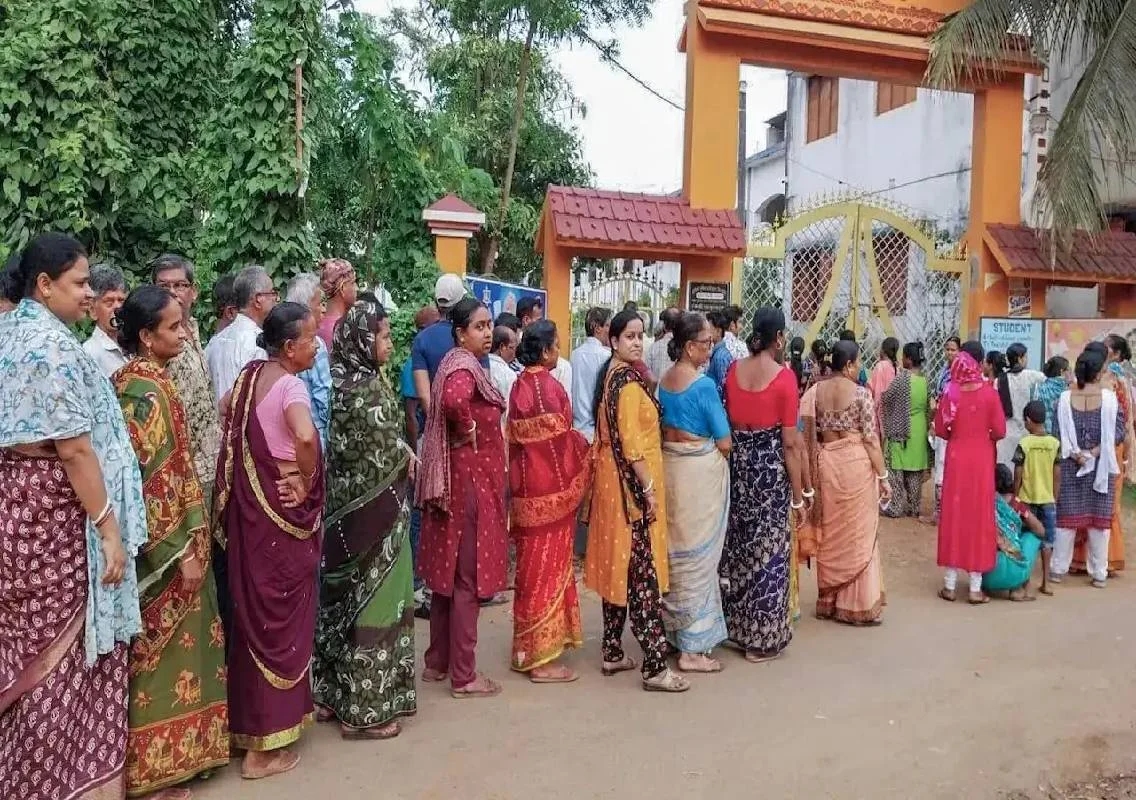


Kolkata: West Bengal recorded its highest-ever voter turnout since Independence in the first phase of the 2026 Assembly elections, with participation touching 92.72 per cent. The unprecedented turnout has triggered a political debate, with both the Bharatiya Janata Party (BJP) and All India Trinamool Congress (TMC) claiming it reflects support in their favour.
Historic turnout across constituencies
According to Chief Election Commissioner Gyanesh Kumar, the turnout in the first phase is the highest recorded in the state since Independence. Voting was held across 152 constituencies in 16 districts, covering 1,478 candidates, including 167 women.
The final turnout figure of 92.72 per cent surpassed the previous high of 84.72 per cent recorded during the 2011 Assembly elections. The second phase of polling is scheduled for April 29, while counting of votes will take place on May 4.
Women voters outnumbered men in participation, with female turnout at 92.69 per cent compared to 90.92 per cent among male voters. The turnout among third-gender voters stood at 56.79 per cent.
Role of electoral roll revision
One of the key factors behind the sharp rise in turnout is the Special Intensive Revision (SIR) of electoral rolls. The exercise led to the removal of inactive voters, including duplicate, deceased, and ineligible names, thereby reducing the total voter base.
Estimates suggest that around 90.8 lakh names — nearly 12 per cent of the electorate — were deleted during the revision process. This brought down the total number of eligible voters to approximately 6.75 crore.
With a lower denominator, the percentage turnout increased as a larger proportion of active voters participated. The revision, however, was strongly opposed by West Bengal Chief Minister Mamata Banerjee, who had approached the Supreme Court over the issue.
Migrant participation and voter engagement
Apart from the roll revision, increased participation by migrant voters and enhanced voter awareness initiatives also contributed to the high turnout. Election officials credited improved voter information slips, reduced crowding at polling booths, and better facilities for persons with disabilities for encouraging more people to vote.
Live webcasting from polling stations was also carried out, monitored by Election Commission officials, to ensure transparency and smooth conduct of the polls.
Anti-incumbency or support for status quo?
The record turnout has led to contrasting political interpretations. The Bharatiya Janata Party views the high participation as a sign of anti-incumbency against the ruling TMC government, suggesting that voters are seeking change.
On the other hand, the All India Trinamool Congress has interpreted the turnout as a vote in favour of continuity, arguing that people have come out in large numbers to support the current administration.
Political analysts note that both narratives cannot be simultaneously correct, and the actual impact will only become clear once the results are announced.
Peaceful polling boosts confidence
A notable aspect of the first phase was the largely peaceful conduct of elections. Unlike previous instances of poll-related violence in the state, only minor incidents were reported.
Union Home Minister Amit Shah praised the Election Commission, central forces, and state police for ensuring smooth polling. He described the violence-free election as a significant achievement.
The peaceful environment is believed to have encouraged more voters to step out and exercise their franchise, contributing to the record turnout.
Mamata Banerjee rejects BJP claims
Chief Minister Mamata Banerjee dismissed the BJP’s claims of anti-incumbency, stating that the high turnout reflects people’s desire to protect their rights and reject the opposition’s narrative.
Her remarks underline the intense political contest in the state, where both parties are attempting to shape public perception ahead of the results.
Conclusion
The record-breaking voter turnout in West Bengal’s first phase of Assembly elections marks a significant moment in the state’s electoral history. While the high participation reflects strong democratic engagement, its political implications remain uncertain.
Whether the surge indicates a demand for change or endorsement of the incumbent government will only be determined when the votes are counted on May 4.