







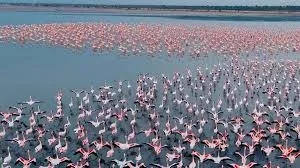


India’s largest inland saltwater lake, Sambhar Salt Lake, has transformed into a striking shade of pink this winter with the arrival of thousands of migratory flamingos, drawing nationwide attention to the ecological importance of the Rajasthan wetland.
Located southwest of Jaipur, Sambhar Salt Lake stretches about 35.5 kilometres in length and between three and eleven kilometres in width. Known for its vast white salt flats and open horizons, the lake takes on a dramatically different appearance during winter when migratory birds arrive in large numbers.
Flamingos paint the lake pink
This season, unusually large flocks of flamingos have descended on the lake, turning shallow water stretches into rose-coloured expanses. Their pink plumage, reflected across the saline waters, has created a visually surreal landscape. Photos and videos of the phenomenon have gone viral on social media, attracting tourists, birdwatchers and wildlife photographers from across the country.
Situated around 80 kilometres from Jaipur, the lake has become one of Rajasthan’s most photographed natural attractions this winter. Visitors describe the scene as tranquil yet breathtaking, with constantly shifting patterns as flamingos feed, cluster and take flight.
Why Sambhar attracts migratory flamingos
Flamingos typically migrate to Sambhar Lake between November and March, following the Central Asian Flyway. Many travel from far-off regions such as Russia, Siberia and Mongolia. The lake’s saline ecosystem supports algae and brine shrimp — a key food source that gives flamingos their distinctive colour.
Experts say water levels and algae growth have remained favourable this year, encouraging larger congregations and longer stays. An estimated two lakh flamingos are believed to be present this winter, significantly intensifying the lake’s pink hue.
Ecological importance and concerns
Covering nearly 240 square kilometres, Sambhar Salt Lake plays a vital role in supporting migratory bird populations along major Asian routes. Scientists note that the dense presence of flamingos points to relatively healthy ecological conditions at present.
However, conservationists caution that the wetland remains fragile. Salt extraction, water diversion and unregulated activity continue to pose long-term threats. Experts stress the need for balanced management that protects wildlife while sustaining local livelihoods.
As Rajasthan is often associated with forts and deserts, Sambhar’s seasonal transformation has once again shifted attention to the region’s natural heritage. The pink lake stands as a reminder of the delicate yet powerful beauty of India’s wetland ecosystems.