







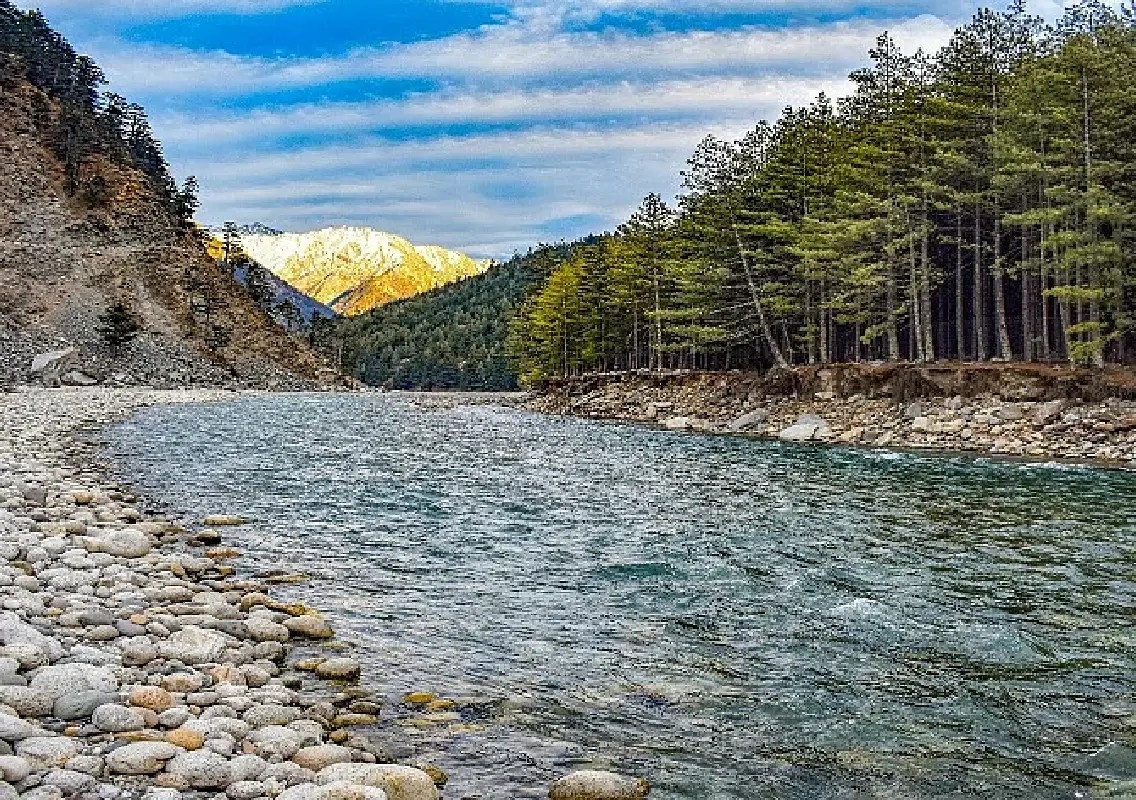


New Delhi: Protecting the Ganga will require more than sewage-treatment plants, embankments and other infrastructure, with long-term conservation also depending on how deeply people understand and value the river.
A recent conservation initiative has sought to bridge that gap through nature interpretation centres established along the Ganga and its tributaries. Developed under the Namami Gange programme with the Wildlife Institute of India (WII) as a knowledge partner, the centres aim to turn scientific information about the river into public understanding and encourage people to participate in conservation.
Six interpretation facilities have been developed as part of the initiative. Four are located in major urban centres — Ganga Avlokan in Haridwar, Raghukul in Ayodhya, Anubhuti in Kanpur and Ganga Darpan in Varanasi. Two open-air interpretation spaces are located at Sanjay Van in Rudrapur and City Forest in Ramnagar, Uttarakhand.
Taking the Ganga beyond a river of water
The centres seek to present the Ganga as a living ecosystem rather than merely a source of water or a symbol of religious and cultural importance.
Their exhibits introduce visitors to aquatic biodiversity, the river’s journey, ecosystem services and the threats posed by pollution and other human pressures. Interactive displays, life-sized models, audio-visual material, educational games and hands-on activities are used to make the experience more engaging.
The idea is to encourage visitors to observe, question and understand rather than simply read information displayed on conventional panels.
Such an approach can create an emotional connection with nature. When people begin to understand the species, communities and ecological processes dependent on a river, awareness can gradually develop into empathy and a greater willingness to protect it.
Six centres tell different stories
The interpretation centres reflect the changing character of the Ganga as it moves from the Himalayas into the plains.
At Haridwar, Ganga Avlokan focuses on the river’s origins, aquatic biodiversity and ecosystem services. Located at Chandi Ghat, the centre uses interactive exhibits and dioramas to explain how the river supports both natural ecosystems and human communities.
The open-air centres at Sanjay Van in Rudrapur and City Forest in Ramnagar take visitors directly into forest landscapes. Natural trails, three-dimensional species models and interpretive displays help visitors understand biodiversity in its natural surroundings.
In Kanpur, Anubhuti presents another dimension of the Ganga’s story. Located within Allen Forest at Kanpur Zoological Park, it explores the relationship between rapid urbanisation, industrial development and the environmental challenges faced by the river.
Ganga Darpan in Varanasi brings together the river’s cultural, spiritual and ecological dimensions. Located within the Turtle Rescue and Rehabilitation Centre at Sarnath, it highlights the biodiversity of the Ganga while examining its deep relationship with communities and India’s cultural heritage.
At Ayodhya, Raghukul focuses on the ecological and cultural significance of the Ghaghara river, while connecting the river’s biodiversity with the historical and spiritual identity of the city.
Growing interest among visitors
The initiative’s impact is not being measured only by the construction of the facilities but also by the people engaging with them.
Visitor numbers have reportedly shown sustained growth at several centres. Ganga Avlokan has recorded an average annual increase of 19 per cent in visitors, while Ganga Darpan has seen an average annual rise of 23 per cent. Anubhuti has recorded an even sharper average annual increase of 61 per cent.
Schools and teachers are increasingly using the centres for experiential learning, while community workshops and awareness programmes provide opportunities for people to participate in conservation activities.
The repeated engagement is important because conservation awareness is rarely created through a single visit or campaign. Continued exposure can help transform curiosity into knowledge and knowledge into a stronger sense of responsibility.
Conservation must reach beyond government projects
The Ganga has been the focus of substantial government investment and institutional efforts, particularly through the Namami Gange programme.
However, the long-term health of a river cannot depend entirely on government-funded infrastructure. Sewage-treatment facilities can reduce pollution, while engineering interventions can address particular physical problems, but neither can by itself guarantee that communities will value and protect the river.
Public participation becomes particularly important because the Ganga flows through diverse landscapes and supports millions of people. Its ecological challenges vary from one stretch to another, as do the pressures created by urbanisation, agriculture, industry and human activity.
An informed public can therefore become an additional and lasting layer of protection.
From awareness to action
The larger purpose of interpretation is to encourage people to make a connection with nature that continues after they leave the centre.
A visitor who understands that the river supports numerous species and provides essential ecological services may begin to see pollution or habitat destruction differently. The river becomes more than an abstract environmental issue; it becomes a living system that deserves care.
This transformation is difficult to measure compared with the number of sewage-treatment plants constructed or kilometres of riverfront improved. Yet it can be crucial for lasting conservation.
The experience of the Ganga interpretation centres suggests that environmental education can serve as an important complement to physical restoration measures.
A river needs millions of custodians
The future of the Ganga ultimately depends on collective responsibility.
Government agencies, scientists and conservation organisations have important roles in restoring habitats, improving water quality and protecting biodiversity. But the scale of the river and the number of communities dependent on it mean that conservation cannot succeed without public participation.
The interpretation centres offer one way of building that participation by helping people understand the Ganga’s ecological importance and encouraging an emotional connection with the river.
The lesson is clear: infrastructure can create the foundation for river restoration, but informed citizens can help sustain it. For the Ganga to remain healthy for future generations, millions of people will need not only to use the river but also to understand, value and protect the living ecosystem it represents.