


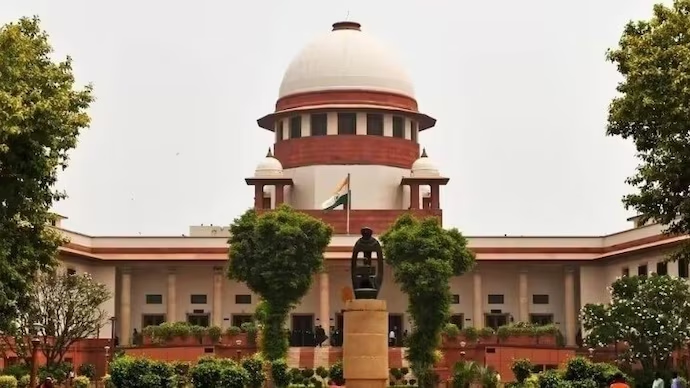


New Delhi: The Supreme Court on Sunday sought responses from the Centre, Delhi Police and the Delhi Metro Rail Corporation (DMRC) on contempt and habeas corpus petitions concerning alleged mass detentions and restrictions imposed in the national capital during the Cockroach Janta Party’s (CJP) call for the ‘Jantar Mantar 2.0’ protest.
A bench of Justices Joymalya Bagchi and V Mohana issued notices to the concerned officials, seeking their responses to the allegations raised in the petitions.
The contempt plea alleges that authorities violated an earlier Supreme Court direction against a complete prohibition on Metro and railway services in Delhi during the protest-related restrictions. The petitions also raise concerns about the alleged detention of protesters and curbs on public movement.
The notices mark a step in the legal proceedings, but do not amount to a finding that contempt of court occurred or that the allegations of illegal detention have been established.
Contempt plea challenges transport restrictions
The contempt petition questions the restrictions imposed on transport services during the CJP protest. It alleges that the authorities failed to comply with the Supreme Court’s earlier direction against a complete shutdown of Metro and train services in Delhi.
The petitioners have challenged measures that they say affected public movement and made it difficult for people to reach the protest site.
The proceedings will require the concerned authorities to explain the restrictions and their compliance with the court’s directions. The Supreme Court will consider the responses before deciding on any further action.
Habeas corpus pleas raise detention concerns
Alongside the contempt petition, habeas corpus petitions have been filed over alleged detentions linked to the protest.
A habeas corpus petition seeks judicial scrutiny of a person’s detention and can ask the court to direct authorities to produce the detained person before it.
The petitions raise concerns about the scale of the detentions and the legality of the police action. The allegations remain subject to judicial consideration, and the authorities have been given an opportunity to respond.
Protest linked to demands over CEC
The CJP had called for the ‘Jantar Mantar 2.0’ protest amid demands for the resignation of Chief Election Commissioner Gyanesh Kumar over alleged irregularities in the Special Intensive Revision (SIR) of electoral rolls.
The planned demonstration led to security arrangements and restrictions in parts of Delhi. Those measures subsequently became the subject of legal challenges concerning transport access, freedom of movement and the alleged detention of protesters.
The Supreme Court proceedings concern the legality of the restrictions and compliance with its earlier directions. They do not, by themselves, determine the separate allegations concerning the electoral roll revision.
Supreme Court awaits responses
The notices issued to the Centre, Delhi Police and DMRC seek their responses to the claims made in the petitions.
The court will examine the submissions before deciding whether further directions are required. Until then, the contempt allegations and claims concerning detention remain matters before the court.
The case highlights the legal questions that can arise when authorities impose transport and movement restrictions during demonstrations, particularly when earlier judicial directions govern the measures that may be taken.