







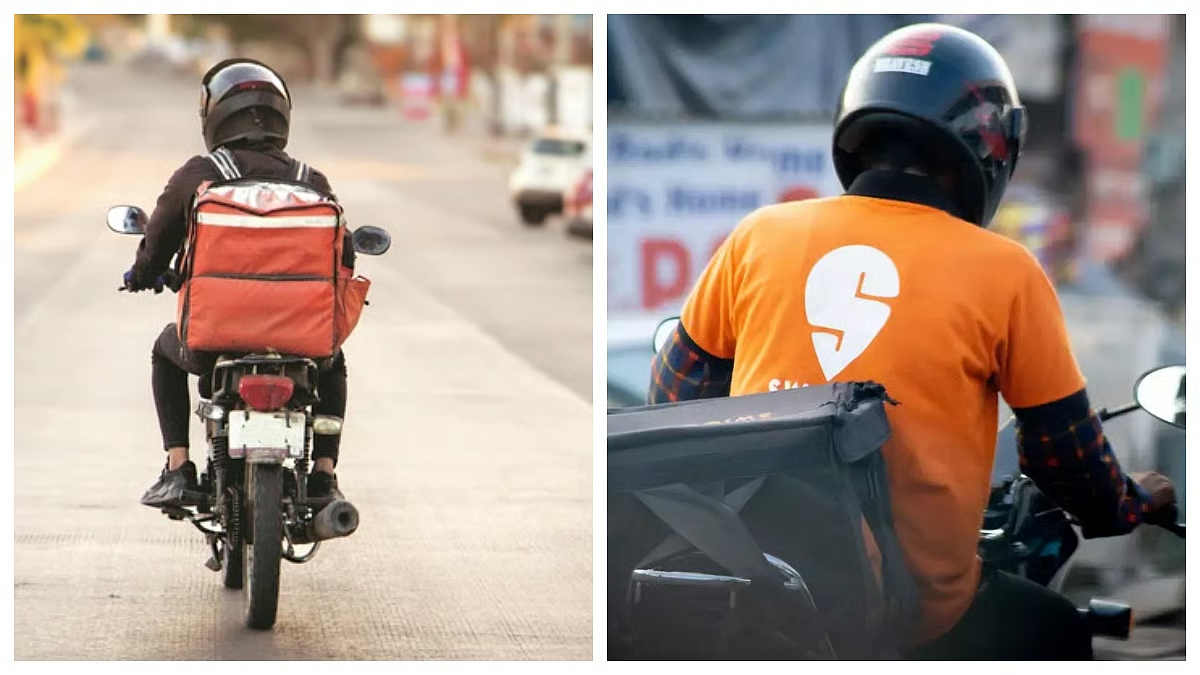


Indian students are no longer waiting to graduate before becoming part of the economy. They are already powering it.
The Doers’ Report 2025, released by TimBuckDo, reveals a major shift in how students across India are using gig work — not as casual side income, but as a vital source of financial survival and independence.
The study draws on platform data from over 4.5 lakh students across metros and fast-growing tier-2 cities.
Gig earnings now mirror student living costs
According to the report, the most common monthly earnings from student gigs range between ₹6,000 and ₹15,000. This closely aligns with basic student expenses such as rent, food, travel, and utilities.
TimBuckDo introduced a new metric — the Gig Survival Index (GSI) — to measure how much of a student’s monthly living costs are covered through gig income. The findings are striking: for many students, especially in tier-2 cities, gig earnings now cover 40 to 100 per cent of monthly expenses.
Average monthly earnings across the platform stood at around ₹8,000, while top-performing students earned up to ₹65,000 through high-responsibility roles. Annual earnings for the highest earners touched ₹1.5 lakh.
Where students earn the most
The highest concentration of student gig earnings came from Bengaluru, Mumbai, Delhi NCR, Chennai, Hyderabad and Pune.
In terms of work format:
- 48 per cent of gigs were on-ground roles
- 32 per cent were remote
- 20 per cent offered hybrid or flexible arrangements
High-demand roles included telecalling, delivery services, social media management, event operations, AI-assisted research and content optimisation.
Leaders say student gigs are now “foundational”
Commenting on the findings, Mythri Kumar said student gigs have moved beyond being temporary solutions.
“What 2025 confirmed for us is that student gigs are no longer transitional, they are foundational,” she said, adding that AI-driven matching and employer trust will make gig work more predictable and safer in 2026.
Apoorv Sharma Prasad stressed the need for formal systems.
“If student income isn’t protected and supported, it breaks the moment life throws a challenge,” he said.
Beyond gigs: building a student work ecosystem
The report highlights TimBuckDo’s evolution into a full-stack student work platform. In 2025, students were supported with PAN registration, affordable insurance and wellness cover, and cost-saving partnerships for travel and essentials.
On the employer side, roles saw 10–50 times more applications per listing, repeat hiring from trusted companies, and rising demand for large-scale student hiring. The platform also blocked over 800 scam job listings.
With India’s gig workforce projected to reach 24 million by 2030, the report positions students not as future contributors, but as a workforce already shaping the country’s gig economy.