







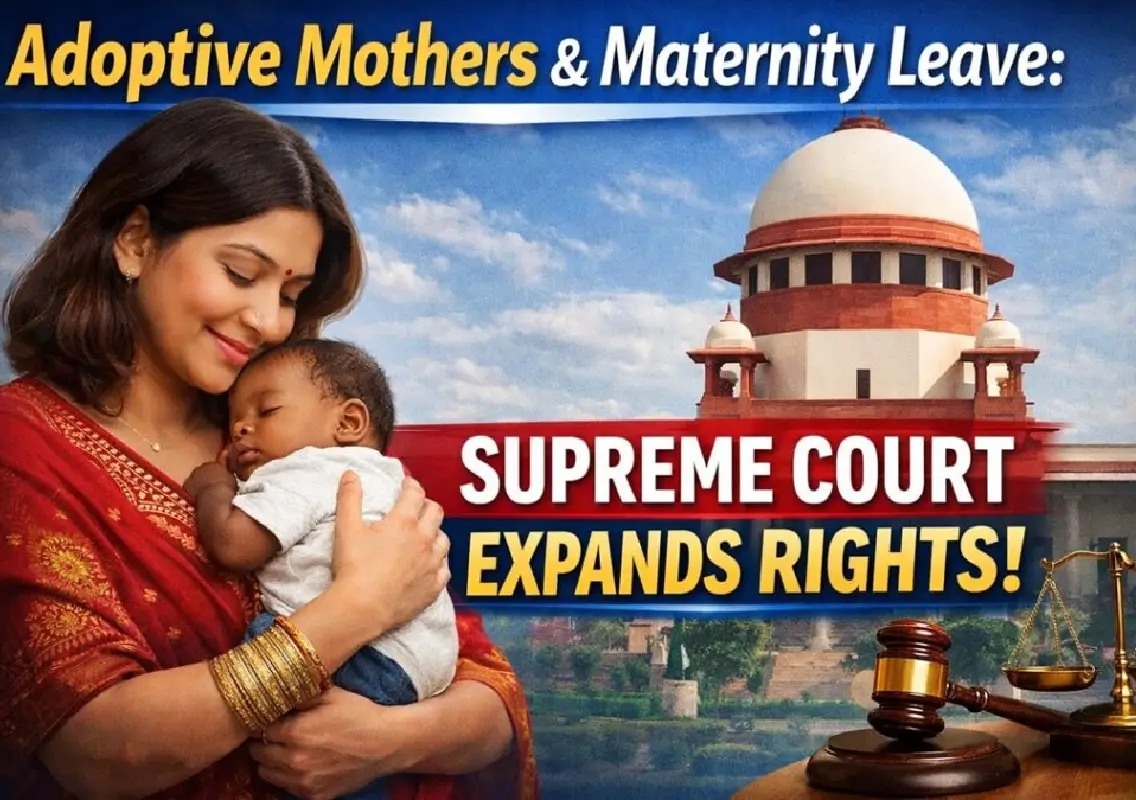


In a progressive step towards gender equality, the Supreme Court of India has expanded maternity rights for adoptive mothers, reinforcing that such benefits are essential for dignity, child welfare and equal parenting.
Landmark ruling removes restrictions
In the case of Hamsaanandini Nanduri vs Union of India, the Court struck down a restrictive provision that limited maternity leave for adoptive mothers only if the child was below three months of age.
The ruling emphasised that bonding, caregiving and emotional development are equally important regardless of whether the child is biological or adopted.
Maternity leave recognised as a fundamental right
Building on earlier rulings, the Court reaffirmed that maternity benefits fall under Article 21 of the Constitution, linking them to a woman’s right to health, privacy and reproductive autonomy.
It clarified that such benefits cannot be denied based on arbitrary conditions, including the number of children or nature of parenthood.
Boost to adoption and modern families
The judgement is expected to encourage adoption by removing legal barriers and recognising diverse family structures, including single parents by choice.
In India, adoption is regulated through bodies such as the Central Adoption Resource Authority, along with state agencies that ensure ethical and legal processes.
Addressing changing social realities
With rising work pressures, delayed marriages and increasing reproductive health challenges, more couples are turning to adoption as a path to parenthood.
The Court’s decision acknowledges these evolving realities and supports inclusive policies that reflect contemporary lifestyles.
Towards equality and child welfare
Legal experts note that the ruling promotes non-discrimination between biological and adoptive mothers while prioritising the well-being of the child.
It also redefines work-life balance by recognising caregiving as a shared societal responsibility, strengthening both family systems and workplace equity