







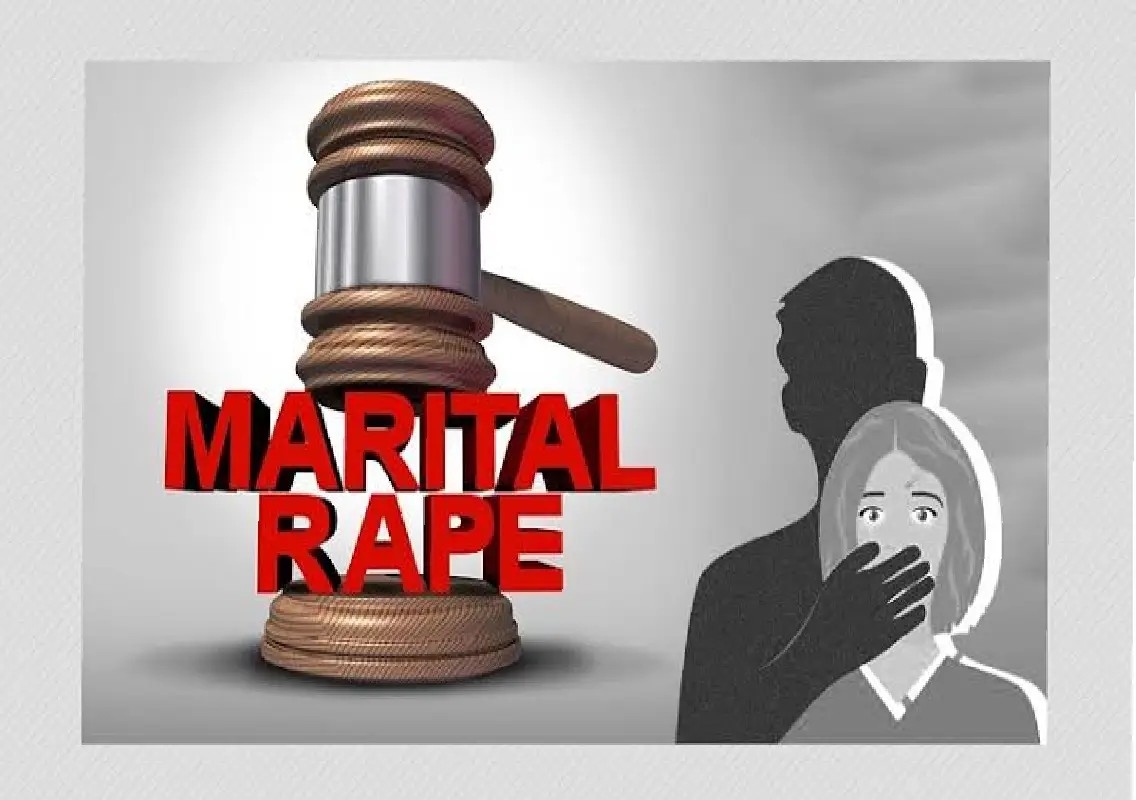


New Delhi: The Supreme Court has begun examining the contentious legal question of marital rape, observing that marriage does not extinguish an individual’s autonomy while questioning whether a husband can be prosecuted for rape when the existing law contains an exception.
A three-judge Bench headed by Chief Justice of India Surya Kant and comprising Justices Joymalya Bagchi and V Mohana is hearing a batch of petitions concerning the marital rape exception under the Indian Penal Code (IPC) and its corresponding provision under the Bharatiya Nyaya Sanhita (BNS).
Court first takes up Karnataka case
The Bench has decided to first hear an appeal arising from a Karnataka High Court ruling that allowed rape proceedings against a husband accused of sexually assaulting his wife. The case has become an important part of the wider constitutional debate over marital rape.
The Supreme Court is considering whether existing law can permit prosecution in such circumstances and whether the marital rape exception itself can withstand constitutional scrutiny.
Marriage does not erase autonomy
During Wednesday’s hearing, Justice Joymalya Bagchi acknowledged the importance of the safety and security of married women and said there was no question of marriage resulting in the extinction of individual autonomy.
At the same time, the court noted that it was dealing with penal law and questioned whether prosecution could proceed for an act that the existing statutory exception does not recognise as rape, before the constitutional validity of that exception is decided.
The court also observed that the marital rape exception does not necessarily shield a husband from all criminal consequences arising from sexual violence. Other offences may apply where serious injury or death occurs.
Final hearing expected after three weeks
The court has directed that the matters be listed for final hearing after three weeks, with hearings scheduled on Wednesdays and Thursdays. Parties have also been asked to compile their pleadings and supporting documents.
The proceedings could have significant implications for how consent, bodily autonomy and protection from sexual violence are understood within marriage in India.