







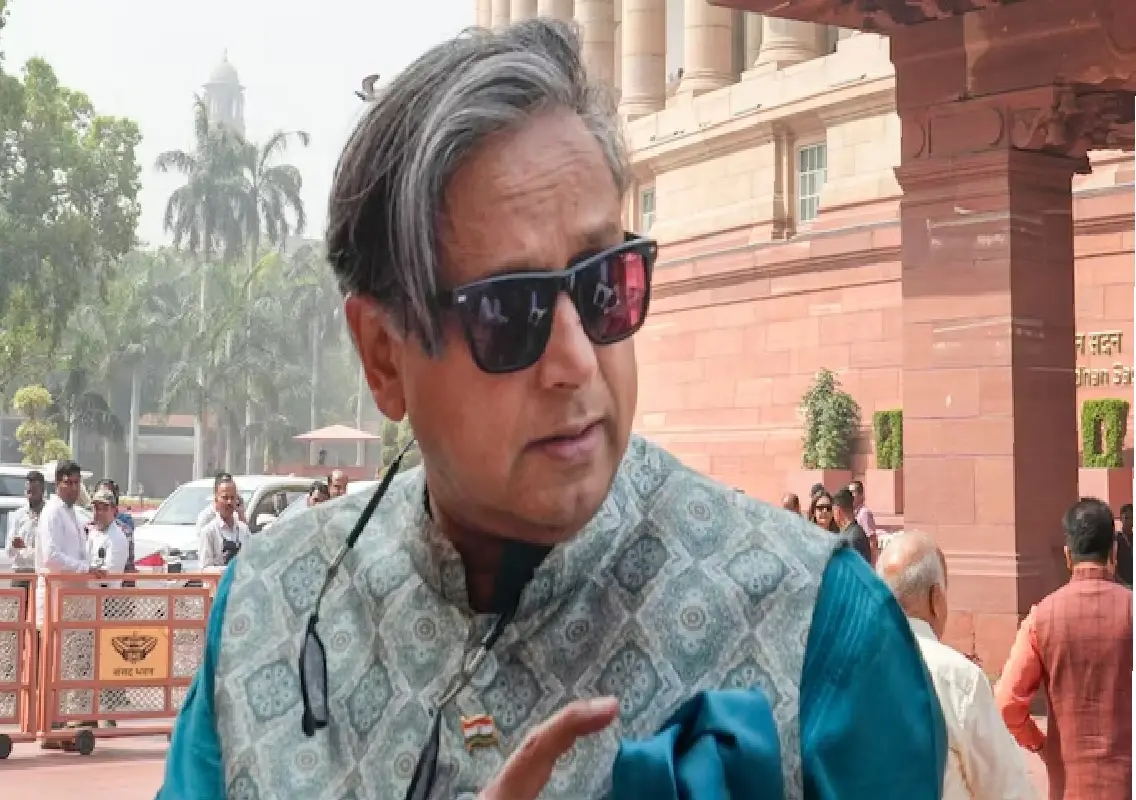


New Delhi: Senior Congress leader Shashi Tharoor has stirred political debate after publicly supporting the Centre’s cautious approach to the ongoing Middle East crisis, with the Bharatiya Janata Party highlighting his remarks to counter opposition criticism.
In a recent interview clip shared widely on social media, Tharoor defended the government’s diplomatic stance, calling restraint a sign of strength rather than weakness.
Tharoor praises “strategic restraint”
Speaking on India’s response to the escalating tensions involving Narendra Modi’s government, Tharoor said that exercising restraint was the right course of action.
He remarked that even if he were advising a Congress-led government, he would recommend a similar approach.
“Restraint is not surrender; it is strength. It shows clarity about national interests and the willingness to act in their protection,” he said, signalling a departure from the broader opposition’s criticism of the Centre.
BJP amplifies remarks
The BJP was quick to share and amplify Tharoor’s comments, presenting them as validation of the government’s foreign policy approach.
In a social media post, the party stated that India’s “balanced and mature diplomacy” stands out at a time of global tension, using Tharoor’s remarks to underline its narrative.
The development has triggered political reactions, as Tharoor’s views appeared to diverge from the usual opposition stance on foreign policy matters.
India’s diplomatic balancing act
India has largely maintained a neutral position amid the ongoing conflict involving Iran, the United States, and Israel.
During the initial phase of the conflict, India refrained from directly condemning military actions, opting instead for a cautious and measured response.
As tensions escalated, particularly with disruptions around the strategically vital Strait of Hormuz, India engaged in quiet diplomacy to safeguard its economic and energy interests.
Securing energy routes
The crisis had significant implications for global energy supply, as the Strait of Hormuz handles nearly one-fifth of the world’s oil and gas shipments.
Indian diplomatic efforts, including engagement by the Ministry of External Affairs, reportedly helped secure safe passage for two LPG tankers and one crude oil vessel through the region.
These developments were seen by many analysts as a diplomatic success, allowing India to protect critical supply lines without taking sides in the conflict.
Call for peace initiatives
Tharoor also emphasised the need for countries like India to play a constructive role in reducing tensions.
He suggested that India should take initiatives aimed at de-escalation by encouraging dialogue between the conflicting sides.
“What countries like India ought to do is call for peace and offer both sides a way to step back,” he said, advocating for diplomacy over confrontation.
“Strategic prudence” over posturing
In a recent opinion piece, Tharoor further described India’s approach as one of “strategic prudence,” arguing that silence should not be interpreted as endorsement of the conflict.
He maintained that India’s primary focus must remain on protecting its national interests rather than engaging in rhetorical positioning.
Conclusion
Tharoor’s remarks have added a nuanced dimension to the political discourse surrounding India’s foreign policy. While the government’s approach has faced criticism from sections of the opposition, his endorsement underscores the complexity of navigating global conflicts where strategic interests and diplomacy must be carefully balanced.