


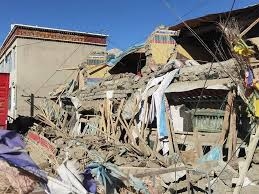


Beijing: The number of people injured in a magnitude 7.0 earthquake that struck China’s southwestern region of Tibet has risen to 76, while the death toll remains at 16, local government authorities said on Friday, October 23, 2026.
The earthquake struck near Nagqu, a high-altitude city in northern Tibet, on Thursday, October 22. The sparsely populated region experienced China’s strongest earthquake since January 2024, according to Reuters.
Rescue and emergency relief operations are continuing as authorities assess damage to buildings and help residents move to safer locations. Officials have warned that homes damaged during the main earthquake could collapse during aftershocks, even as communication networks and electricity supplies are gradually being restored.
More than 12,000 people have been safely relocated, according to China’s state-run Xinhua news agency. Authorities are continuing to assess the situation and provide assistance to affected communities.
Rescue operations underway near Nagqu
More than 300 police officers, including traffic and community police personnel, were deployed to the earthquake’s epicentre to assist with rescue and emergency relief work, the Nagqu police department said in a post on the Chinese messaging platform WeChat on Friday.
The officers were tasked with inspecting damage to homes, checking affected areas and helping residents relocate to safer places.
Footage released by the police on Douyin, the Chinese short-video platform, showed officers loading supplies into a truck in the dark. Other scenes showed personnel examining a building and debris with flashlights as they carried out checks in the affected area.
The deployment reflects the scale of the emergency response required in a region where the earthquake has damaged buildings and raised concerns about the safety of residents returning to their homes.

Authorities are also working to identify structures that may be at risk of collapse. Homes that have developed cracks or begun leaning following the initial tremor could become particularly dangerous if further seismic activity occurs.
Officials have urged caution as rescue personnel continue their inspections and relocation efforts.
More than 12,000 people moved to safety
More than 12,000 people have been safely relocated following the earthquake, Xinhua reported.
Videos released earlier by local official media showed residents leaving their homes and seeking shelter outdoors or inside cars parked along streets. Some residents chose to remain away from buildings because of fears that aftershocks could cause further damage.

One resident described being awakened by the powerful tremor and hearing the house creak as the earthquake shook the area.
The evacuation effort is aimed at reducing the risk to residents whose homes may have sustained structural damage. Authorities face the additional challenge of ensuring that people have access to temporary shelter and essential supplies while safety assessments continue.

The region’s high altitude and sparse population also make the coordination of emergency services important, particularly when officials need to reach communities spread across a large area.
Although communication and power supplies are gradually being restored, officials have warned that damaged buildings remain a concern.
More than 400 aftershocks recorded
The China Earthquake Networks Center said 413 aftershocks had been recorded following the main earthquake.
Aftershocks can cause additional damage to buildings already weakened by the initial tremor. Even structures that remain standing may become unsafe if their foundations, walls or supporting elements have been compromised.

The warning is particularly relevant for residents considering returning to their homes. Authorities are assessing buildings and helping people move away from locations considered unsafe.
The number of recorded aftershocks also underlines the continuing uncertainty facing communities near the epicentre. Emergency teams must carry out rescue work while remaining alert to further seismic activity.
The authorities have not indicated in the information available how long the inspections and relocation operations are expected to continue.
Earthquake was the strongest to hit China since January 2024
The magnitude 7.0 earthquake near Nagqu is the strongest to strike China since January 2024, according to Reuters.

Nagqu is located in northern Tibet, a region characterised by high elevations and relatively low population density. Despite the sparse population, earthquakes can pose serious risks because of the vulnerability of buildings and the difficulties associated with reaching affected communities.
The current emergency has left 16 people dead and 76 injured, according to the latest figures provided by local authorities on Friday. The casualty figures may be updated as rescue teams continue assessing the damage.
The number of people moved to safety indicates the scale of precautionary measures being undertaken to protect residents from potentially unstable structures and further tremors.
Earlier earthquake in neighbouring Qinghai killed thousands
China has experienced devastating earthquakes in the wider Tibetan Plateau region in the past.
In 2010, a magnitude 7.1 earthquake struck Yushu in neighbouring Qinghai province. The disaster killed at least 2,698 people and left nearly 300 others missing.
The 2010 earthquake demonstrated the potentially severe consequences of major seismic events in the region. However, the circumstances and impact of each earthquake differ depending on factors such as the location, depth, population exposure and vulnerability of buildings.
The latest earthquake near Nagqu has so far resulted in 16 reported deaths, with 76 people injured. Authorities are continuing rescue and relief operations while monitoring aftershocks and inspecting damaged homes.
Authorities continue damage assessments and relief work
The immediate priorities following the Tibet earthquake include assisting injured residents, checking buildings for structural damage and ensuring that people can remain in safe locations.
The deployment of police personnel, the relocation of more than 12,000 people and the gradual restoration of communication and electricity services form part of the ongoing response.
Officials have warned that the danger has not necessarily passed, as aftershocks could affect buildings weakened by the main earthquake. Residents may therefore need to remain away from unsafe structures until inspections are completed.
With the death toll unchanged at 16 and the number of injured rising to 76 as of Friday, the full extent of the damage is still being assessed. Emergency teams continue to work in the affected region as authorities focus on public safety and relief for displaced residents.