







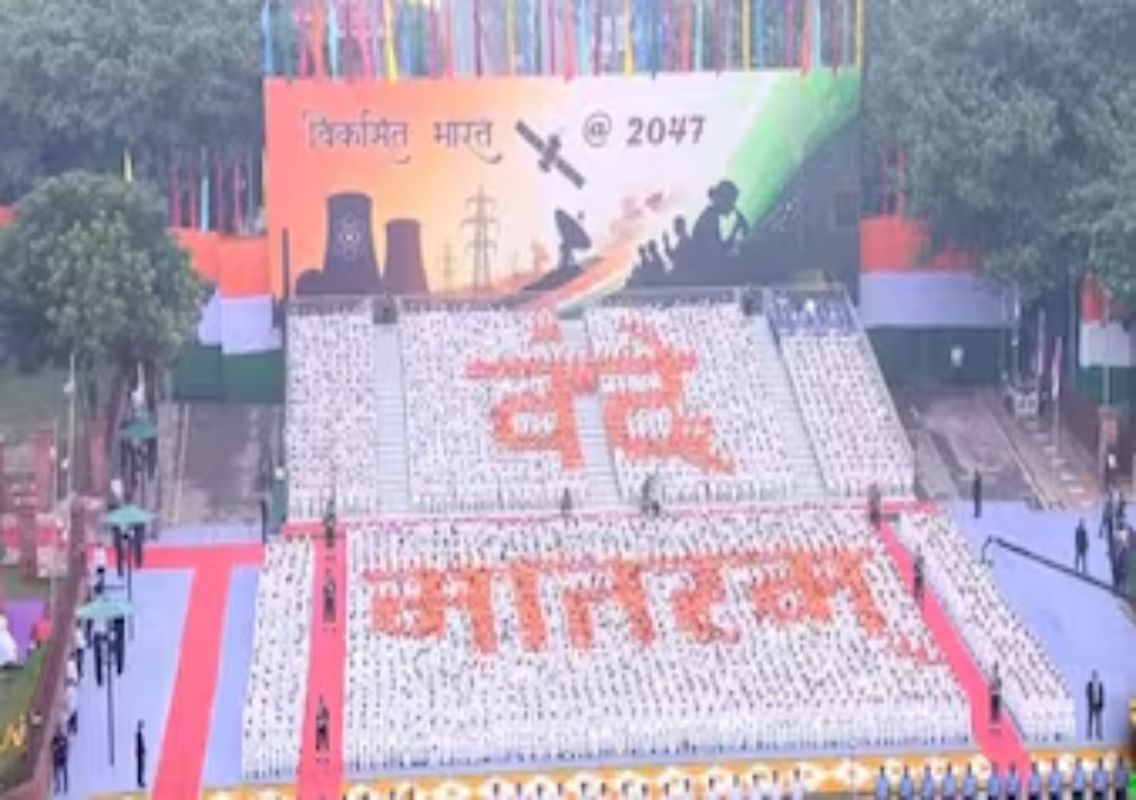


New Delhi: Vande Mataram was played in full at the Red Fort for the first time during the official Independence Day celebrations on Saturday, marking a significant moment as India observed its 80th Independence Day. The rendition followed Prime Minister Narendra Modi’s hoisting of the national flag and was followed by the playing of the National Anthem, Jana Gana Mana.
The development is particularly significant this year as India is marking 150 years of Vande Mataram, the National Song written by Bankim Chandra Chattopadhyay. The song has had a prominent place in India’s freedom movement and has remained an important symbol of the country’s nationalist history.
Vande Mataram played at Red Fort
The Army band performed Vande Mataram during the Independence Day ceremony at the Red Fort after Prime Minister Narendra Modi hoisted the national flag. According to NDTV, the full version of the National Song was played before the customary rendition of Jana Gana Mana.
The ceremony began with the national flag being unfurled from the ramparts of the historic Red Fort. The flag-hoisting was synchronised with a 21-gun salute by the 1721 Field Battery (Ceremonial), using indigenous 105 mm Light Field Guns.
The ceremony also featured an aerial display. Two Mi-17 helicopters of the Indian Air Force showered flower petals over the venue. One of the helicopters carried the National Flag, while the other carried a flag depicting Vande Mataram.
Addressing the nation after the ceremony, Prime Minister Modi highlighted the significance of the rendition and said it was the first time since Independence that Vande Mataram had been played at the Red Fort.
150 years of the National Song
The rendition comes at a significant milestone for Vande Mataram. This year marks 150 years of the National Song, adding further importance to its inclusion in the official Independence Day ceremony.
Vande Mataram became closely associated with India’s freedom struggle and the Swadeshi Movement. Its words and melody became symbols of resistance against British rule and helped establish the song as one of the country’s most recognised patriotic compositions.
President Droupadi Murmu also referred to the song’s historical importance in her address to the nation on the eve of Independence Day. She noted its role during the Swadeshi Movement, when it became a song of the masses.
The song’s place in the country’s official ceremonial landscape has also received renewed attention following recent legislative changes.
Vande Mataram gets legal protection
The full version of Vande Mataram was recently accorded the same legal protection as the National Anthem following President Droupadi Murmu’s assent to the Prevention of Insults to National Honour (Amendment) Bill, 2026.
Under the amended law, deliberate disruption of or prevention of the singing of the National Song can attract penalties, including imprisonment, a fine, or both.
The change places Vande Mataram on a more prominent legal footing in matters concerning national honour. The song’s use during the Independence Day ceremony at the Red Fort therefore comes at a time when its official status and public significance are receiving renewed attention.
The President’s address on Friday also featured Vande Mataram both before and at the conclusion of her speech, according to the report.
Ceremony combines tradition and indigenous technology
The 80th Independence Day ceremony also highlighted India’s military and technological capabilities alongside its historical traditions.
The 21-gun salute was carried out using indigenous 105 mm Light Field Guns, linking the traditional ceremonial salute with domestically developed defence equipment. The helicopter flypast and flower-petal shower added another visual element to the ceremony.
The sequence of events at the Red Fort was also notable. Following the flag-hoisting and ceremonial salute, the Army band played the full version of Vande Mataram. This was followed by Jana Gana Mana, the National Anthem.
The inclusion of both songs gave the ceremony a distinct emphasis on India’s national symbols and their historical evolution.
A symbolic moment on India’s 80th Independence Day
The playing of Vande Mataram in full at the Red Fort is more than a change to the musical programme of the Independence Day ceremony. It comes during the 150th anniversary year of the National Song and shortly after the legislation providing it with the same legal protection as the National Anthem.
The Red Fort itself carries considerable historical significance. Every year, the Prime Minister’s Independence Day address from its ramparts serves as one of the country’s most important national ceremonies.
This year’s ceremony therefore brought together several elements: the 80th anniversary of India’s Independence, the 150th year of Vande Mataram, the recent legal changes concerning the National Song and the continued emphasis on India’s indigenous defence capabilities.
The full rendition also marked a notable moment in the official use of the song at the Red Fort. With Vande Mataram now receiving renewed prominence in national ceremonies, its role in India’s public and cultural life is likely to remain an important subject of discussion.
Conclusion
The first full rendition of Vande Mataram at the Red Fort during an Independence Day celebration adds a historic dimension to India’s 80th Independence Day. Coming in the 150th anniversary year of the National Song and following its enhanced legal protection, the event underscored the enduring place of Vande Mataram in India’s national history.