









New Delhi: A viral social media post claiming that Generation Z no longer romanticises unnecessary hardship has ignited a lively debate online about how younger Indians view work, convenience and success.
The discussion centres on a simple question: Why struggle if technology can make life easier?
The post argues that while older generations often associate hardship with character-building and resilience, many young people today see little value in making life difficult when modern technology offers more efficient alternatives.
Social media post strikes a chord
The conversation began after X user Prem Soni shared a satirical post about what he described as the “existential crisis” faced by many Indian parents as their children increasingly prioritise convenience over avoidable discomfort.
According to Soni, previous generations spent decades striving for a better quality of life, only to expect their children to repeat the same struggles despite having access to modern solutions.
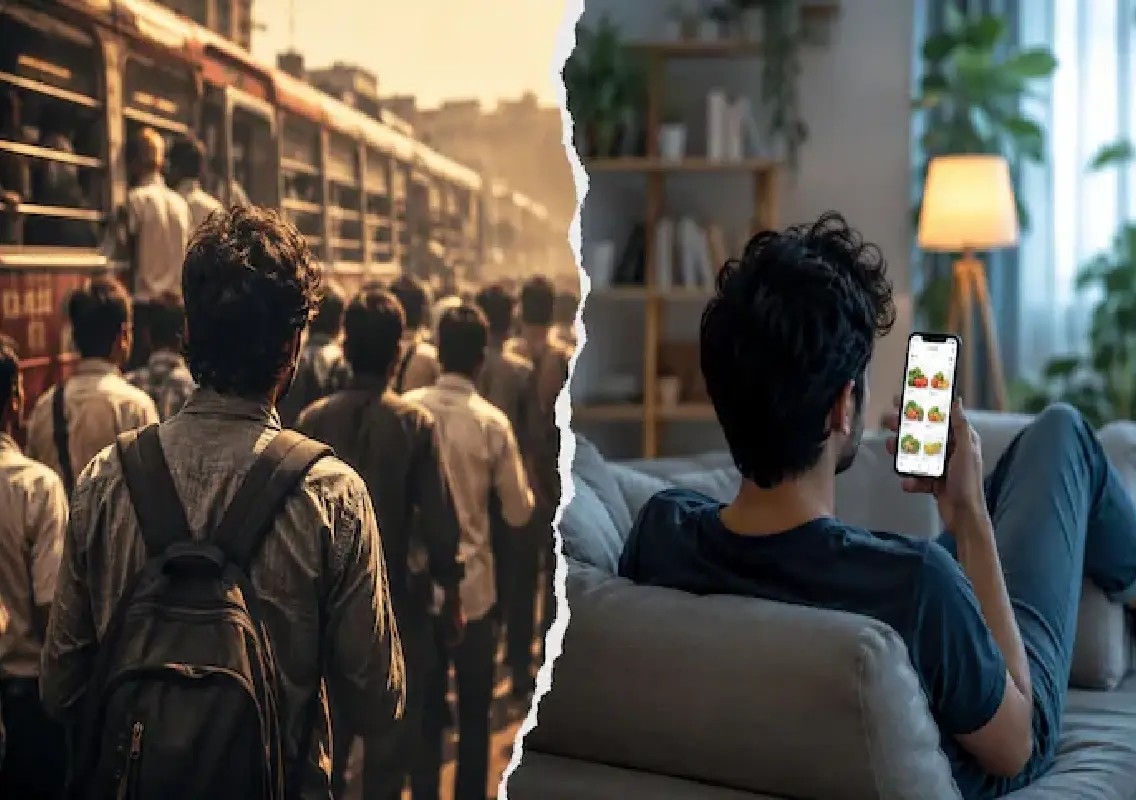
He cited the example of a young person ordering groceries online instead of spending nearly an hour travelling to markets and bargaining over small amounts of money.
According to the post, such behaviour is often labelled as laziness by older generations, even though many young people view it as a more efficient use of time.
Changing definitions of hard work
The post also highlighted what it described as contradictions within many Indian households.
While parents encourage their children to become successful professionals and embrace modern careers, they may simultaneously criticise them for using ride-hailing applications instead of taking crowded public transport because previous generations had no other option.
Another example mentioned in the post involved parents praising frugality and sacrifice while eagerly tracking their own quick-commerce deliveries through smartphone applications.
The central message of the post was that the hardships endured by earlier generations were intended to create better opportunities for future generations, not to become a standard that everyone must continue to endure.
Convenience versus resilience
The post quickly gained traction on social media and prompted thousands of reactions from users.
Many agreed with the argument, saying that valuing convenience and efficiency should not be mistaken for laziness.
Supporters argued that technology exists to save time and reduce unnecessary effort, allowing people to focus on more productive or meaningful activities.
They also pointed out that younger generations face a different set of challenges, including rising living costs, intense workplace competition and increasing mental health concerns.
Others, however, disagreed with the sentiment and argued that certain forms of hardship still play an important role in developing resilience, discipline and appreciation for life’s comforts.
Some users warned that excessive dependence on technology and convenience could result in a loss of practical life skills and reduce people’s ability to cope with difficult situations.
A wider generational conversation
The debate reflects a broader shift in how different generations define success and effort.
For many older Indians, struggle is often viewed as a necessary part of personal growth and achievement.
For younger generations, however, progress is increasingly measured by the ability to work smarter, save time and use technology to improve quality of life.
Sociologists note that every generation tends to redefine values based on the social and economic realities it experiences.
The rise of digital services, instant delivery platforms and automation has fundamentally changed how younger people approach everyday tasks and decision-making.
More than a debate about convenience
As the discussion continues online, it has become clear that the debate is no longer simply about grocery deliveries or booking a cab.
Instead, it touches on deeper questions about changing social values, intergenerational expectations and the meaning of a well-lived life.
The viral post has highlighted an evolving mindset among young Indians—one that increasingly questions whether hardship should be celebrated when technology has made many aspects of life easier, faster and more convenient.