









A safety test hidden behind every flight
For lakhs of Indian air passengers flying through hubs like Delhi, Mumbai and Bengaluru, aviation safety often feels abstract. Yet one of the most critical safety procedures behind every take-off involves an unusual but essential test — firing dead chickens at jet engines.
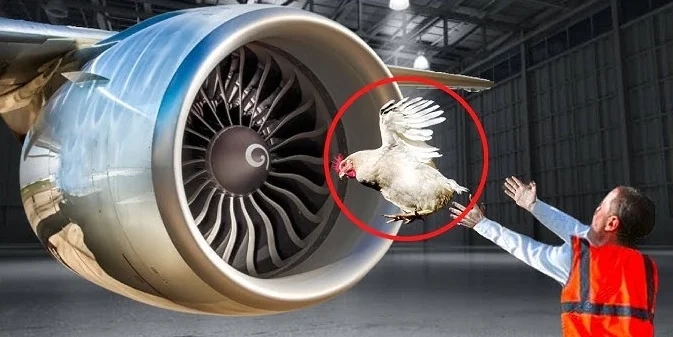
Formally known as a bird strike simulation, the test is a globally mandated certification process designed to ensure that aircraft engines and cockpit windshields can withstand collisions with birds during flight, particularly during take-off and landing.
The science behind the “chicken gun”
The practice dates back to the 1950s, when British aerospace firm de Havilland sought ways to simulate real bird impacts as jet engines became common. Engineers developed a compressed-air cannon — popularly called the “chicken gun” — which fires whole, dead chickens at aircraft engines and windshields at high speeds.
Chickens are used because their mass and density closely resemble large birds, making them effective stand-ins. To pass certification, an engine must safely ingest a bird without disintegrating, while the windshield must remain intact without endangering pilots or depressurising the cockpit.
Why this matters for Indian airports
The relevance of this testing has grown sharply in India. Data from the Ministry of Civil Aviation shows that nearly 2,800 bird strikes were reported across ten major Indian airports between 2020 and mid-2025.
The trend is worrying. Incidents rose from 309 in 2020 to a peak of 709 in 2023, following the post-pandemic recovery in air travel.
- Delhi IGI Airport recorded the highest number at 695 incidents
- Mumbai’s CSMIA reported over 400 cases
- Bengaluru’s Kempegowda Airport saw 343 incidents, the highest in South India
Experts link the rise to increased flight movements and rapid urban development near airport boundaries, including construction and waste disposal that attract birds into flight paths.
How airports manage the risk
Indian airports operate Wildlife Hazard Management Plans aligned with global standards. Measures include bird deterrent sounds, lasers, pyrotechnics, controlled grass height, water drainage, and real-time bird movement monitoring. Airports also work with nearby communities to improve waste management, a key factor in reducing bird activity.
A layered safety net
While most bird strikes cause little or no damage, the risk rises with larger birds or multiple impacts. This is why engine resilience testing, including the chicken gun, works hand-in-hand with daily wildlife control.
For Indian travellers, this little-known engineering ritual plays a quiet but crucial role in ensuring every flight remains safe as the country’s aviation sector continues its rapid growth.