







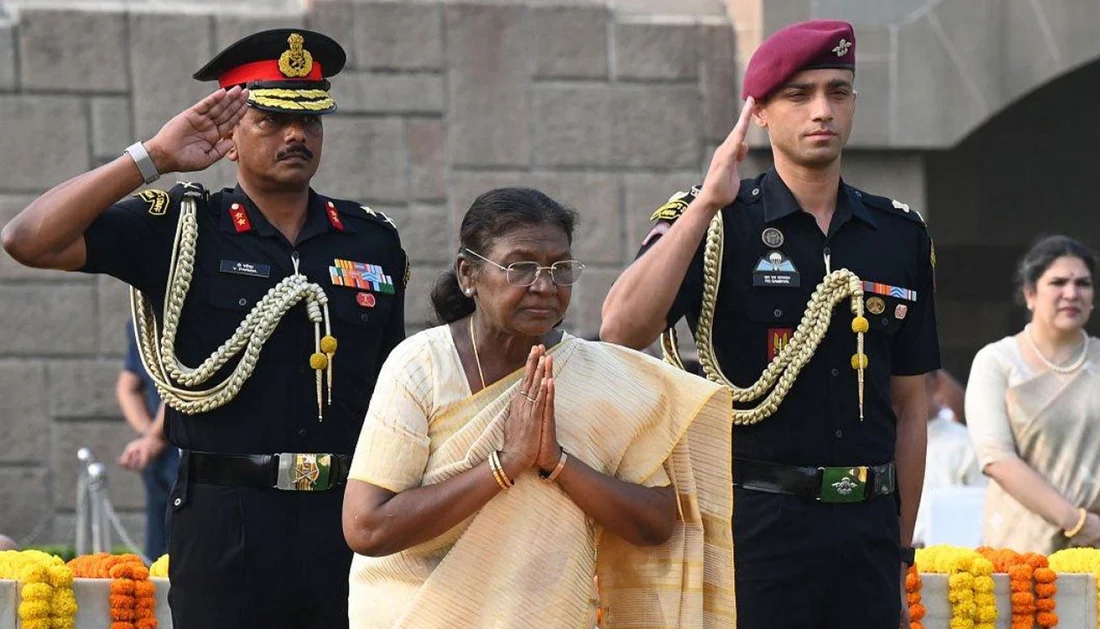


The President’s Bodyguard (PBG), the senior-most regiment of the Indian Army and the ceremonial guard of the President of India, continues to follow a unique recruitment policy rooted in history and tradition. Unlike most modern Army units that adopt an “All India, All Class” system, the PBG recruits its troopers exclusively from three communities — Jats, Rajputs and Jat Sikhs — a practice that has drawn public curiosity and occasional legal scrutiny.
A fixed-class composition shaped by tradition
The PBG maintains a strictly balanced composition among its troopers, with recruitment divided equally:
- 33.3% Jats
- 33.3% Rajputs
- 33.3% Jat Sikhs
This restriction applies only to troopers (sepoys). Officers and administrative staff may be drawn from any community or region.
The regiment, raised in 1773, is one of the oldest military units in continuous service and carries forward traditions that date back to colonial-era martial class structures. After Independence, the composition was reorganised, leading to the present three-caste system that the Army has chosen to preserve.
Functional reasons: ceremonial precision and physical standards
While ceremonial duties define the public image of the PBG, the recruitment policy is not merely symbolic. The Army has argued before courts that the regiment’s troopers must present visual uniformity, especially during high-profile events such as the Republic Day Parade, the Beating Retreat ceremony and state visits.
The PBG also has the strictest height requirement in the Indian Army — a minimum of 6 feet (183 cm). The Army contends that Jats, Rajputs and Jat Sikhs traditionally meet these physical standards more consistently, enabling the perfectly matched appearance expected of a presidential guard.
This uniformity, the Army says, contributes to the precision and grandeur of ceremonial displays.
Historic legacy and continuity
The PBG was originally composed of what the British considered “martial communities”, including Punjabi Muslims, Sikhs and Rajputs. After Partition, Muslim troopers were transferred to Pakistan’s Governor General’s Bodyguard. Their positions in India were filled by Jats, creating the three-community structure that continues today.
The Indian Army has argued that maintaining the regiment’s historic identity supports unit cohesion, preserves legacy and upholds the ceremonial prestige associated with the President’s household troops.
A ceremonial unit with combat capability
Despite its public-facing ceremonial role, the PBG is a fully trained combat regiment. Troopers are:
- Qualified paratroopers, trained in airborne operations
- Armoured soldiers, capable of operating tanks and armoured vehicles
- Combat-deployed personnel, with detachments having served in Siachen, during the IPKF operations in Sri Lanka, and in several UN Peacekeeping Missions
This dual responsibility underscores the PBG’s operational readiness beyond ceremonial duties.
Legal challenges and constitutional debate
The recruitment policy has been challenged multiple times by candidates who met the height and physical standards but were rejected because they did not belong to the three designated castes.
Petitioners have argued that the rule violates Article 15 (prohibition of discrimination) and Article 16 (equal opportunity in public employment) of the Constitution.
However, the Army has defended the policy on grounds of functional necessity rather than caste bias. Courts, including the Delhi High Court, have generally deferred to the Army’s operational judgment, noting the regiment’s unique ceremonial role.
A blend of heritage and modern purpose
The continued restriction reflects a combination of historical legacy, ceremonial expectations and military tradition. While debates around inclusivity persist, the Indian Army maintains that the PBG must present a uniform contingent that symbolises the discipline, elegance and heritage of India’s armed forces before the nation and visiting dignitaries.