







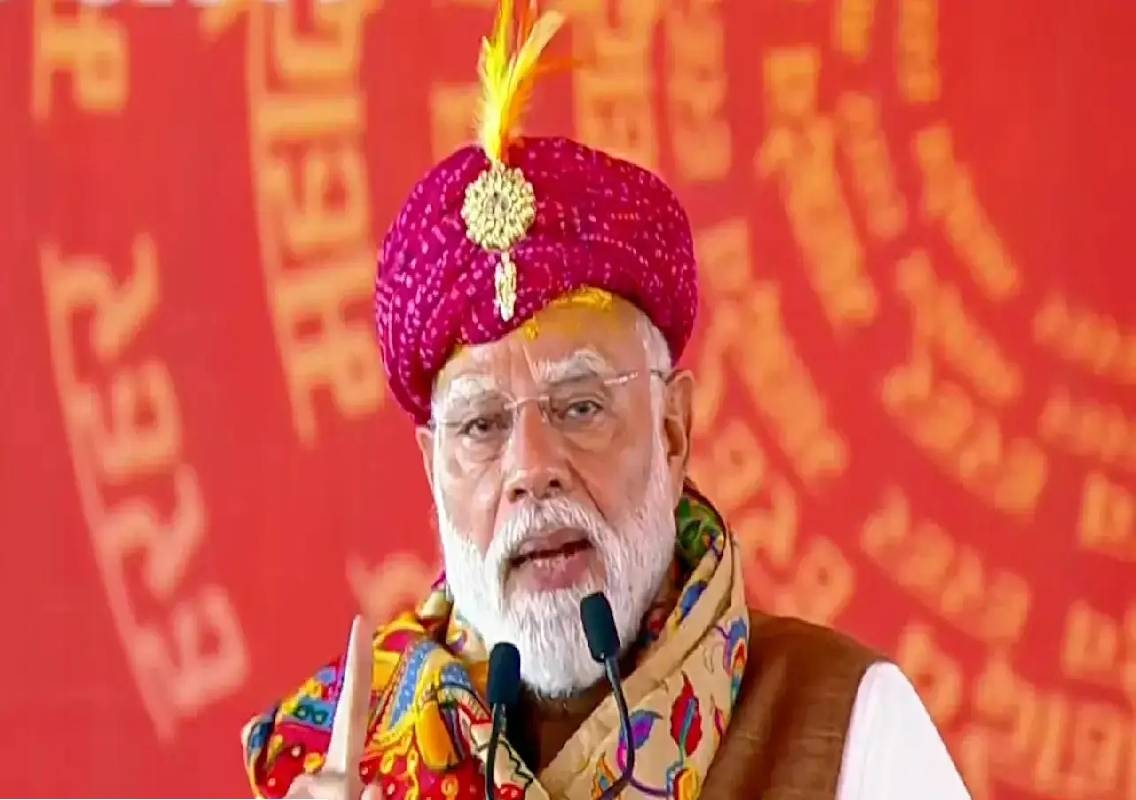


Vadodara: Narendra Modi has made one of his strongest public appeals yet for behavioural and lifestyle changes aimed at reducing India’s dependence on imports and protecting the country’s foreign exchange reserves amid growing global economic uncertainty.
Speaking at a public meeting in Gujarat’s Vadodara, the Prime Minister urged citizens to save fuel, reduce non-essential spending, avoid overseas travel, postpone gold purchases and prioritise Indian-made products.
The remarks came against the backdrop of rising crude oil prices, disruptions in global supply chains and mounting tensions in West Asia, all of which are increasing pressure on India’s economy.
PM Modi calls for “economic participation”
The Prime Minister framed the appeal as a collective national responsibility rather than a government policy measure.
“When 140 crore people take one step forward, the nation too advances 140 crore steps,” Modi said during his address.
He stressed that India remains heavily dependent on imported fuel and commodities, making the country vulnerable to global market fluctuations and geopolitical instability.
“We don’t have big oil wells. We have to import petrol, diesel and gas,” Modi said while highlighting the financial burden caused by expensive global energy prices.
The Prime Minister urged people to reduce petrol and diesel usage by relying more on metro rail systems, electric buses, public transport and carpooling.
He also encouraged citizens to increase the use of electric vehicles wherever possible.
Why fuel saving has become critical
India is currently the world’s third-largest importer and consumer of crude oil.
According to data from the Petroleum Planning and Analysis Cell (PPAC), India’s crude oil import dependency rose to nearly 88 per cent during the first half of FY2025.
Domestic production has remained relatively stagnant while fuel demand has continued increasing.
Official figures show that India’s crude oil import bill touched approximately $71.3 billion in just the first six months of FY2025, marking a 12 per cent increase compared to the previous year.
Higher global crude prices linked to conflicts in West Asia have further intensified concerns over India’s trade deficit and foreign exchange reserves.
The Prime Minister’s appeal is therefore being viewed as an attempt to reduce demand-side pressure through citizen participation.
Push for work-from-home and virtual meetings
PM Modi also referred to lessons learned during the COVID-19 pandemic.
He urged both government and private organisations to revive efficient work-from-home systems, virtual meetings and digital collaboration wherever feasible.
According to Modi, reducing unnecessary travel and commuting can significantly lower fuel consumption without affecting productivity.
“Digital technology has now made so many things easy,” he said, while encouraging organisations to prioritise online conferences and remote working arrangements in the national interest.
Economists say transport fuel consumption remains one of India’s largest contributors to imported energy demand.
Any reduction in commuting patterns could help ease pressure on fuel imports over time.
Appeal to reduce foreign exchange outflow
The Prime Minister extended his appeal beyond energy conservation and directly linked personal consumption habits with India’s foreign exchange reserves.
He urged citizens to postpone unnecessary foreign travel, destination weddings and overseas vacations for at least one year.
Modi also encouraged people to support domestic tourism and spend within India instead of contributing to foreign exchange outflows abroad.
“Every small and big effort matters,” he said while stressing the need to reduce dependence on imported products.
The Prime Minister also urged citizens to buy Indian-made goods including footwear, bags and household products to strengthen domestic manufacturing and employment generation.
Gold imports and edible oil concerns
One of Modi’s strongest appeals was directed at gold consumption.
India imported gold worth nearly $72 billion in FY2025-26, a record high and a sharp increase over the previous financial year.
Since India produces very little gold domestically, the majority of demand is fulfilled through imports, placing additional pressure on forex reserves.
The Prime Minister asked families to avoid non-essential gold purchases for at least a year.
He also highlighted India’s dependence on edible oil imports.
According to industry data, India spent approximately ₹1.61 lakh crore on edible oil imports in 2024-25.
More than 57 per cent of the country’s edible oil requirement currently comes from imports.
Modi urged citizens to reduce edible oil consumption both for economic reasons and personal health benefits.
Why the appeal is being seen as personal
Analysts say PM Modi’s repeated public appeals within a short period suggest growing concern within the government over global economic risks and India’s external financial exposure.
Rather than announcing restrictive measures, the Prime Minister has chosen to frame the issue as a national movement requiring public cooperation.
The messaging reflects an attempt to build economic resilience through collective citizen behaviour during a period of heightened global uncertainty.
With oil prices remaining volatile and geopolitical tensions continuing in West Asia, the government appears keen to reduce pressure on imports and protect India’s foreign exchange reserves through both policy action and public participation.