


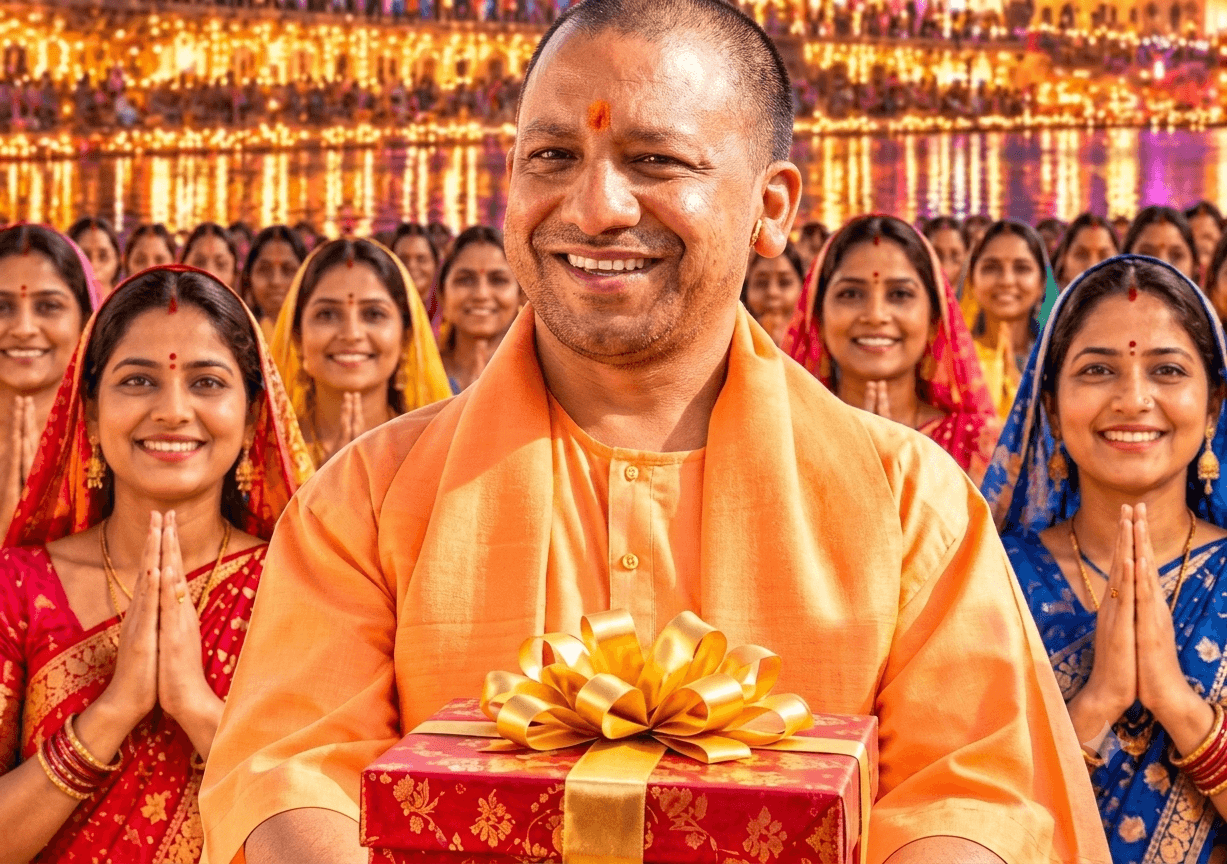


Lucknow: Uttar Pradesh Chief Minister Yogi Adityanath has urged people to support local artisans and craftspeople by purchasing products made under the state’s ‘One District One Product’ (ODOP) initiative during the Dhanteras celebrations. Linking festive shopping with economic self-reliance, he appealed to consumers to celebrate a ‘Local Wali Diwali‘ by choosing locally made products as gifts.
In a message shared on X on Friday, Adityanath encouraged people to support Prime Minister Narendra Modi‘s ‘Vocal for Local’ campaign and contribute to building an ‘Aatmanirbhar Uttar Pradesh’.
According to a report by the Press Trust of India (PTI), the Chief Minister said festive purchases could help strengthen the livelihoods of artisans while giving greater recognition to the state’s traditional crafts.
His appeal came ahead of Diwali, when households across the country purchase gifts, decorative items, clothes and other products as part of the festive celebrations.
Adityanath said consumers should include the state’s artisans and craftspeople in their celebrations by purchasing products that reflect Uttar Pradesh’s cultural heritage.
“Dhanteras symbolises prosperity, auspiciousness and well-being. On this auspicious occasion, include the state’s hardworking artisans and craftspeople in the festive celebrations by purchasing products showcasing the state’s cultural heritage,” he said.
ODOP products highlighted as festive gift options
The Chief Minister highlighted several traditional products associated with different districts of Uttar Pradesh, urging people to consider them while shopping for Dhanteras and Diwali.
Among the products he mentioned were Bhadohi’s carpets, Prayagraj’s Moonj craft, Mainpuri’s Tarkashi work and Chitrakoot’s wooden toys.
Bhadohi is known internationally for its carpet-making industry, which has provided livelihoods to generations of weavers and artisans. The district’s carpets are recognised for their traditional designs and craftsmanship.
Prayagraj’s Moonj craft involves creating decorative and utility products using Moonj grass. Artisans make a range of items, including baskets, containers and household accessories. The craft reflects the use of locally available natural materials and traditional skills.
Mainpuri’s Tarkashi is a distinctive form of wire inlay work in which thin metal wires are embedded into wooden surfaces to create decorative patterns. The technique is used in furniture and other handcrafted objects.
Chitrakoot’s wooden toys are another example of the state’s traditional craft heritage. These products showcase the skills of local woodworkers and form part of the district’s handicraft identity.
By highlighting these products, Adityanath sought to encourage consumers to look beyond mass-produced festive goods and consider items made by local artisans.
The appeal also places emphasis on the economic value of traditional crafts, which often depend on sustained consumer demand to support artisan families and preserve skills passed down through generations.
UP exports rise from Rs 84,000 crore to over Rs 2 lakh crore
Adityanath cited the state’s export performance to highlight the growing reach of products made in Uttar Pradesh.
According to the Chief Minister, the state’s exports increased from Rs 84,000 crore in the 2016-17 financial year to more than Rs 2 lakh crore in 2025-26.
He attributed the growth to the enterprise and capabilities of the state’s artisans and craftspeople, whose products have found markets beyond Uttar Pradesh.
The export figures formed an important part of his appeal, linking local manufacturing and traditional skills with the state’s wider economic ambitions.
The ODOP initiative aims to promote products associated with individual districts by improving their visibility, market access and commercial opportunities. It covers a range of traditional and locally significant goods, including handicrafts, textiles, food products and other specialised items.
The initiative is intended to help producers benefit from the identity of their districts while creating opportunities to reach larger domestic and international markets.
Adityanath’s message encouraged consumers to contribute to this process through their purchasing decisions during the festive season.
Exhibition centres aim to expand market access
The Chief Minister also referred to infrastructure being developed to promote Uttar Pradesh’s traditional products and connect artisans with wider markets.
He said modern exhibition centres in Lucknow and Greater Noida, along with Bhadohi’s Carpet Bazaar, were helping the state’s traditional crafts gain greater recognition on global platforms.
Such facilities can provide artisans, manufacturers and businesses with opportunities to display their products, interact with buyers and explore new commercial relationships.
For traditional industries, access to organised markets and exhibition spaces can be important in reaching customers beyond their immediate localities.
Bhadohi’s Carpet Bazaar, in particular, is associated with the state’s carpet industry and its efforts to expand the market for locally manufactured products.
Adityanath’s reference to these facilities underlined the government’s focus on combining traditional craftsmanship with modern marketing and exhibition infrastructure.
The broader objective, as outlined in his message, is to make locally produced goods more visible and commercially competitive while supporting the people involved in their manufacture.
‘One purchase can support an artisan family’
In his appeal, Adityanath emphasised that even a single purchase could make a difference to an artisan household.
“Your one purchase can light a lamp of self-reliance and dignity in the courtyard of a skilled artisan family,” he said.
The statement connected the symbolic significance of Dhanteras shopping with the livelihoods of people working in traditional industries.
For many artisan families, festive demand can provide an important opportunity to sell products and generate income. Purchases by consumers can also help sustain traditional skills and encourage younger generations to continue working in these trades.
The ‘Vocal for Local’ campaign promotes the use of domestically produced goods, while the ODOP initiative seeks to give products associated with individual districts a stronger market identity.
Adityanath’s ‘Local Wali Diwali’ appeal brings these two themes together by encouraging people to make local products part of their festive celebrations.
Dhanteras marks the beginning of Diwali festivities
The Chief Minister also extended greetings to people on Dhanvantari Jayanti, which is observed on the occasion of Dhanteras.
According to Hindu mythology, Dhanvantari is regarded as the divine physician and the god of Ayurveda. The day is associated with health, well-being and prosperity.
Dhanteras, also known as Dhantrayodashi, is celebrated two days before Diwali and marks the beginning of the five-day festival.
In Uttar Pradesh and several other parts of north India, the celebrations continue with Naraka Chaturdashi, also known as Chhoti Diwali, followed by Diwali, Govardhan Puja and Bhai Dooj.
The festival period is associated with wealth, health, the victory of good over evil, gratitude towards nature and family relationships. Shopping for gold, silver, household goods and gifts is also an important part of Dhanteras celebrations.
Adityanath’s message sought to add another dimension to these traditions by encouraging people to support local producers while making festive purchases.
His appeal places artisans and craftspeople at the centre of the state’s festive-season economic message, with the government seeking to connect consumer spending, traditional craftsmanship and the goal of self-reliance.