







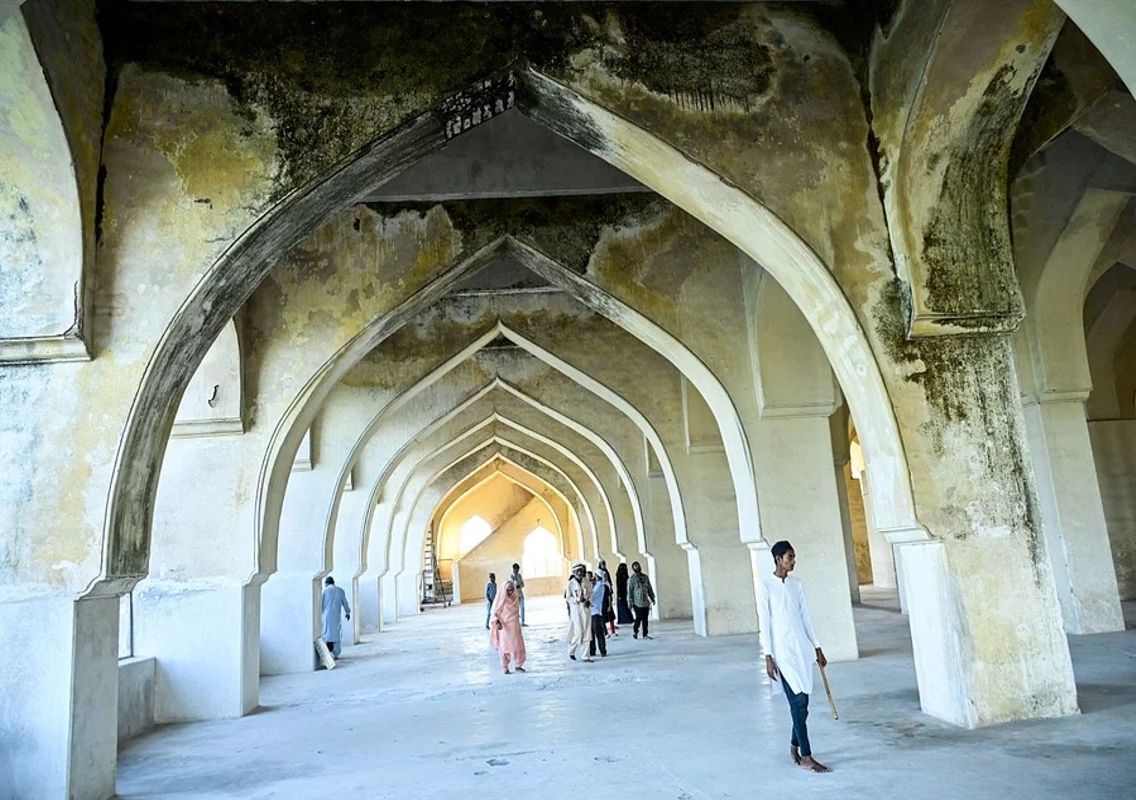


Kalaburagi: The historic Jama Masjid in Kalaburagi, built during the Bahmani Sultanate in 1367, is facing severe damage due to water leakage during rains. The leakage has led to the growth of mold on arches and the falling of plaster from the walls, putting the mosque’s preservation at risk.
The mosque, designed in the Persian architectural style by Muhammad Shah I and the renowned architect Rafi Khaqvi, is South India’s first mosque and can accommodate up to 5,000 worshipers. Despite undergoing repairs 10–12 years ago, the current level of water leakage is unprecedented, with parts of the mosque turning green from mold, according to mosque staff.
Abdul Ghafoor Sagri Tailor, a local resident, expressed deep concern: “I grew up playing around this mosque, and now it’s sad to see its decay. Hundreds of tourists visit this site daily, and we must preserve it.” The mosque’s peaceful and cool atmosphere also attracts students from different communities, who use the space for study.
In addition to the structural issues, the mosque’s informational plaque, which detailed its rich history, has disappeared, leaving only “Protected Monument” signs. Visitors, including a family from Gujarat, have urged the Archaeological Survey of India (ASI) to reinstall the historical plaque for tourists to better understand the significance of the site.
In response, ASI Assistant Survey Officer Vinayak Shirahatti assured that a new trilingual plaque in Kannada, Hindi, and English is being prepared and will be installed soon. Shirahatti also noted that while some plaster repairs were made last year up to a height of 3–4 feet, further funds are required for additional repairs to prevent further water damage.
Researcher Rehman Patel emphasized the importance of the mosque, stating, “Jama Masjid is one of the largest mosques in Asia. If immediate repairs aren’t made, the structure may deteriorate beyond repair, and the authorities must act swiftly.”