







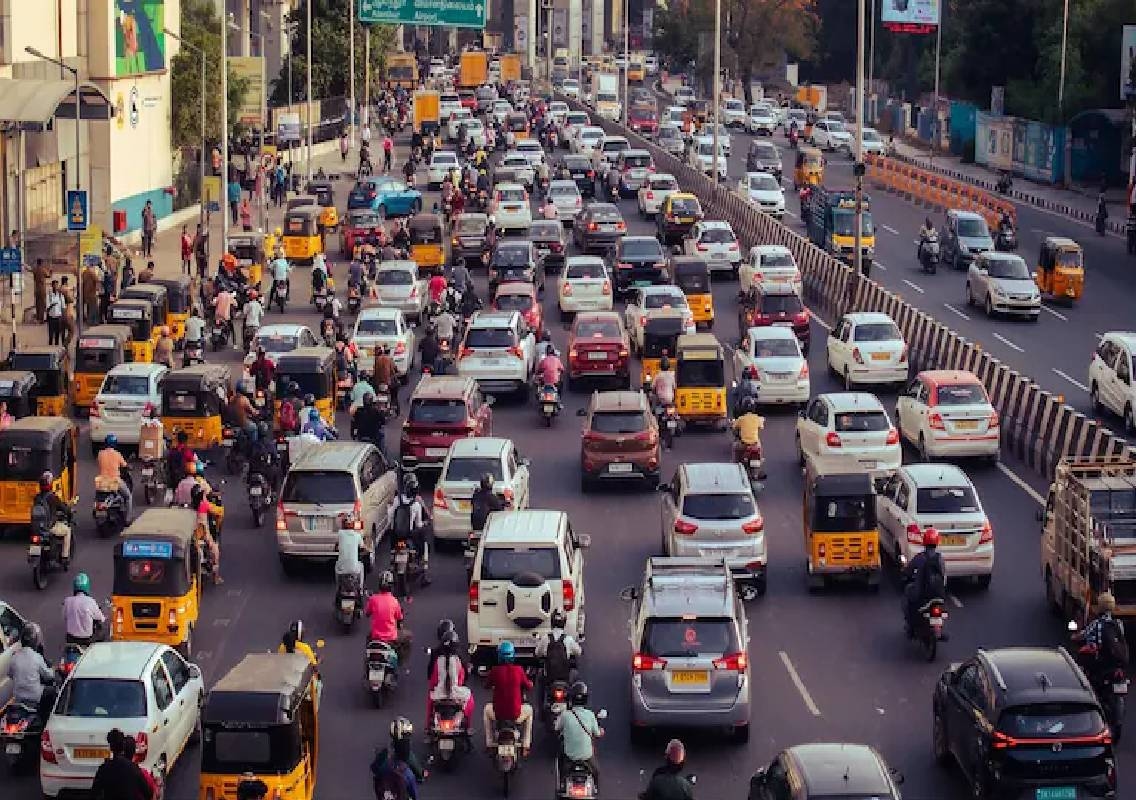


BENGALURU: A Bengaluru resident has sparked an online debate after defending the city’s notorious traffic congestion, arguing that peak-hour traffic is a problem across Indian cities but Bengaluru receives a disproportionate share of the criticism. His account of reaching Kempegowda International Airport comfortably for an early-morning flight has drawn mixed reactions from social media users.
Nihal Shetty, a Bengaluru resident, shared his experience on X on October 10. He said he left home at 6.10 am for a flight scheduled to depart at 8.10 am and reached the airport with enough time to have breakfast before boarding.
Shetty also highlighted the distance covered during the journey, stating that he had travelled around 35 kilometres without facing the kind of delays often associated with the city’s roads. His post questioned whether Bengaluru’s reputation for traffic congestion had become exaggerated compared with the experiences of commuters in other Indian cities.
The post quickly attracted responses from users who agreed with his argument as well as those who felt that one successful journey could not reflect the daily commuting experience of thousands of Bengaluru residents.
Bengaluru resident questions city’s traffic reputation
In his post, Shetty argued that Bengaluru was being unfairly singled out for a problem common to major urban centres across India. He described the city as the “poster child” for people who wanted to vent their frustration about traffic.
His argument centred on the difference between the city’s public image and his own experience of travelling to the airport early in the morning.
Shetty’s journey covered approximately 35 kilometres, and he said he arrived comfortably ahead of his flight’s departure. Having additional time for breakfast further strengthened his view that the city’s traffic reputation did not always match the reality on the roads.
However, his experience was specific to one journey, one route and one departure time. Traffic conditions can change significantly depending on the time of day, the route taken, roadworks, weather and the volume of vehicles on the road.
While his account offered a counterpoint to the frequent complaints about Bengaluru’s congestion, it did not establish that the city has no significant traffic problems.
Social media users question the timing
Several users challenged Shetty’s argument, pointing out that leaving home at 6.10 am meant that he had travelled before the city’s usual morning rush had fully developed.
One user responded that 6 am was not peak traffic time, suggesting that the journey was not representative of the conditions faced by people travelling during busy commuting hours.
Another user asked him to attempt a similar journey for an 8.10 pm flight on a weekday, when traffic patterns could be considerably different.
A third user agreed with Shetty’s assessment, indicating that Bengaluru might receive more criticism than other cities for a problem experienced across the country.
Another commenter suggested that he should undertake the journey daily to understand the difficulties experienced by regular commuters.
The responses demonstrated how personal experiences can shape perceptions of traffic. A relatively smooth airport journey may support one person’s view of the city, while repeated delays on a daily commute can lead another person to reach a very different conclusion.
Why Bengaluru traffic remains a frequent talking point
Bengaluru’s traffic congestion has become a recurring subject of public discussion, particularly because the city is a major centre for information technology, business and employment.
The concentration of offices, residential developments and commercial activity across different parts of the city means that large numbers of people travel between neighbourhoods during similar hours.
Commuters frequently raise concerns about congestion on important corridors, unpredictable travel times and the difficulty of planning journeys around office schedules. Road conditions, potholes, junction management and the availability of convenient public transport can also influence the overall commuting experience.
The city’s traffic debate is therefore not limited to the number of vehicles on the road. It also concerns the reliability of journeys and the time people need to travel between home, work and other destinations.
Shetty’s post challenged the tendency to use Bengaluru as the main example whenever traffic congestion becomes a topic of discussion. However, the reactions indicate that many residents consider the criticism to be rooted in their own experiences rather than simply an online trend.
A single journey cannot represent every commute
The timing of Shetty’s airport trip is an important factor in understanding the debate. Early-morning journeys can be smoother than those undertaken during established office rush hours, although conditions vary by location and day.
Airport travel also differs from regular commuting. A person travelling to catch a flight may follow a route that does not necessarily overlap with the busiest office corridors, while daily commuters may have fewer options to adjust their schedules.
For this reason, reaching the airport comfortably does not necessarily disprove the concerns raised by people who experience prolonged delays during peak hours.
Equally, the existence of severe congestion on some routes does not mean every journey across Bengaluru will be difficult. Traffic conditions are influenced by several variables, and travel experiences can differ even between people leaving at similar times.
The discussion highlights the importance of considering a broader range of journeys and commuting patterns before drawing conclusions about a city’s overall traffic situation.
Traffic debate extends beyond congestion
Some responses to Shetty’s post also highlighted concerns beyond the time spent in traffic. Users referred to road conditions, potholes, speed breakers and unpredictable driving as additional sources of frustration for Bengaluru commuters.
These concerns suggest that the experience of travelling through a city depends on more than the average time taken to cover a particular distance.
For commuters, a journey can remain stressful even when traffic is moving if road surfaces are poor or driving conditions are unpredictable. Similarly, a relatively short distance may take considerably longer to cover during periods of heavy congestion.
The debate also draws attention to the importance of reliable public transport, road maintenance and better traffic management. Improving these aspects can help make journeys more predictable, regardless of whether Bengaluru receives more criticism than other major cities.
Conclusion
Nihal Shetty’s defence of Bengaluru’s traffic has triggered a wider discussion about whether the city is unfairly criticised for a problem shared by urban centres across India.
His 35-kilometre airport journey, which he said he completed comfortably before an 8.10 am flight, offered one example of a smooth trip. However, critics argued that an early-morning journey cannot represent the difficulties experienced by commuters during peak hours.
The contrasting reactions reflect the complexity of Bengaluru’s traffic problem. While the city’s reputation may not describe every journey, concerns about congestion, road conditions and unpredictable travel times remain important to many residents.
Ultimately, the debate goes beyond whether Bengaluru deserves its traffic reputation. It highlights the need for more reliable commuting options, better road infrastructure and traffic management that addresses the everyday experiences of the city’s residents.