







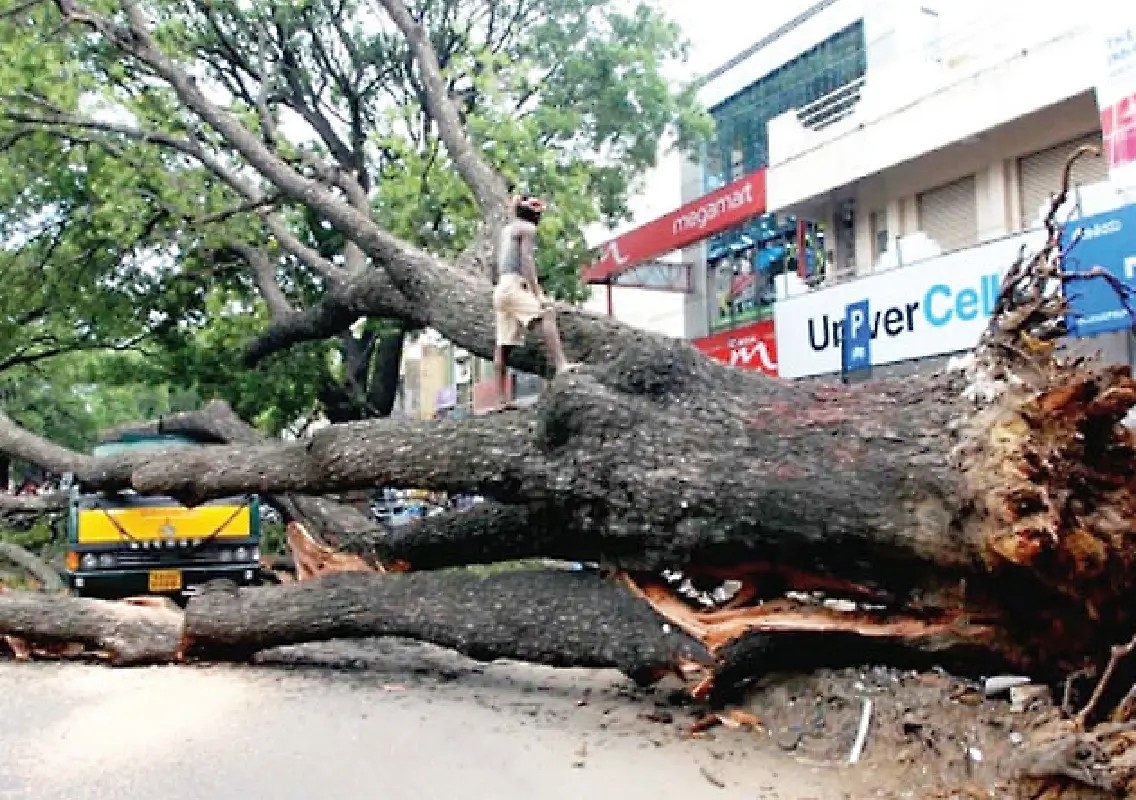


The Bengaluru civic administration is exploring the use of scientific testing techniques to assess the health and stability of roadside trees, aiming to prevent accidents caused by tree falls during heavy rain and strong winds.
The proposal comes amid recurring incidents of trees and branches collapsing across the city during the monsoon season, often resulting in traffic disruptions, damage to property and, in some cases, injuries and loss of life.
Technology to assess hidden risks
Officials are evaluating advanced methods that can examine a tree’s internal condition without causing damage. These techniques are designed to detect problems such as internal decay, hollow trunks, weakened roots and fungal infections that may not be visible from the outside.
Experts say many trees appear healthy despite having serious structural weaknesses. Scientific assessment can help identify such risks early, allowing authorities to take preventive measures before accidents occur.
Balancing safety and conservation
Civic authorities believe the proposed approach could help strike a balance between public safety and environmental conservation. Instead of removing trees based solely on visual inspections or precautionary concerns, officials would be able to make decisions backed by scientific evidence.
This targeted strategy could help preserve Bengaluru’s green cover while ensuring that potentially dangerous trees are identified and managed appropriately.
Towards a long-term tree management plan
If implemented, the initiative could become part of a broader urban forestry and tree management programme. Regular monitoring would enable civic agencies to maintain updated records on tree health and prioritise maintenance in areas considered vulnerable.
Experts have welcomed the move, noting that proactive monitoring is essential in a city known for its extensive tree cover and rapidly changing urban landscape.
As Bengaluru prepares for another monsoon season, the proposed scientific testing programme is being viewed as a step towards safer roads, better urban planning and stronger protection of the city’s valuable green assets.