







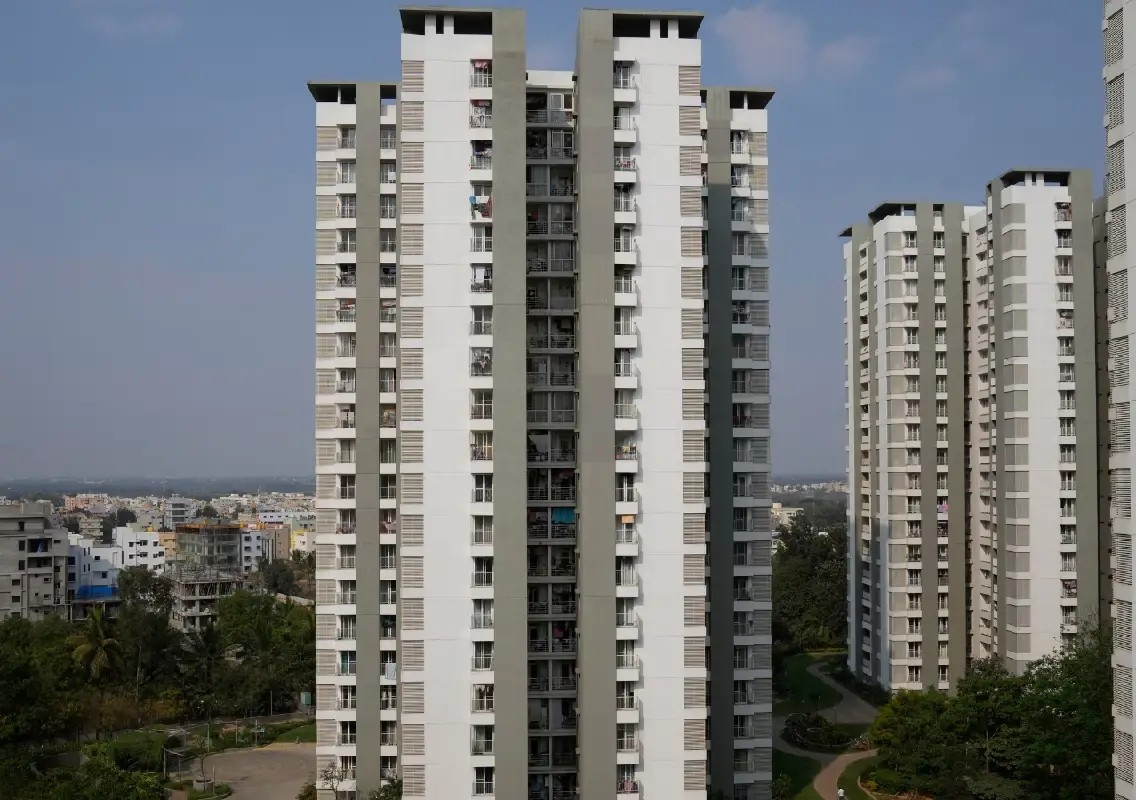


Greater Bengaluru Authority has expressed strong interest in promoting more high-rise buildings across Bengaluru, as the urban development department urges the defence ministry and civil aviation ministry to reconsider building height restrictions near the city’s airports.
Officials in the town planning department said vertical growth is essential to meet Bengaluru’s rising population and future housing demand.
City expanding sideways, not upward
According to officials, Bengaluru has fewer skyscrapers compared to other major Indian cities and continues to expand horizontally through low-rise developments spread across large land parcels.
They warned that this pattern has increased urban sprawl, resulting in longer commutes, higher infrastructure costs and pressure on civic amenities.
Airport rules limiting growth
Officials said building height restrictions around airports have significantly slowed vertical development in many parts of Bengaluru.
They have proposed reducing strict control zones to within 15 km of the aerodrome reference point instead of the current 20 km, allowing taller buildings in more areas.
Global cities used as examples
Town planners cited cities such as Singapore, Amsterdam, Dallas, London and Dubai, where airport regions have evolved into mixed-use hubs with offices, housing and entertainment spaces.
They said airports globally are increasingly becoming economic centres rather than only transport gateways.
High-rises seen as cost effective
Officials argued that compact vertical development can lower the cost of infrastructure compared to spreading the city outward.
They also highlighted the use of Premium Floor Area Ratio (PFAR) as a tool to support denser and smarter urban planning.
Hope for future skyline shift
If approved, the proposal could transform Bengaluru’s skyline, encourage transit-oriented development and create more efficient land use in the city.
For a fast-growing metropolis, planners believe the future lies upward.