







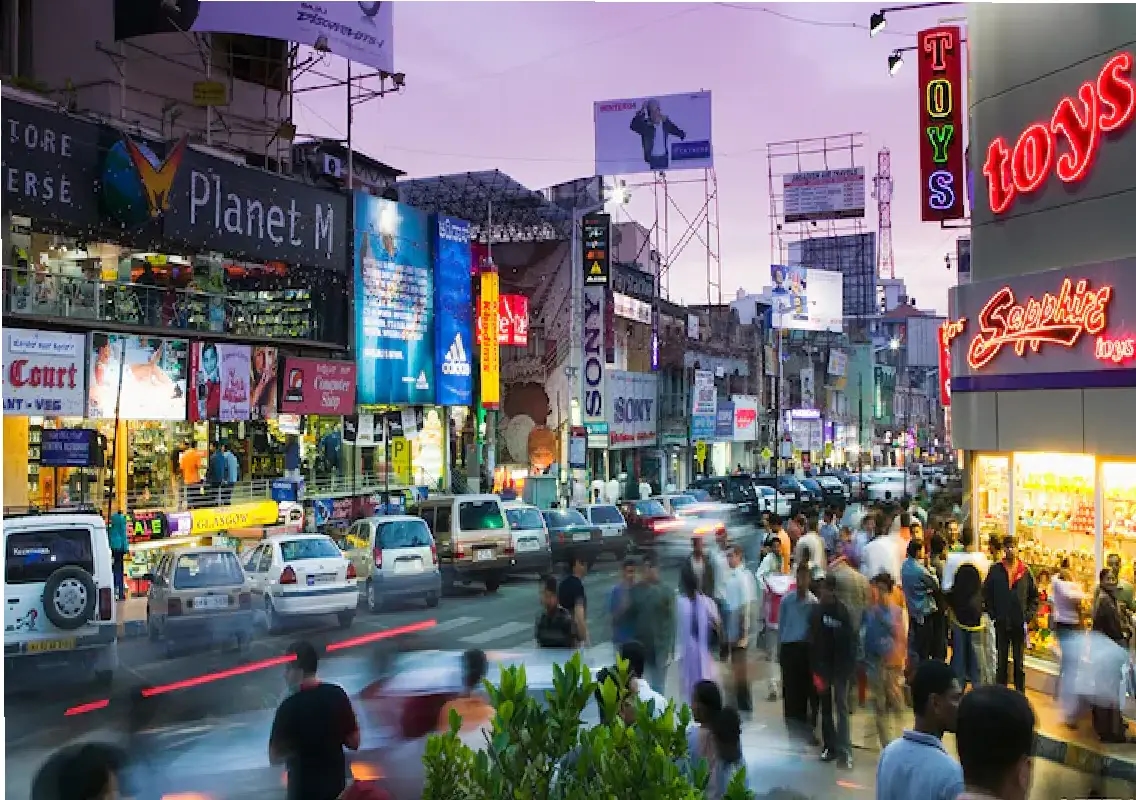


Bengaluru: India’s technology hub has added another unenviable distinction to its growing list of urban challenges. According to the latest TomTom Traffic Index (City), Bengaluru has emerged as the second most congested city in the world in 2025, with an average congestion level of 74.4 per cent. This marks an increase of 1.7 percentage points compared to 2024, underscoring the worsening traffic conditions in a city already notorious for gridlocks and long commute times.
The TomTom Traffic Index, compiled using anonymous trip data covering 3.65 trillion kilometres of driving worldwide, places Bengaluru just behind Mexico City, which tops the global ranking. The Karnataka capital is followed by Dublin in third place, while Lodz in Poland and Pune in India complete the top five most congested cities globally.
Longer commutes for everyday travel
For daily commuters, the report’s findings translate into significantly longer travel times even for short distances. On average, a 10-kilometre drive in Bengaluru took 36 minutes and 9 seconds in 2025. This is 2 minutes and 4 seconds longer than the same journey in 2024, reflecting a steady deterioration in traffic flow across the city’s road network.
The impact is even more pronounced during peak hours. During the morning rush hour, a 10-kilometre commute takes an average of 41 minutes and 6 seconds, with congestion levels touching 94.2 per cent and an average speed of just 14.6 kmph. Evening rush hour conditions are worse, with the same distance taking 45 minutes and 27 seconds on average. Congestion during evening peak hours stood at a staggering 115.2 per cent, while average speeds dropped further to 13.2 kmph.
Time lost adds up to days
One of the most striking aspects of the report is the amount of time lost by commuters due to traffic congestion. Bengaluru drivers lost an estimated 168 hours during rush hours in 2025. This is equivalent to 7 days and 40 minutes spent stationary or crawling in traffic over the course of a year.
The figure represents an increase of 12 hours and 46 minutes compared to 2024, highlighting how congestion is steadily eating into personal time, productivity and quality of life. For many professionals in the city’s IT and services sectors, this lost time often translates into longer working days, increased stress and reduced work-life balance.
Even short trips feel the squeeze
The index also highlights how congestion is affecting short-distance mobility. In 15 minutes, the average distance covered in Bengaluru in 2025 was just 4.2 kilometres. This is 0.2 kilometres less than the previous year, a seemingly small decline that nevertheless points to shrinking mobility and increasing inefficiency in everyday travel.
Urban planners note that such trends indicate saturation of road capacity, where additional vehicles lead to disproportionate increases in travel time. The growing number of private vehicles, coupled with limited road expansion and ongoing infrastructure projects, has compounded the problem.
Worst day on the roads
The TomTom report identifies Saturday, May 17, 2025, as the worst day for travel in Bengaluru. On that day, the average congestion level touched 101 per cent, effectively meaning that travel times more than doubled compared to free-flow conditions.
Traffic experts say such extreme congestion levels are often driven by a combination of factors, including weekend shopping traffic, public events, roadworks and weather-related disruptions. The data reinforces the unpredictability that commuters face, even outside traditional weekday rush hours.
Indian cities dominate global rankings
Bengaluru’s high ranking is not an isolated case. The TomTom Traffic Index shows that congestion is a widespread issue across major Indian cities. Pune ranked fifth globally with an average congestion level of 71.1 per cent, making it the second Indian city in the global top five.
Other Indian cities featured prominently in the top 35 include Mumbai at 18th place with 63.2 per cent congestion, New Delhi at 23rd with 60.2 per cent, Kolkata at 29th with 58.9 per cent, Jaipur at 30th with 58.7 per cent, and Chennai at 32nd with 58.6 per cent congestion.
The presence of seven Indian cities in the top 35 globally highlights the scale of urban mobility stress in the country. Despite differences in road layouts, public transport availability and commuting patterns, congestion has emerged as a common challenge across metropolitan regions.
What the index measures
TomTom, a Netherlands-based location technology company, is best known for its digital maps, navigation software and real-time traffic services. Its annual Traffic Index analyses congestion levels and travel times across cities worldwide using anonymised GPS-based driving data.
The congestion percentage reflects the extra travel time experienced compared to free-flow traffic conditions. For instance, a congestion level of 74.4 per cent means that trips take nearly three-quarters longer than they would on empty roads.
Conclusion
Bengaluru’s ranking as the world’s second most congested city serves as a stark reminder of the urgent need for sustainable urban mobility solutions. As commute times grow longer and productivity losses mount, experts argue that expanding public transport, improving last-mile connectivity and managing vehicle growth must become policy priorities. Without coordinated intervention, the city’s traffic woes are likely to worsen, further affecting economic efficiency and the daily lives of its residents.