









Bengaluru: The Karnataka government has designated Bowring and Lady Curzon Hospital in Bengaluru as the nodal centre for collecting DNA samples from first-degree relatives of people from the State who remain missing following the devastating Nepal-Tibet flash floods.
The move is aimed at helping authorities identify unidentified mortal remains recovered in Nepal and facilitate their repatriation to the families of the victims. The decision follows communication from the Embassy of India in Kathmandu regarding the identification and repatriation of mortal remains of foreign nationals.
Bowring Hospital designated as nodal centre
According to an order issued by the Karnataka State Disaster Management Authority on September 4, Bowring and Lady Curzon Hospital has been designated as the centre where DNA samples of relatives of missing Karnataka residents will be collected.
Dr Nagesh Kuppast, Professor and Head of the Department of Forensic Medicine, has been appointed as the Nodal Officer for the process.
He will be responsible for verifying the relationship between the relatives and missing persons, collecting DNA samples and coordinating their profiling and further processing.
First-degree relatives of people reported missing in the disaster have been advised to approach the designated officers at the hospital.
They have also been asked to carry a recent passport-size photograph, Aadhaar or another government-issued identity document, along with documents establishing their relationship with the missing person.
DNA matching to help identify remains
The DNA exercise is part of a larger identification process being undertaken after the massive disaster along the Nepal-Tibet border.
Authorities in Nepal are preparing DNA profiles of unidentified bodies recovered following the floods. DNA samples from blood relatives can then be compared with these profiles to establish the identities of victims.
The process is particularly important because several bodies recovered from the affected areas have remained unidentified. Nepal has been using photographs, records and DNA sampling as part of efforts to establish identities and ensure that remains can eventually be handed over to families.
For families in Karnataka, the establishment of a designated sampling centre in Bengaluru is expected to make it easier to participate in the identification process without having to travel to Nepal.
13 people from Karnataka remain untraced
The development comes amid continuing concern over Karnataka residents who have not yet been traced following the disaster.
A Times of India report had said that 13 people from Karnataka remained missing as of August 31, after the flash floods struck the Nepal-Tibet border.
The disaster has triggered a major search, rescue and identification operation involving Nepalese authorities and assistance from India.
At the national level, the Ministry of External Affairs said on September 4 that 275 Indian nationals remained missing and 169 had been rescued. India has also provided relief material and deployed specialised personnel to assist the response.
The number of people being reported missing has made identification of recovered remains a major challenge for authorities.
Massive disaster along Nepal-Tibet border
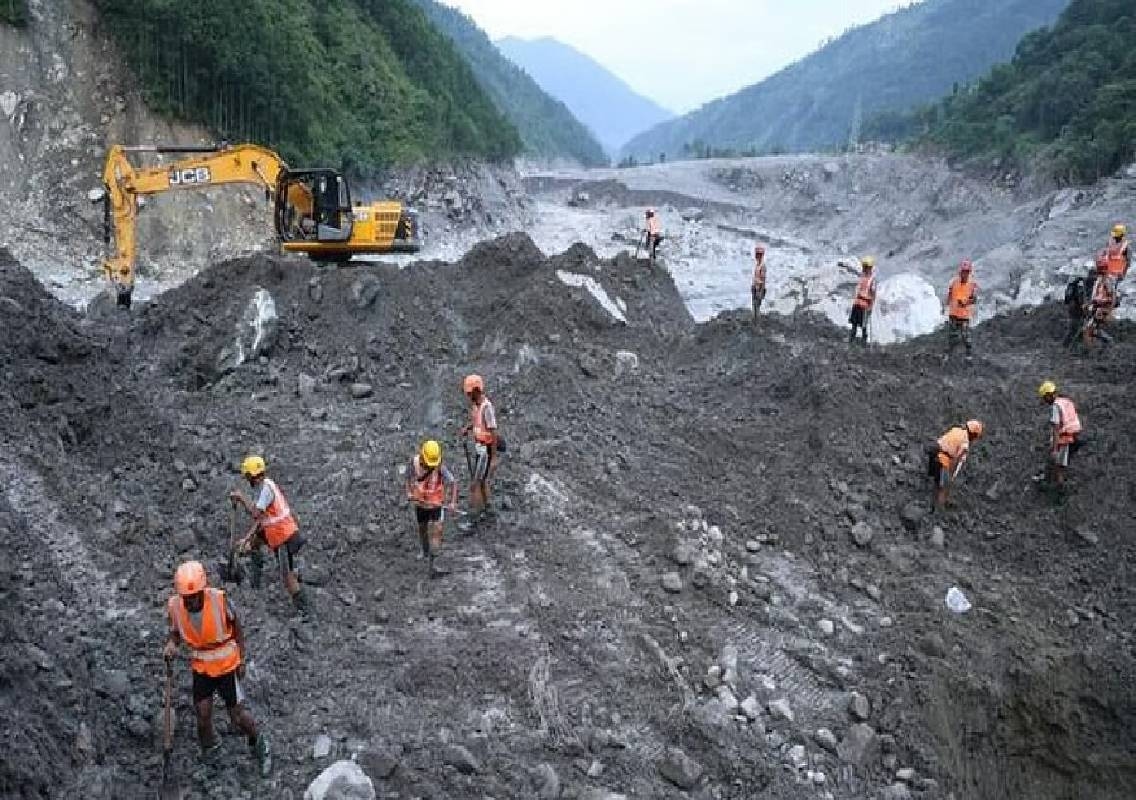
The flash floods followed a catastrophic glacial event in the Himalayan region on August 26, sending huge volumes of water, rock and debris into river valleys and causing extensive destruction.
The affected areas include parts of Nepal’s Rasuwa and Nuwakot districts, where roads, bridges, settlements and hydropower infrastructure were severely damaged.
Search and rescue operations have continued despite difficult terrain and damaged infrastructure.
The scale of the disaster has also placed enormous pressure on mortuary and identification facilities. Nepal has resorted to temporary measures for unidentified remains while authorities continue efforts to establish the identities of victims.
Indian forensic teams assisting Nepal
India has also extended forensic assistance to Nepal to support the identification of victims.
An Indian forensic team has been involved in DNA analysis and other identification procedures. The assistance is intended to strengthen Nepal’s capacity to process remains recovered from the disaster and match them with information provided by families.
The use of DNA profiling becomes especially important when bodies cannot be identified through photographs or other physical characteristics.
For families who have been waiting for information about missing relatives, DNA matching can provide a scientific means of establishing identity when conventional identification methods are not sufficient.
Families asked to provide relationship documents
The Karnataka government’s process places particular emphasis on establishing the relationship between the missing person and the person providing the DNA sample.
First-degree relatives are therefore being asked to approach Bowring and Lady Curzon Hospital with identification documents and proof of their relationship.
The information and samples collected in Bengaluru will be processed and coordinated with the wider identification exercise.
Authorities hope that the process will help establish the identity of Karnataka residents whose whereabouts remain unknown and, where remains are recovered and identified, enable their repatriation to their families.
Search and identification efforts continue
The latest initiative does not mean that all missing persons have been presumed dead. The DNA exercise is an identification mechanism for cases where mortal remains are recovered and need to be matched with families.
Rescue operations are also continuing in affected areas. In a significant development, two workers were rescued alive on September 4 after reportedly spending nine days trapped inside a tunnel at the Upper Trishuli 3A Hydropower Station. The rescue has renewed hopes that others could still be found alive in inaccessible locations.
For Karnataka families, however, the establishment of Bowring Hospital as the nodal DNA centre provides a formal channel through which they can participate in the identification process.
As Nepal continues to recover from the devastating floods, authorities in both countries are working to trace survivors, identify victims and reunite families with their missing relatives.