







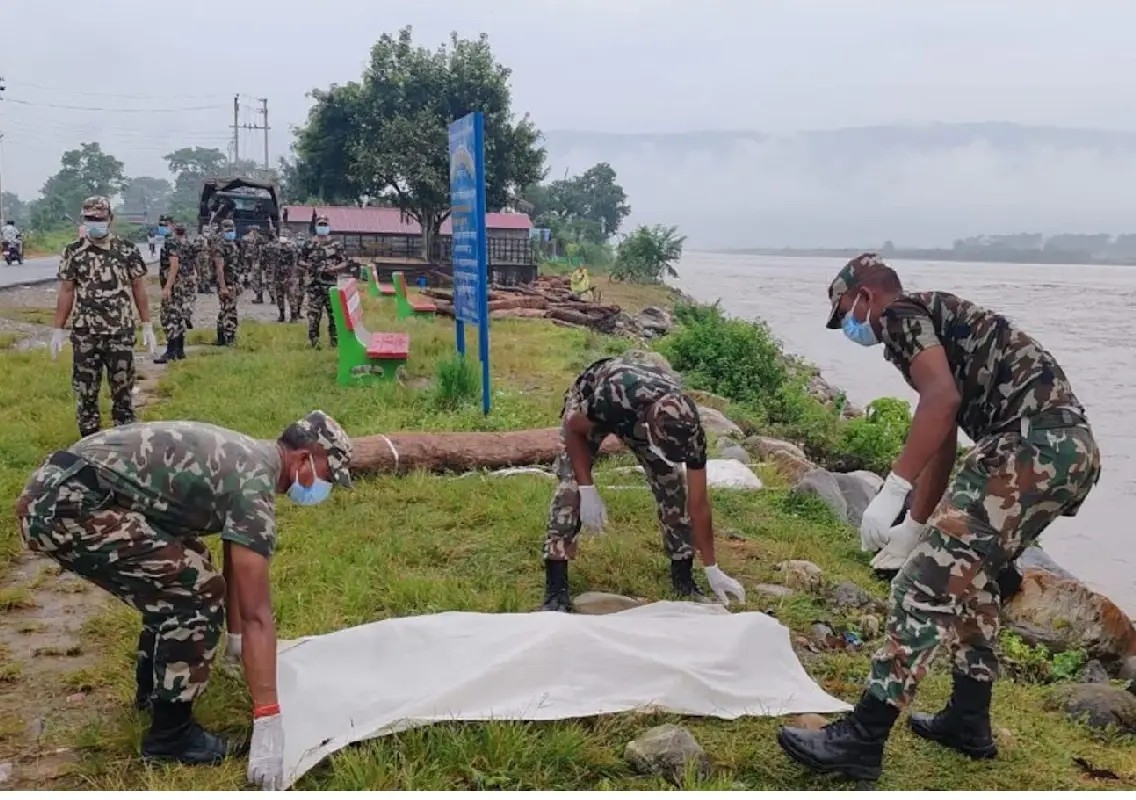


Kathmandu: Nepal has begun preparations to bury unidentified and unclaimed bodies recovered after devastating flash floods, with authorities taking steps to preserve DNA records and ensure families can identify and reclaim the remains later.
The decision has been taken amid concerns over the deteriorating condition of the bodies and the risk of infection. Chitwan, which has recovered the highest number of bodies, is among the districts facing difficulties due to limited facilities for preserving the remains.
DNA samples collected before burial
Authorities are collecting DNA samples from the unidentified bodies before burial and assigning each one a unique identification number.
The location of every burial will also be recorded so that relatives can trace the remains if a DNA match is established in the future.
By Saturday afternoon, DNA profiling of more than 100 bodies had reportedly been completed and the remains were ready for burial.
Burial sites carefully documented
The burial pits are being dug around 1.5 metres deep, allowing bodies to be exhumed if they are identified later. A gap of around 40 centimetres will be maintained between individual bodies to ensure specific remains can be retrieved without disturbing others.
Each body will be placed in a bag carrying its identification number. Concrete platforms with signboards displaying the corresponding numbers are also being constructed at burial locations.
Authorities plan to document the burial process through photographs and video and geo-tag each burial site.
Families can use DNA to trace missing relatives
People searching for missing family members will be able to provide DNA samples at designated hospitals. Health authorities will compare these samples with DNA collected from unidentified bodies.
If a match is established, police records will be used to locate the corresponding burial site. The identified body can then be exhumed and handed over to the family.
Police have also uploaded details of unidentified and unclaimed bodies on a website to help families search for information.
The measures are intended to ensure that even as Nepal deals with the immediate humanitarian challenges following the floods, families retain a means of identifying and recovering the remains of their loved ones.