







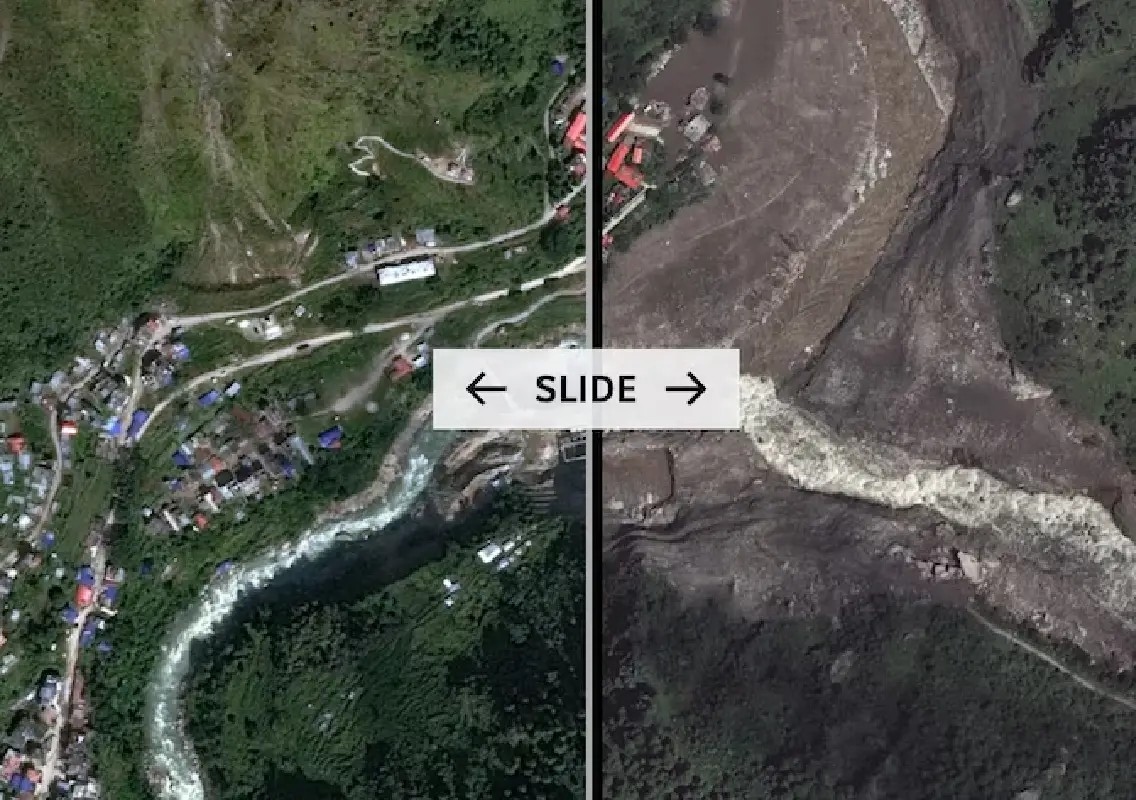


Gyirong: China is facing scrutiny over reports that videos posted by local residents showing the devastation caused by a major mudslide at Gyirong Port were removed from Chinese social media platforms.
The reports have drawn attention to the contrast between footage shared from Nepal, where journalists and residents have documented the destruction, and information emerging from the Chinese side, which has largely been carried by state-controlled media.
Local disaster footage reportedly removed
According to a report by The New York Times cited by India Today, videos showing the mudslide engulfing Gyirong Port were briefly circulated on Chinese social media before being taken down.
One video reportedly showed the scale of destruction at the key China-Nepal border crossing. The removal of such footage has raised questions about the availability of independent information from the affected region.
Chinese authorities have instead highlighted rescue operations, including the deployment of emergency personnel, military teams, helicopters and other equipment.
Hundreds reported missing in Gyirong
The disaster struck on August 26 after a glacier-related event triggered a massive surge of water, mud and debris towards Gyirong Port.
Chinese authorities had reported hundreds of people missing in Gyirong in the immediate aftermath, along with confirmed deaths. The region is largely rural, and reports have suggested that the full impact on individual settlements remains difficult to assess.
Concerns over information access
Observers and Tibet-related advocacy groups have raised concerns that restrictions on locally generated information could affect the flow of potentially useful information during rescue operations.
Independent access to Tibet is already tightly controlled, making resident-generated footage particularly significant during a disaster.
China rejects claims over cause
Chinese authorities have rejected claims that a geological barrier or infrastructure failure on the Chinese side caused the flooding. Officials have said preliminary information indicated that the disaster originated on the Nepalese side of the border.
While the cause of the disaster remains separate from the allegations over information control, the reported removal of local footage has added another dimension to scrutiny of China’s response.
As rescue and relief efforts continue, calls for greater transparency and access to reliable information are likely to remain central to the wider humanitarian response.