







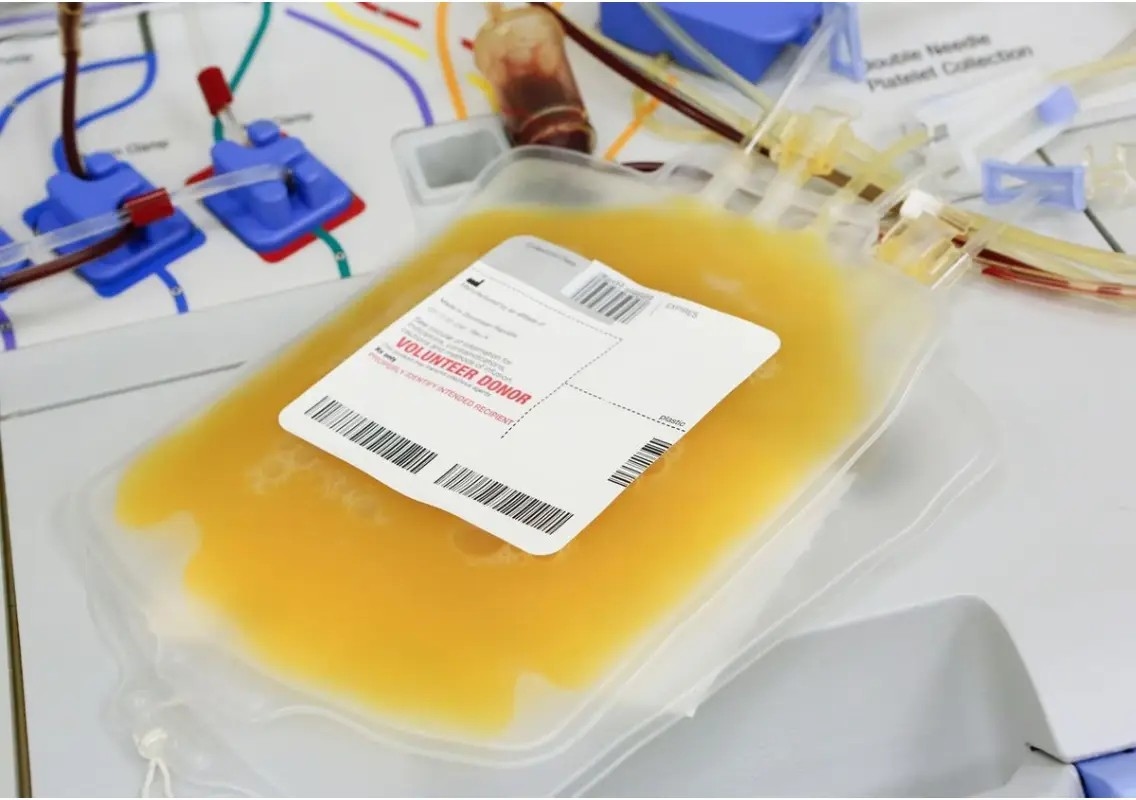


Bengaluru: A major fake plasma racket uncovered in Gujarat has now extended its links to Bengaluru, with investigators revealing that adulterated plasma was supplied to a blood bank and a pharmaceutical company in the city.
Ahmedabad Rural Police have arrested three more accused in connection with the racket, taking the investigation deeper into an alleged network that operated across Gujarat, Maharashtra and Karnataka.
Bengaluru among destinations for fake plasma
According to investigators, the latest arrests include three laboratory operators from Maharashtra and a driver. Earlier, police had arrested an Ahmedabad-based laboratory owner, a laboratory owner from Maharashtra and two drivers allegedly involved in the operation.
During interrogation, the accused reportedly disclosed that fake plasma was supplied not only in Gujarat and Maharashtra but also to a blood bank and a pharmaceutical company in Bengaluru. Karnataka authorities are now expected to assist in the ongoing investigation.
Over 1,700 fake plasma units sold
Police said the accused allegedly sold fake plasma units for around ₹5,000 each, with the investigation so far revealing that more than 1,700 units had been distributed.
Officials clarified that none of the plasma units seized during the investigation had been transfused into patients. Instead, they were allegedly supplied to blood banks and pharmaceutical companies.
However, investigators suspect that more than 2,000 adulterated plasma units may have been circulated and are probing whether any patients elsewhere may have received the fake plasma.
Illegal laboratory uncovered
The racket was exposed on June 23, 2026, when police raided an illegal laboratory in Changodar, Ahmedabad.
Investigators alleged that the accused extracted genuine plasma from donated blood, replaced it with saline solution and sold the adulterated product at nearly half the market price.
Police said all 1,140 plasma units seized during the raid were found to be adulterated and warned that the counterfeit plasma could have posed a serious threat to patients if used for transfusions.
The investigation is continuing to identify all those involved in the racket and trace the full distribution network across multiple states.